Why Is My Pond Water Cloudy?
By The Pond Review · Updated September 2026
Independent editorial guide. We never accept payment for coverage, though we may earn a commission if you purchase through our links.
Quick Take
Start with the colour, because it tells you which problem you have. Green water is suspended algae, tea-brown is usually tannins, and the white, grey, milky haze that brought you here is something else: nearly always a bacterial bloom, or fine particles the filter is not catching. A bloom happens when bacteria multiply fast on a sudden surplus of dissolved organics, which is why it turns up in young ponds that are still cycling, after a big cleanout, or after rocks and media went in unwashed. Here is the part the product aisle will not tell you: no chemical ends a bacterial bloom. It clears on its own, usually in a few days to two or three weeks. What you should do meanwhile is add aeration, because the bloom consumes oxygen and that, not the cloudiness, is the actual risk to your fish.
The aerator and fine media we would reach for, and the test kit to tell cycling from everything else, are below. See picks ↓
Cloudy water panics people more than green water does, partly because it looks wrong in a way algae does not, and partly because every search result immediately offers to sell you a clarifier. Milky, grey, hazy water in a pond is usually one of two things, and only one of them is worth spending money on. The common one is a bacterial bloom, a population explosion of the microscopic bacteria that break down waste, triggered by a surge of dissolved organic matter. The other is fine particles, clay, silt, or stirred-up sediment, hanging in the water because nothing in your system is fine enough to catch them.
The two need opposite responses, which is why guessing costs you. A bloom wants patience and oxygen, and reacting to it with chemicals or a big cleanout usually makes things worse or restarts the whole cycle. Suspended fines want mechanical filtration and, occasionally, a flocculant. This guide separates them, covers the less obvious causes, including one that is purely seasonal, and is honest about the thing most pages bury: for a young pond, the right move is very often to do nothing except aerate and wait.
First, what colour is it?
Cloudy is not one problem, and the colour is the fastest diagnostic you have. Look at the water in a white bucket or a clear glass, in daylight, and sort it into one of three categories:
- Green, from a faint tint to pea soup: that is suspended single-celled algae, a different problem with a different fix, and we cover it separately.
- Brown or tea-coloured: usually tannins leaching from leaves and wood, or stirred sediment. Also a separate problem, and also covered separately.
- White, grey, or milky: this article. Either a bacterial bloom or fine suspended particles.
If it is green, read our guide to clearing green pond water. If it is brown or tea-stained, read why pond water turns brown. Experienced keepers ask this colour question first too, one replying to a photo with exactly the right instinct: "is this completely milky or does it also have a green tint to it?" before offering a diagnosis. Sorting the colour out first is what stops you treating the wrong problem.
The usual answer: a bacterial bloom in a young pond
Milky water most often means heterotrophic bacteria have multiplied rapidly because you handed them a sudden feast of dissolved organic matter. New ponds do this while they are cycling, before the biological filter has matured enough to process waste steadily. Established ponds do it after a disturbance: a deep clean, a big slug of uneaten food, new filter media or rock that went in unrinsed, or even a dose of bottled bacteria that itself becomes food for the population already there. The individual bacteria are far too small to see, but in bloom numbers they scatter light, and the water goes the colour of watered-down milk.
The diagnosis a seasoned keeper gives is the one we would give: "Apparently you have developed a bacterial bloom with or without an accompanying algae bloom. This is caused by an excess of certain organics in a pond." The reassuring half is that it is self-limiting. Once the bacteria exhaust the organic surplus, the population crashes back and the water clears, typically within a few days to two or three weeks. You do not have to do anything to make that happen, and no chemical treatment will meaningfully speed it up. One piece of gear can shorten a bloom, and it is worth naming precisely: a UV unit run at sterilising strength kills bacteria as the water passes the lamp. That is a higher dose and a slower flow than the clarifier setting used against green algae, and it treats the symptom rather than the organic surplus underneath, so it shortens the haze without fixing the cause.
The one thing that matters while it clears: oxygen
This is the part worth taking seriously, and it is a genuine safety point rather than an aesthetic one. A bacterial bloom is a huge population of organisms all respiring at once, and they draw down dissolved oxygen in the process. Extension fisheries guidance treats bacterial decomposition of organic matter as a textbook cause of pond oxygen depletion and fish kills, with fish showing stress as dissolved oxygen falls toward the 3 to 4 parts per million range, and aeration as the standard response. The cloudiness will not hurt your fish; the oxygen crash underneath it can. The same keeper is direct about both the risk and the response: "Bacterial blooms can be dangerous in that the bacteria will consume a large amount of the Oxygen in the water thus depriving the fish. I would recommend providing supplemental aeration to your pond. This will sustain the Oxygen content until the bacterial bloom dissipates over time. There are no treatments for a bacterial bloom."
So the intervention is an air pump and a diffuser, or a fountain, or aiming your return to break the surface harder, and running it around the clock until the water clears. Aeration is also useful on the warmest days and overnight, when dissolved oxygen is naturally at its lowest and a bloom's demand is at its most inconvenient. Because an air pump is powered equipment sitting beside water, put it on a GFCI-protected outdoor circuit, which the National Electrical Code requires for outdoor receptacles, and keep the pump itself above the waterline so it cannot siphon back.
The other causes worth checking
If your pond is not newly built or recently disturbed, run down this list before assuming a bloom:
- Unwashed rock, gravel, or media. Dust and fines coat new stone and rinse straight off into the water. It is one of the most common causes of sudden white cloudiness in a brand-new pond, and it settles or filters out on its own.
- Stirred sediment. Vacuuming, netting the bottom, or a heavy rain can lift fine silt into suspension. It clouds fast and settles slowly.
- Spawning. A seasonal one that catches people out. When fish spawn, the water can turn cloudy and milky with a distinctive smell for a day or two, then clear on its own. Worth testing the water afterwards, since the protein released can push ammonia up briefly.
- Overfeeding or overstocking. Both push more dissolved organics into the water than the filter can process, which is the fuel a bloom runs on.
- Clay or silt in your source or runoff. Suspended mineral particles never decompose and will not clear with time, which is the one case that genuinely needs mechanical help.
One owner who hit the rock version of this described it plainly, saying they "made a huge mistake in not washing the rocks" and the water went "a murky white colour." The reply they got was the correct one: "it may just need a day or two to settle. Often when rocks are placed into a pond they inevitably have residue on them." A day later they were back to report the pond "has settled down quite a lot more today already." That is the normal arc.
What not to do
Most of the damage done to cloudy ponds is done by the owner trying to fix them. Three moves to avoid:
- Do not reach for chemicals first. There is no product that ends a bacterial bloom, and algaecides and sludge treatments do nothing about the nutrient surplus driving it. As one keeper advises a new owner, "The use of chemicals for a quick fix to clear water is discouraged, give nature time to work it’s magic."
- Do not do a huge water change. Modest top-ups are fine, but in a pond that is still cycling, a large change strips out the ammonia the developing filter bacteria feed on, which slows the very process you are waiting to finish.
- Do not drain and deep-clean. This is the one that really costs you. Stripping the pond destroys the bacteria you were waiting on, and the pond starts cycling from zero. A keeper warns someone who did exactly that: "you’ve destroyed whatever beneficial bacteria you had in your pond -- which means your pond is going to have to “cycle” all over."
It also helps to know the sequence you are in rather than reacting to each stage. A new pond commonly runs white cloudy, then green, then settles, and one keeper sets that expectation for a beginner well: "no sooner than you get rid of the white cloudiness from the rocks, your going to get some green water from algae bloom, continue to be patient and give the pond time to mature." Riding that out is the job.
When it is suspended particles instead
If the haze is not clearing after a few weeks, or the pond is well established and nothing was disturbed, work out what is suspended. Fill a clear glass or jar with pond water and leave it somewhere still for a day or two. What that tells you is narrower than most guides claim: if a layer settles out and the water above goes clear, you had settleable sediment, silt stirred off the bottom, and it will drop out in the pond too. If it stays evenly hazy, you have ruled out settleable sediment and nothing more, because both a bacterial bloom and colloidal clay stay suspended. Extension guidance is blunt about the clay case: the particles carry like electrical charges, repel each other, and can hold a sample visibly stained for months.
Separate those two by history and time rather than by the jar. A bloom belongs to a young pond, a recent cleanout, or a fresh organic load, and it clears within a few weeks. Colloidal clay belongs to an established pond fed by muddy runoff or dug in heavy soil, and it goes hand in hand with soft, low-hardness water, because without enough calcium and magnesium in solution there is nothing to neutralise the charge holding those particles apart. It will not clear no matter how long you wait, which is the tell. If weeks pass with no change and the pond was never disturbed, stop waiting and treat it as clay.
For settleable fines, the answer is mechanical filtration fine enough to catch them. Adding a finer pad, filter mat, or a layer of floss after your coarse media is the straightforward fix, and it is worth increasing surface area and flow through the filter before buying anything in a bottle. For genuine colloidal clay, filtration alone will not do it, because the particles are too fine and too stubbornly suspended to trap.
That is where flocculants earn their place, and it is worth knowing that the two kinds work differently. The treatments extension services recommend for clay bind the particles into clumps heavy enough to sink, so the clay ends up on the pond floor rather than in your filter. Of those, agricultural gypsum is the one to reach for in a pond with fish, because it also raises the hardness that was letting the clay stay suspended. Alum acts faster, within hours, but carries a risk worth stating plainly: it drives pH down, and extension guidance warns it can cause fish kills in ponds with alkalinity below about 20 mg/L, with 50 preferred. Test alkalinity before you consider alum, and if you are unsure, use gypsum. Bottled aquarium-style clarifiers work the other way, clumping fines so your filter can catch them, which only helps if your filtration is fine enough to hold what they make. Either way it is a tool for particles, never for a bloom.
Cloudy pond water questions, answered
How long does cloudy pond water take to clear?
A bacterial bloom in a young or recently disturbed pond usually clears in a few days to two or three weeks, once the bacteria have consumed the organic surplus that fed them. Cloudiness from unwashed rock or stirred sediment often settles within a day or two. If the haze has persisted well past a month with no disturbance, you are probably looking at suspended clay or silt rather than a bloom, which will not clear with time and needs finer mechanical filtration.
Is cloudy pond water harmful to fish?
The cloudiness itself is not the problem, but what causes it can be. During a bacterial bloom the bacteria consume a significant amount of dissolved oxygen, and low oxygen is a real risk to fish, so run extra aeration until the water clears. In a young pond, cloudiness can also coincide with the ammonia and nitrite swings of cycling, so test the water rather than guess. If those readings are elevated, feed less, stop adding fish, and let the filter mature.
Will beneficial bacteria fix cloudy water?
Not in the way the label implies. Bottled bacteria help establish and support a biological filter over time, which is useful in a young pond, but dosing them will not clear an active bacterial bloom, and adding a large dose can briefly add to the organic load instead. If the pond is cycling, bacteria are a reasonable long-term investment; they are not a same-week fix for cloudy water. Aeration and patience are what carry you through a bloom.
Should I do a water change to clear cloudy water?
Usually not a large one. A modest top-up is harmless, but a big water change in a cycling pond removes the ammonia the developing filter bacteria need, which slows the maturing you are waiting for. Draining and deep-cleaning is worse still, because it destroys the established bacteria and restarts cycling from scratch. Aerate, feed lightly, leave the filter alone, and let it run its course.
The picks
Products we recommend for this guide.
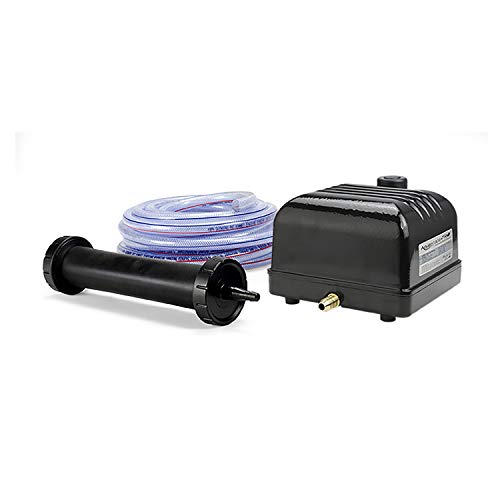
Aquascape Pro Air 20 Pond Aeration Kit
The one thing worth buying during a bloom, because oxygen is the real risk rather than the haze. A complete kit with pump, tubing, and diffuser, so you can run aeration around the clock until the water clears. Keep the pump above the waterline and on a GFCI circuit.

Matala Pond Filter Mat
For the other kind of cloudy, where fine particles are slipping through your filter. Layering progressively finer mat after your coarse media catches what is passing now, which is the fix that lasts rather than a bottle that clumps particles and hopes.

API Freshwater Master Test Kit
Tells you whether a young pond is still cycling instead of leaving you to guess. Ammonia and nitrite readings turn cloudy water from a mystery into a known stage, and knowing that stops you from doing the expensive wrong thing, like a full drain and clean.
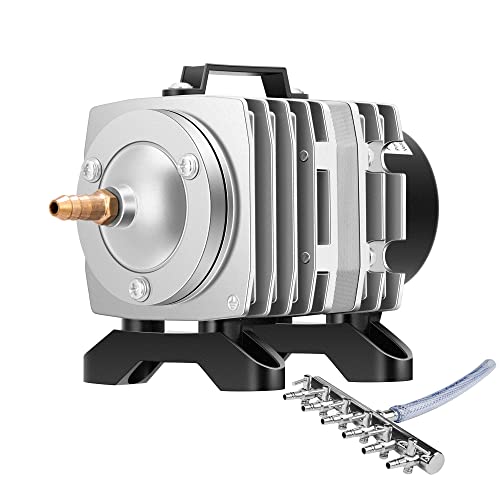
VIVOSUN Commercial Air Pump
A cheaper route to the same aeration, with multiple outlets to split air between diffusers. Less refined than a matched kit, and you may need a diffuser to suit your pond, but it moves air, which through a bloom is what matters. Same rules: above the waterline, GFCI circuit.
What owners say
Real owner reports from the threads and editorial sources we drew on for this guide.
“Bacterial blooms can be dangerous in that the bacteria will consume a large amount of the Oxygen in the water thus depriving the fish. I would recommend providing supplemental aeration to your pond. This will sustain the Oxygen content until the bacterial bloom dissipates over time. There are no treatments for a bacterial bloom and I do not recommend them for algae issues either.”
“it may just need a day or two to settle. Often when rocks are placed into a pond they inevitably have residue on them. Yes, ideally a good washing is in order but patience should hopefully resolve your issue.”
“no sooner than you get rid of the white cloudiness from the rocks, your going to get some green water from algae bloom, continue to be patient and give the pond time to mature. The use of chemicals for a quick fix to clear water is discouraged, give nature time to work it's magic.”
“If you completely cleaned everything, then you've destroyed whatever beneficial bacteria you had in your pond -- which means your pond is going to have to "cycle" all over. Be sure to keep an eye on your fish and watch your ammonia levels.”
“I have 40+ KOI 10-20in, when they start spawning, it turns my pond cloudy/milky with a distinct oder.”
“The pond has settled down quite a lot more today already! Glad to know it's not a huge issue.”


