Aquascape Pro Air 20 Aeration Kit Review + Verdict
By The Pond Review · Updated August 2026
Independent editorial review. We never accept payment for coverage, though we may earn a commission if you purchase through our links.
Verdict
The pond forums line up with why we picked this: the standout report is an owner whose Aquascape pro pump sits under a clay pot and is inaudible until you're about a foot away, which is the quiet this kit is bought for. On the mechanism, experienced keepers independently land where the physics does, describing a single large diffuser setting up a vertical rotating current, and an air stone adding oxygen more by water movement than by infusion, so one well-placed diffuser turning the pond over beats scattered stones fizzing at the surface. The honest cautions come from the same threads: these diaphragm pumps run hot and need ventilation if you box them, and buyers wrestling with quiet-versus-output are right to, because output runs out against depth. Weighing all of it, our call stands: for a small-to-mid patio pond this is the quiet, complete kit to buy, but a big deep koi pond wants the rebuildable pressure of a linear Hiblow, not this.
Read full take ↓Similar aerators
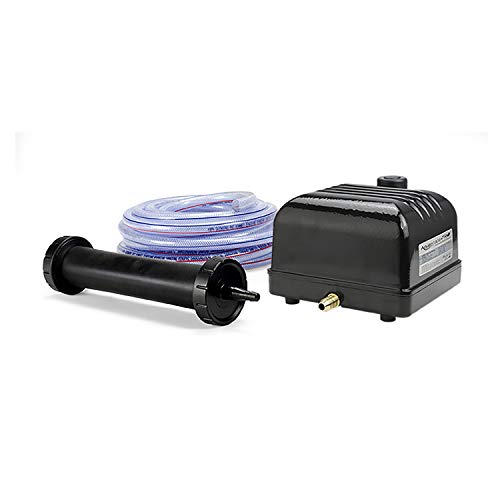
The Aquascape Pro Air 20 is the quiet, complete consumer aeration kit for a small-to-mid pond: the pump, the weighted tubing, the self-cleaning diffuser stones and the check valves all arrive in one box, so there's nothing else to buy and nothing to guess at. It's also, straightforwardly, quiet. A foot away it's near silent, which is exactly why it wins for a patio pond sitting close to the house or a seating area, where a buzzing pump would ruin the reason you built the pond in the first place.
The honest limit is what it isn't. This is a sealed consumer unit, not a rebuildable linear-piston pump like the Hiblow. When a diaphragm eventually wears, you replace the pump rather than a $30 kit of parts. For a patio pond that runs seasonally, that trade is fine. For a big deep koi pond, or a pump you expect to run 24/7 for a decade, the Hiblow is the better long-run buy, and we say so below rather than pretend the Pro Air 20 is the last aerator you'll own.
The short version
What works:
- Genuinely near silent a foot away, so it can sit next to a patio pond without you hearing it over the water.
- A complete kit in the box: pump, weighted tubing, self-cleaning diffuser and check valves, no separate parts run.
- Outdoor-rated and simple to place, with self-cleaning stones that don't clog the way cheap air stones do.
- Right-sized output for a small-to-mid pond, enough to turn the water over and keep dissolved oxygen up in summer.
What to watch:
- It's sealed. When the diaphragm wears you buy a new pump, not a rebuild kit, so it isn't a lifetime unit.
- Output is finite. Push it onto a big deep koi pond and it runs out of air against the depth.
- Like every diaphragm pump it warms up in use, so it needs ventilation if you box or hide it.
- Priced like a mid unit, so on raw air-per-dollar a bare commercial pump undercuts it.
Who it's for, and who should skip it
Buy the Pro Air 20 if your pond is roughly small-to-mid and no more than about waist deep, it sits close to where you sit, and you want one box that solves aeration without a parts list. It's the aerator we'd put on a patio koi or goldfish pond first, precisely because the quiet is real and the kit is complete.
Skip it if your pond is large, deep past about five feet, or heavily stocked with koi, where you want the pressure and rebuildability of a linear pump and should step up to the Hiblow. Skip it too if your job is a small water garden or a quarantine tub, where the little Aquascape Pond Air 2 does the same thing for a third of the money. And skip it if you already own tubing and stones and only want raw air cheap, in which case a bare commercial pump is the value play.
The number that decides it: LPM against depth and fish load
Aerators aren't sized by gallons. They're sized by air delivery, measured in liters per minute, weighed against two things the box doesn't put on the front: how deep the pond is and how many fish are in it. Depth is the quiet killer. Every foot of water the diffuser sits under adds back pressure the pump has to push against, so a unit that boils the surface in a two-foot tub can barely bubble at five feet. The original poster in the forum thread we read had a 4.5-foot pond and no idea what size to buy, and that depth is right at the ceiling of what a consumer kit like this handles well.
Fish load is the other half. Koi are big animals that eat a lot and breathe a lot, and dissolved oxygen is consumed fastest on warm summer nights when the plants stop producing it and start using it too. That's when a pond crashes. So size the air up, not down: a pump that looks generous on a cool afternoon is the one that keeps fish off the surface at 5am in August. The Pro Air 20 has the output for a small-to-mid pond carrying a sensible number of fish. Ask it to oxygenate a 2,000-gallon koi pond at depth and it's the wrong tool, and the Hiblow, whose name is its liters-per-minute rating, is where you go for that job.
How a diffuser oxygenates a pond
It's worth being clear about the mechanism, because it changes how you place the thing. A diffuser doesn't add much oxygen by the bubbles themselves dissolving on the way up. It adds oxygen by lifting a column of water: the rising bubbles drag water off the bottom to the surface, that water sheds carbon dioxide and takes on oxygen at the air interface, then falls back and the pond slowly rotates. The experienced keepers converge on exactly this. One put it as a single large diffuser setting up a vertical rotating current that constantly exposes new water to the atmosphere, and another noted an air stone does more by creating water movement than by infusion.
The practical upshot: one well-placed diffuser near the deepest point, turning the whole pond over, beats several scattered stones fizzing at the surface. It also means you don't need to chase a violent boil. A steady, quiet lift, which is exactly what the Pro Air 20 produces, is doing the real work even when it looks gentle. That gentleness is a feature, not a shortfall.
Safety comes first: this is dissolved-oxygen life support
Treat an aerator as life support, not a decoration, because in the situations that matter it's the only thing keeping the fish alive. In a summer heat wave, warm water holds less oxygen and a stocked pond can go hypoxic overnight; aeration is what carries the fish through to morning. In winter it does a different job: it keeps a hole open in the ice so the gases that build up under a frozen surface can escape. A run diffuser isn't heating anything, and it isn't a substitute for adequate overwintering depth, but the open gas-exchange hole is what prevents a sealed-ice fish kill.
Two authority-grade rules. First, in winter keep the diffuser shallow, near the surface, not on the bottom. Run it deep and it drags the warmest water up out of the depths and chills the zone where the fish are trying to sit out the cold, which is why seasoned keepers switch to a smaller pump or raise the stone once temperatures drop. Second, electrical: any outdoor pond circuit must be on a GFCI-protected outlet, per the National Electrical Code, and the pump should sit above the water line in a ventilated, weatherproof housing. That isn't optional caution around water and mains power.
Living with it, and the reliability limit
Day to day the Pro Air 20 is close to invisible, which is exactly what you want. It sits on the ground, ideally on something soft and inside a vented cover, and hums. Owners tuck these under a clay pot or inside a little scrap-wood pump house and stop noticing them. One keeper described the Aquascape pro pump sitting under a clay pot, inaudible until you get about a foot away and then only a gentle hum, and that matches the quiet this unit is bought for.
The reliability picture is where you should keep your eyes open, and it's the reason this isn't a nine. It's a diaphragm pump in a sealed housing. Like all of them it runs warm, so if you box it up leave real ventilation or you cook it, a caution the forum keepers raise from experience about aerator pumps getting hot. And when the diaphragm finally goes, there's no field rebuild: you replace the pump. On a seasonal patio pond that's years away and a fair trade for the low price and the quiet. On a pond that runs every hour of every day for a decade, that sealed design is exactly the weakness the rebuildable Hiblow doesn't have, and it's why we send heavy-duty buyers there.
How it compares
- Versus the Hiblow HP-40: the step up in both pressure and lifespan. The Hiblow is a linear-piston pump you rebuild with a cheap diaphragm kit instead of replacing, and it pushes far more air against depth, so it's the right answer for a big deep koi pond or a decade of 24/7 duty. It's louder, pricier and more than a patio pond needs, which is the only reason the Pro Air 20 wins where it wins.
- Versus the Aquascape Pond Air 2: the same idea, smaller. The Pond Air 2 is a two-outlet kit for a small water garden, a shallow preformed pond or a quarantine tub, at roughly a third of the price. It doesn't have the output for a deep or well-stocked pond, so buy it when your job is small and save the difference.
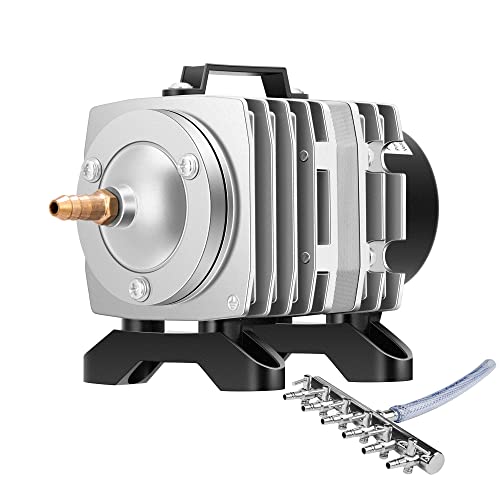
- Versus a bare commercial pump like the VIVOSUN: the value route if you already own tubing and stones. You get strong raw air per dollar in an aluminum housing, but you assemble the kit yourself and it runs louder, so it's the wrong pick for the quiet patio job and the right one when air-per-dollar is all you care about.
Setting it up
Place the pump above the water line in a ventilated, weatherproof housing, on a GFCI outlet, and set it on something soft to kill vibration noise. Run the weighted tubing to the deepest part of the pond and sink one diffuser near the bottom in summer so it lifts the whole water column, then raise it shallow for winter so it keeps an ice hole open without chilling the depths. Let it run continuously in warm weather, especially overnight, when oxygen is scarcest. For the rest of the picture, see our pond aerator picks for how the sizes stack up against pond depth and fish load.
Where we land
For a patio-scale koi or goldfish pond that sits where you can hear it, the Pro Air 20 is the easy call: near silent, outdoor-rated, and complete in one box, with output that comfortably covers a small-to-mid pond and a diffuser that does its oxygenating by turning the water over rather than putting on a show. Sized to that job, it's hard to be unhappy with.
Buy it for what it's, though, not for what the Hiblow is. It's a sealed consumer unit, so when the diaphragm wears you buy another pump, and its air runs out against real depth. If your pond is big, deep or stocked hard, or you want a pump you rebuild instead of replace for the next ten years, spend up on the linear pump and don't look back. For everyone whose pond is small, close and quiet, this is the one we'd plug in.
Our Ratings
Overall score
Outdoor-rated and plainly built, with self-cleaning stones that resist clogging. The real limit is the sealed diaphragm design: like every pump of the type it runs warm and needs ventilation, and when the diaphragm wears you replace the whole unit rather than rebuild it. Fine for seasonal patio duty, a genuine weakness against a decade of 24/7 running.
The quiet is real and the oxygenation is right for the class: a foot away it is near silent, and its steady lift turns a small-to-mid pond over the way aeration is supposed to, rather than putting on a surface show. It loses ground only where the box does, running out of air against real depth and a heavy koi load, which is a sizing ceiling, not a defect.
You pay a mid price and get a complete, quiet, no-parts-list kit, which is fair for a patio pond you want to solve once. Docked because raw air-per-dollar is cheaper from a bare commercial pump, and because the sealed unit is a replace-not-rebuild cost down the line where the Hiblow is not.
Aquascape Pro Air 20 Aeration Kit on Amazon.
The Evidence Behind Our Verdict
The pond forums line up with why we picked this: the standout report is an owner whose Aquascape pro pump sits under a clay pot and is inaudible until you're about a foot away, which is the quiet this kit is bought for. On the mechanism, experienced keepers independently land where the physics does, describing a single large diffuser setting up a vertical rotating current, and an air stone adding oxygen more by water movement than by infusion, so one well-placed diffuser turning the pond over beats scattered stones fizzing at the surface. The honest cautions come from the same threads: these diaphragm pumps run hot and need ventilation if you box them, and buyers wrestling with quiet-versus-output are right to, because output runs out against depth.
Weighing all of it, our call stands: for a small-to-mid patio pond this is the quiet, complete kit to buy, but a big deep koi pond wants the rebuildable pressure of a linear Hiblow, not this.
Our rating above is our own editorial call. What follows is the field evidence we weighed to reach it: first-hand reports from pond owners on dedicated pond and koi forums, which we lean on more than manufacturer-influenced published reviews because unsponsored owners tend to be the more candid signal.
What Pond Forums Say
“We have the Aquascape Pro air pump - that may not be the actual name, but it's incredibly quiet. It sits directly on the ground under a clay pot. Until you get about a foot away you can't hear it at all, and then it's just a gentle hum.”Source →
“Actually a single diffuser large enough for the pond is the best way to go as it will set up a vertical rotating current constantly exposing new water to the atmosphere to be oxygenated.”Source →
“An air stone does more to add dissolved oxygen by creating water movement then it does by infusion.”Source →
“I've just seen some really noisy ones so I'm eager to get it far away from the pond. Don't really want to hear it anywhere in the yard, though.”Source →
“Leave some sort of ventilation if you cover so in the summer, it doesn't overheat. I know my aerator pump gets pretty hot, though I've read they tend that way.”Source →
Frequently asked questions
Is the Aquascape Pro Air 20 Aeration Kit worth it?
You pay a mid price and get a complete, quiet, no-parts-list kit, which is fair for a patio pond you want to solve once. Docked because raw air-per-dollar is cheaper from a bare commercial pump, and because the sealed unit is a replace-not-rebuild cost down the line where the Hiblow is not.
How reliable is the Aquascape Pro Air 20 Aeration Kit?
Outdoor-rated and plainly built, with self-cleaning stones that resist clogging. The real limit is the sealed diaphragm design: like every pump of the type it runs warm and needs ventilation, and when the diaphragm wears you replace the whole unit rather than rebuild it. Fine for seasonal patio duty, a genuine weakness against a decade of 24/7 running.
How well does the Aquascape Pro Air 20 Aeration Kit perform?
The quiet is real and the oxygenation is right for the class: a foot away it is near silent, and its steady lift turns a small-to-mid pond over the way aeration is supposed to, rather than putting on a surface show. It loses ground only where the box does, running out of air against real depth and a heavy koi load, which is a sizing ceiling, not a defect.
What do real owners say about the Aquascape Pro Air 20 Aeration Kit?
The pond forums line up with why we picked this: the standout report is an owner whose Aquascape pro pump sits under a clay pot and is inaudible until you're about a foot away, which is the quiet this kit is bought for. On the mechanism, experienced keepers independently land where the physics does, describing a single large diffuser setting up a vertical rotating current, and an air stone adding oxygen more by water movement than by infusion, so one well-placed diffuser turning the pond over beats scattered stones fizzing at the surface. The honest cautions come from the same threads: these diaphragm pumps run hot and need ventilation if you box them, and buyers wrestling with quiet-versus-
Options Worth Checking Out

HIBLOW HP-40 Pond and Septic Air Pump
The rebuildable step up. This linear-piston pump runs for years because you swap its diaphragms with a cheap kit instead of buying a whole new unit, and it pushes far more air against depth. The right call for a big deep koi pond.

Aquascape Pond Air 2 Aeration Kit
The smaller, cheaper Aquascape kit for a small water garden or a quarantine tub. Two outlets, two stones and tubing in the box at roughly a third of the price. Right-sized for a few-hundred-gallon pond, short on output for a deep koi pond.
VIVOSUN 634GPH Commercial Air Pump
The bare-pump value route. An aluminum-housed commercial air pump with strong raw output for the money, but you supply your own tubing, stones and check valves, and it runs louder. The pick when you want cheap air and will assemble the kit yourself.