HIBLOW HP-40 Air Pump Review + Verdict for Ponds
By The Pond Review · Updated August 2026
Independent editorial review. We never accept payment for coverage, though we may earn a commission if you purchase through our links.

Verdict
Owner reports on the pond forums line up with the reputation and with our own read. Keepers running the same class of linear pump describe leaving it on 24/7, 365 days a year, and going years without changing a part beyond a clean, which is the durability we're paying for. The quiet is real too: linear diaphragm pumps are widely held to be the quietest type, quiet enough to tuck out of the way and forget it's running. The downsides are small and consistent, chiefly that these pumps run warm, so they want ventilation and a weatherproof housing rather than a sealed box, and a brick or pad under them to kill the hum. On the aeration question itself, experienced keepers independently make the point our arithmetic does, that an air stone adds dissolved oxygen mostly by moving water rather than by the bubbles themselves. Weighed together, the forums land where we do: buy the pump you rebuild, size it to your pond's depth and fish, and put it on a GFCI-protected circuit.
Read full take ↓Similar aerators
The HIBLOW HP-40 is the linear-diaphragm air pump serious koi keepers buy, and it earns that spot for boring reasons: it's quiet, it runs around the clock for years, and when it finally slows down you rebuild it with a diaphragm kit instead of throwing it out. On a pump that never switches off, rebuildable beats disposable, and that difference is what you're paying for.
It isn't cheap, and the sticker is the only real reason to hesitate. A thirty-dollar pump moves air today, then quits in a year and takes your dissolved oxygen down with it. Spread the HP-40's price across the seasons it keeps running and the math tilts hard toward the pump you service over the one you keep replacing. Buy it once, keep a spare diaphragm kit on the shelf, and aeration stops being a thing you worry about.
The short version
What works:
- A linear diaphragm is the quiet, efficient way to move air, and this one runs 24/7 without complaint.
- Rebuildable. The wear part is a diaphragm you swap with a kit, so one pump outlives a stack of throwaways.
- Output lands right where a typical koi pond wants it, and the model number tracks roughly to its air volume.
- A known quantity. Linear-diaphragm pumps of this type have a long track record of years-long, trouble-free running.
What to watch:
- The up-front price is real, several times what a disposable pump costs.
- It runs warm, like most linear pumps, so it wants ventilation and a weatherproof housing rather than a sealed box.
- It sits at the lower end of the useful air band, so a deep or heavily stocked pond wants a bigger unit.
- It's an air source only. You still supply the tubing, the check valves, and a diffuser sized to your depth.
How to size an air pump, and the number that matters
Size an air pump by LPM against your pond's depth and fish load, not by pond gallons. This is the arithmetic the box hopes you skip. Air has to be pushed down against the water column, so a deep pond needs more pressure and more volume than a shallow one holding the same water. Two ponds can share a gallon count and need very different pumps once you account for how deep the diffuser sits and how many fish are breathing.
As a rough working figure, 40 to 60 LPM covers a typical backyard koi pond. The HP-40 sits at the bottom of that band, which is exactly where most stocked garden ponds live, and the "40" in the name tracks roughly to its rated air volume, so the bigger HP-60 and HP-80 climb the same scale for deeper or more heavily stocked water. Start from depth and fish, land on an LPM figure, then pick the model whose number matches. Sizing by gallons alone is how people end up with a pump that boils the surface on a shallow pond and gasps on a deep one.
One more piece of the same arithmetic, because it changes how you set the pump up: a diffuser raises dissolved oxygen mostly by moving water, not just by bubbling. The bubbles themselves hand over a little oxygen on the way up, but the real work is the column of water they drag to the surface, where gas exchange happens. That's why placement and depth matter as much as raw LPM, and why a strong pump on a well-placed diffuser out-performs a bigger pump dumping bubbles in the wrong spot.
Why linear diaphragm, and why rebuildable is the point
Air pumps come in a few flavors, and for a pond that runs every hour of every day the linear diaphragm is the one that lasts. There's no piston and no rotor scraping itself to death; an electromagnet flexes a rubber diaphragm back and forth, which is efficient, quiet, and slow to wear. When wear does come, it comes to the diaphragm and the flapper valves, and those are exactly the parts a rebuild kit replaces.
That's what separates this pump from the cheap ones. A disposable pump has no serviceable parts, so the day the diaphragm hardens or a valve tears, the pump is trash. The HP-40 is built to be opened. Keep a kit on the shelf and a fifteen-minute rebuild returns it to full output for years more service. On gear that never turns off, the pump you can rebuild is the pump you buy once instead of every couple of seasons.
Aeration is dissolved-oxygen life support
This is the part that isn't a matter of taste, so we defer to the authorities rather than the forums. Aquatic-vet and university extension guidance is consistent: aeration on a stocked pond is dissolved-oxygen life support, not a nice-to-have. Koi suffocate in two predictable windows. In summer heat, warm water holds less oxygen at the same time the fish and their filter bacteria are demanding more of it, and the danger peaks in the pre-dawn hours after plants have consumed oxygen all night. Under winter ice, a sealed surface stops gas exchange entirely and traps the gases fish and decomposition give off. A running air pump keeps a hole open and the water turning through both windows.
The other essential is electrical. This is an outdoor appliance sitting in a wet environment and running continuously, so it belongs on a GFCI-protected circuit, per the National Electrical Code and every pump maker's own instructions. A GFCI outlet or breaker cuts power the instant it senses current leaking to ground, which is the failure mode that turns a nicked cord in a damp box into a lethal hazard. Don't run this pump, or any pond pump, off an unprotected outlet.
Living with it, and what owners run into
The recurring positive from owners of this class of pump is the one you hope for: it disappears into the yard. Linear diaphragm pumps are the quiet type, and people describe tucking one under a pot where it vanishes a step away. Run two lines off it, one to the skimmer and one to the pond body, and a single HP-40 handles a good-size backyard pond on its own.
The downsides are small and consistent. These pumps run warm, so the standard advice is to house the pump above the pond in a ventilated, weatherproof enclosure, a Rubbermaid box or a little vented shelter, never a sealed container that bakes it. Put a brick or foam pad under it to kill vibration noise and stop it walking around, use weighted air line so the tubing stays hidden and sinks, and fit a check valve on each line so water can't siphon back into the pump when the power drops. None of this is hard; it's the setup that separates a pump you never think about from one that buzzes on the patio and cooks itself.
How our picks compare
- Aquascape Pro Air 20, the alternative: a kit rather than a bare pump, with a self-cleaning, weighted diffuser and braided tubing in the box. It moves less air than the HP-40 and isn't built to be rebuilt, but it runs quiet out of the crate and gets a small-to-mid koi pond aerated without sourcing parts.
- Airmax PS10, the premium step up: a cabinet-style system for a big or deep pond, or a small lake up to an acre. Far more output and pressure than a single HP-40, at many times the price. It's overkill for a backyard pond and the right tool for serious water.
- VIVOSUN commercial air pump, the budget pick: the cheap way to get air moving today. An aluminum-housed pump that pushes plenty of bubbles for the money, but a throwaway with no diaphragm kit, so plan to replace rather than rebuild it on a pump that runs nonstop.
Setting it up right
Mount the HP-40 above the water line in a ventilated, weatherproof box on a GFCI-protected outdoor circuit. Run weighted air line down to a diffuser set near the deepest point, add a check valve on each line, and rest the pump on a brick or foam pad to quiet the hum. Size the diffuser and its depth to your pond, since the water it moves does most of the oxygenating. For the winter half of the job, our pond aerator picks cover keeping a gas-exchange hole open under ice.
Our call on the HP-40
If you keep koi and you want to stop thinking about aeration, the HP-40 is the pump to buy. It's quiet, it's sized right for a typical backyard koi pond, and above all it's rebuildable, which on a device that runs 24/7 is the feature that matters most. The price is the only real objection, and rebuildability answers it over any horizon longer than a single season.
Size it honestly first. Work from depth and fish load to an LPM figure, confirm the low-40s output suits your pond, and step up to a bigger HIBLOW if you run deep or heavily stocked. Put it on a protected circuit, house it where it can breathe, and this is close to the last air pump a backyard koi pond needs.
Our Ratings
Overall score
This is the reason to buy it. A linear diaphragm is about the most durable way to move air, the wear part is a diaphragm you swap with a kit, and owners of the same Hakko/HIBLOW class run these 24/7 for years before anything needs attention. Nothing here is disposable, which is exactly what you want on gear that never switches off. It runs warm, but that is a housing problem, not a durability one.
The HP-40 does the one job an air pump has and does it without drama: steady output in the low-40s LPM a typical koi pond wants, quiet enough to sit near a patio, and unbothered by running every hour of the year. It sits at the bottom of the useful air band, so a deep or heavily stocked pond wants a bigger HIBLOW, and that ceiling is the only thing keeping it off a perfect mark.
Expensive next to the thirty-dollar pumps, and that sticker is the only real hesitation. Rebuildability changes the math, since one HP-40 outlives a stack of throwaways and you return it to full output for the price of a diaphragm kit. Docked only because the up-front cost is real, and a lightly stocked shallow pond may never need this much pump.
HIBLOW HP-40 Air Pump on Amazon.
The Evidence Behind Our Verdict
Owner reports on the pond forums line up with the reputation and with our own read. Keepers running the same class of linear pump describe leaving it on 24/7, 365 days a year, and going years without changing a part beyond a clean, which is the durability we're paying for. The quiet is real too: linear diaphragm pumps are widely held to be the quietest type, quiet enough to tuck out of the way and forget it's running.
The downsides are small and consistent, chiefly that these pumps run warm, so they want ventilation and a weatherproof housing rather than a sealed box, and a brick or pad under them to kill the hum. On the aeration question itself, experienced keepers independently make the point our arithmetic does, that an air stone adds dissolved oxygen mostly by moving water rather than by the bubbles themselves. Weighed together, the forums land where we do: buy the pump you rebuild, size it to your pond's depth and fish, and put it on a GFCI-protected circuit.
Our rating above is our own editorial call. What follows is the field evidence we weighed to reach it: first-hand reports from pond owners on dedicated pond and koi forums, which we lean on more than manufacturer-influenced published reviews because unsponsored owners tend to be the more candid signal.
What Pond Forums Say
“I have the Hakko40 running 24/7 - 365 days a year with 2 lines, one in my skimmer and one in the pond itself. I'm on year 6 and haven't changed any parts expect for cleaning the filter”Source →
“We have the Aquascape Pro air pump - that may not be the actual name, but it's incredibly quiet. It sits directly on the ground under a clay pot. Until you get about a foot away you can't hear it at all, and then it's just a gentle hum.”Source →
“And I think the "linear" pumps are supposed to be the quietest?”Source →
“An air stone does more to add dissolved oxygen by creating water movement then it does by infusion.”Source →
“I know my aerator pump gets pretty hot, though I've read they tend that way.”Source →
Frequently asked questions
Is the HIBLOW HP-40 Air Pump worth it?
Expensive next to the thirty-dollar pumps, and that sticker is the only real hesitation. Rebuildability changes the math, since one HP-40 outlives a stack of throwaways and you return it to full output for the price of a diaphragm kit. Docked only because the up-front cost is real, and a lightly stocked shallow pond may never need this much pump.
How reliable is the HIBLOW HP-40 Air Pump?
This is the reason to buy it. A linear diaphragm is about the most durable way to move air, the wear part is a diaphragm you swap with a kit, and owners of the same Hakko/HIBLOW class run these 24/7 for years before anything needs attention. Nothing here is disposable, which is exactly what you want on gear that never switches off.
How well does the HIBLOW HP-40 Air Pump perform?
The HP-40 does the one job an air pump has and does it without drama: steady output in the low-40s LPM a typical koi pond wants, quiet enough to sit near a patio, and unbothered by running every hour of the year. It sits at the bottom of the useful air band, so a deep or heavily stocked pond wants a bigger HIBLOW, and that ceiling is the only thing keeping it off a perfect mark.
What do real owners say about the HIBLOW HP-40 Air Pump?
Owner reports on the pond forums line up with the reputation and with our own read. Keepers running the same class of linear pump describe leaving it on 24/7, 365 days a year, and going years without changing a part beyond a clean, which is the durability we're paying for. The quiet is real too: linear diaphragm pumps are widely held to be the quietest type, quiet enough to tuck out of the way and forget it's running.
Options Worth Checking Out
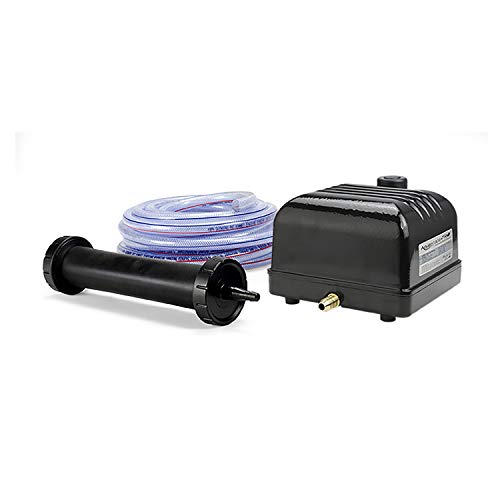
Aquascape Pro Air 20 Pond Aerator Kit
The alternative if you want a kit instead of a bare pump: a self-cleaning, weighted diffuser and braided tubing in the box. It moves less air than the HP-40 and isn't rebuildable, but it runs quiet out of the crate and suits a small-to-mid koi pond.

Airmax PondSeries PS10 Aeration System
The premium step up for a big or deep pond, or a small lake up to an acre. A cabinet-style aeration system with far more output and pressure than a single HP-40, at many times the price. Overkill for a backyard pond, right for serious water.
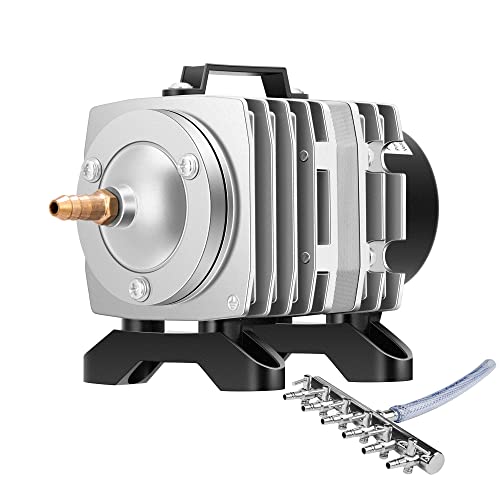
VIVOSUN Commercial Air Pump, Aluminum Housing
The budget way to get air moving today. An aluminum-housed commercial pump that pushes plenty of bubbles for the money, but a throwaway with no diaphragm kit. Plan to replace rather than rebuild it on a pond pump that never switches off.