TotalPond Waterfall Pump Review + Verdict
By The Pond Review · Updated August 2026
Independent editorial review. We never accept payment for coverage, though we may earn a commission if you purchase through our links.

Verdict
Our read is that the mass-market pumps are a coin toss you can shorten. On GardenPondForum the durability question shows up right in the thread titles, yet most owners who chimed in weren't the ones with dead pumps: several report store-brand and big-box pond pumps running non-stop for six years, one keeps two going with no trouble, and the failures that do surface often trace to how the pump was run rather than the pump itself. The useful pattern is that the owners with years of uptime kept theirs off the silt, matched them to a sane head, and, tellingly, several had migrated to mag-drive brands like Danner and Pondmaster after an early failure or two. The one clear failure story in the reports is an owner who burned through two Beckett pumps with nothing obviously wrong inside. None of this contradicts our call: the TotalPond can run for years, but you can't know which one you bought at the register, and on a pond where a dead pump costs fish we'd rather pay a little more for the longer odds of a known-maker mag-drive.
Read full take ↓Similar pond pumps
The TotalPond 3600 GPH Waterfall Pump is the pump you have already seen, stacked on an endcap at the big-box store, priced to grab off the shelf, and it does the one thing a waterfall pump has to do: it pushes water uphill. For a small waterfall, a fountain, or the spare pump every serious pond keeper should own for the day the main one quits, it's a reasonable buy. We wouldn't put it at the heart of a heavily stocked koi pond.
The reason is a number and a track record. The "3600 GPH" is measured with the pump sitting in a bucket at zero lift, and a backyard waterfall doesn't work that way. On top of that, the mass-market pumps carry a real thread of durability complaints, the kind of "why did this die in its second season" post that fills the pond forums. Neither is a dealbreaker on a small feature. Both matter a lot when a dead pump means a pond full of fish with no moving water.
The short version
What works:
- Cheap and stocked everywhere, so a replacement is a same-day drive to the store, not a shipping wait.
- Enough flow for a small waterfall, a spillway, or a fountain, especially at a low lift.
- A fine backup pump to keep on the shelf for the day your main pump quits mid-summer.
- Simple submersible design, nothing to prime and no external plumbing to seal.
What to watch:
- The 3600 GPH rating is a zero-head number. At a real waterfall you keep far less.
- Durability is the weak spot, with a real rate of early failures in owner reports.
- Priced above some better-built pumps, so it isn't even the cheapest option on the shelf.
- A shorter 2-year warranty than the mag-drive makers back theirs.
Which ponds and setups it fits
Buy the TotalPond for a small waterfall or fountain on a lightly stocked water garden, for a short lift of a couple of feet, or as the backup pump you keep in the garage. In those jobs the flow is plenty and a failure is an annoyance, not a fish kill. This is a pump for the low-stakes water feature, and it's fine at that.
Look elsewhere if this is the only pump on a stocked koi pond running 24/7, where reliability is what you're paying for. For that we'd spend a little more on a mag-drive from Danner, the Pondmaster Pond-Mag, or on an Alpine, both of which trade some headline GPH for years of uptime. If you just want more flow for less money and can live with the same durability question, the VIVOSUN 5300 is the cheaper high-flow play.
Read the GPH at your head, not on the box
Every waterfall pump is rated at zero head, meaning the flow you get with the outlet at water level and nothing to lift. Raise the water to the top of a 4 to 6 foot waterfall and you lose a large share of that number to gravity and pipe friction. A pump badged 3600 GPH at zero head can deliver somewhere near half that at a 5 foot lift once you add the run of hose and a bend or two. So size it by flow at your actual head, not by the sticker.
Work it backwards from the waterfall. For a lively sheet over the falls you want roughly 1,500 GPH for every foot of spillway width, delivered at the top of the falls. If your falls sit 5 feet up and you want a 1 foot wide sheet, you need about 1,500 GPH at 5 feet of head, which is already at or past what a 3600 GPH mass-market pump delivers up there. Size to that delivered number and the falls run. Size to the box number and they trickle. And remember the other rule of thumb: turn the whole pond over about once an hour, twice for a koi pond, measured at head, not in a bucket.
Two things quietly eat into that delivered flow, and neither shows on the box. The first is vertical lift, the straight height from the water surface to the top of the falls. The second is friction, every foot of hose and every fitting the water fights through on the way up. A long run of undersized tubing and a couple of 90 degree elbows can cost you as much flow as another foot or two of height, so keep the plumbing short and wide and step up a hose size if you have the choice. The pump only ever delivers what's left after both of those take their cut.
The reliability math nobody runs at the register
A waterfall pump runs every hour of every day, about 8,760 hours a year, and that's the context that makes durability, not sticker price, the number that decides what the pump costs to own. Say the TotalPond sells for a little over $200 and, on the unlucky end owners describe, dies in its second season. Call it two years. That's north of $100 a year in pump. A Pondmaster or Alpine mag-drive costs in the same range or a bit more and routinely runs 5 to 9 years in owner reports, which pencils out under $40 a year. The cheaper pump on the shelf is the more expensive pump on the pond.
This isn't a knock on every unit. Plenty of mass-market pumps run for years, and one owner keeps a store-brand pond pump going non-stop for six. But you can't tell the good unit from the early failure at the register, and a mag-drive from a known maker shortens that gamble. On a pond where a stalled pump costs fish, we'd pay the small premium for the longer odds.
How it holds up, and where owners get burned
The common failure pattern in owner reports is an impeller that jams or a motor that quits earlier than it should. Some of that's the pump, and some is how it's run. A submersible set flat on the pond bottom drags in grit and sediment that chews the impeller, which is why longtime keepers stand theirs on a brick or a flat stone. Debris getting into the impeller housing is a recurring theme, and it's one you can design out. Running a pump near the top of its capacity, fighting more head than it was built for, is the other way to cook a motor early.
Dry-running is the fast killer for any submersible: if the water level drops and the pump gasps air, it overheats. Keep the intake submerged, keep it off the silt, and match the pump to a head it can handle comfortably. Do that and a budget pump outlasts its reputation; skip it and the best pump on the market fails too.
How it compares
- Versus the VIVOSUN 5300: more flow for less money in the same class of pump. If your job is a big waterfall on a budget and you accept the same durability question, the VIVOSUN moves more water per dollar. Neither is the pump we'd trust alone on a stocked koi pond.
- Versus the Pondmaster Pond-Mag: this is the reliability trade laid bare. The Pondmaster is rated lower at 1800 GPH, but it's a mag-drive from Danner with a five-year limited warranty and a forum reputation for years of uptime. For a 24/7 pump you can't afford to lose, the lower number that keeps running beats the higher number that might not.
- Versus the Alpine PAL3100: a known-maker middle ground at 3100 GPH with 21.5 feet of lift and a quiet 276W motor. It gives you head-height headroom for a taller falls and better-built internals than the mass-market units, for an outlay close to the TotalPond.
Setting it up so it lasts
Stand the pump on a brick or a flat paver, never flat on the pond floor, so it isn't inhaling silt. Match the outlet hose to the pump's port and keep the run short with as few sharp bends as you can, because every foot of hose and every 90 degree elbow adds head and steals flow. Confirm the intake stays underwater at your lowest normal level so it never runs dry, and put the pump on a GFCI outlet, which is basic safety for anything electrical near water. Then size for flow at head as above, and give a new pond a few weeks before you judge the falls. For the pump on the other end of the pond, our waterfall pump picks cover what we'd run alongside or instead.
Our call on the TotalPond
The TotalPond 3600 GPH is a fair pump for a small waterfall, a fountain, or the spare you keep for emergencies, and its best feature is that you can replace it the same afternoon at any big-box store. As the sole pump on a stocked koi pond, we'd pass. The rating flatters itself at zero head, and the durability record is spotty enough that we wouldn't bet a pond full of fish on it.
Spend a little more on a mag-drive from Pondmaster or Alpine and you're buying years, not a season, and on a pump that never gets to rest that's the cheaper decision over its life. Keep the TotalPond in mind for the low-stakes jobs it's good at. For the pump your fish depend on, the boring, well-built one wins.
Our Ratings
Overall score
This is where it earns the caution. Owner reports carry a real thread of early impeller jams and motors that quit before they should, and there is no meaningful warranty behind it the way Danner and Alpine back theirs. Run right, off the silt and inside its head, it lasts longer than its reputation, but you cannot pick the good unit at the register.
It moves enough water for a small waterfall or fountain, but the 3600 GPH badge is a zero-head figure, and at a real 4 to 6 foot lift you keep closer to half of it. Size it to flow at your head and it performs on low-stakes features. Ask it to run a tall falls or a full koi-pond turnover and it comes up short of the number on the box.
Cheap to buy and stocked everywhere, which is its real appeal for a backup or a small feature. It loses points because it is not even the cheapest high-flow option, and because on a 24/7 pump that dies in a season or two the low sticker turns into a higher cost per year. A mag-drive that runs five years is the better value on the pond.
TotalPond Waterfall Pump on Amazon.
The Evidence Behind Our Verdict
Our read is that the mass-market pumps are a coin toss you can shorten. On GardenPondForum the durability question shows up right in the thread titles, yet most owners who chimed in weren't the ones with dead pumps: several report store-brand and big-box pond pumps running non-stop for six years, one keeps two going with no trouble, and the failures that do surface often trace to how the pump was run rather than the pump itself. The useful pattern is that the owners with years of uptime kept theirs off the silt, matched them to a sane head, and, tellingly, several had migrated to mag-drive brands like Danner and Pondmaster after an early failure or two.
The one clear failure story in the reports is an owner who burned through two Beckett pumps with nothing obviously wrong inside. None of this contradicts our call: the TotalPond can run for years, but you can't know which one you bought at the register, and on a pond where a dead pump costs fish we'd rather pay a little more for the longer odds of a known-maker mag-drive.
Our rating above is our own editorial call. What follows is the field evidence we weighed to reach it: first-hand reports from pond owners on dedicated pond and koi forums, which we lean on more than manufacturer-influenced published reviews because unsponsored owners tend to be the more candid signal.
What Pond Forums Say
“The brand I use is Danner or Pondmaster . They have a 3 year warranty . The customer service was great when I had the problem.”Source →
“Gee we have two pumps that have run for 6 years - one constantly, one from April through October - with no trouble.”Source →
“I have a pump from Home Depot (whatever "pond" brand it is that they carry). It's been running non-stop for 6 years.”Source →
“head pressure can be the problem more head height the higher you need the pump rating”Source →
“The brand was Beckett, which I thought was a decent one. Both pumps were the same. I didn't find anything weird in the impeller itself, either time.”Source →
Frequently asked questions
Is the TotalPond Waterfall Pump worth it?
Cheap to buy and stocked everywhere, which is its real appeal for a backup or a small feature. It loses points because it is not even the cheapest high-flow option, and because on a 24/7 pump that dies in a season or two the low sticker turns into a higher cost per year. A mag-drive that runs five years is the better value on the pond.
How reliable is the TotalPond Waterfall Pump?
This is where it earns the caution. Owner reports carry a real thread of early impeller jams and motors that quit before they should, and there is no meaningful warranty behind it the way Danner and Alpine back theirs. Run right, off the silt and inside its head, it lasts longer than its reputation, but you cannot pick the good unit at the register.
How well does the TotalPond Waterfall Pump perform?
It moves enough water for a small waterfall or fountain, but the 3600 GPH badge is a zero-head figure, and at a real 4 to 6 foot lift you keep closer to half of it. Size it to flow at your head and it performs on low-stakes features. Ask it to run a tall falls or a full koi-pond turnover and it comes up short of the number on the box.
What do real owners say about the TotalPond Waterfall Pump?
Our read is that the mass-market pumps are a coin toss you can shorten. On GardenPondForum the durability question shows up right in the thread titles, yet most owners who chimed in weren't the ones with dead pumps: several report store-brand and big-box pond pumps running non-stop for six years, one keeps two going with no trouble, and the failures that do surface often trace to how the pump was run rather than the pump itself. The useful pattern is that the owners with years of uptime kept theirs off the silt, matched them to a sane head, and, tellingly, several had migrated to mag-drive brands like Danner and Pondmaster after an early failure or two.
Options Worth Checking Out

VIVOSUN 5300 GPH Submersible Water Pump
A cheaper way to move a lot of water. At 5300 GPH on paper it out-flows the TotalPond for roughly half the price, but it's the same big-box class, so treat its rating as a zero-head number and expect the same durability question.
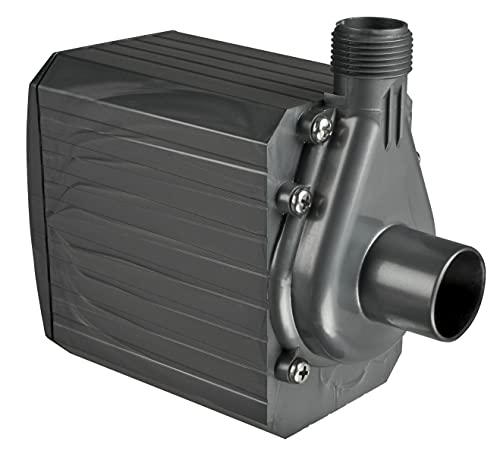
Pondmaster Pond-Mag 1800 GPH Magnetic Drive Pump
The reliable step-up, and the pump this review keeps pointing to. A Danner mag-drive rated 1800 GPH with a five-year limited warranty and a reputation for running years on a stocked pond. Buy it for flow at head, not the headline number.

Alpine PAL3100 3100 GPH Submersible Pump
A known-maker middle option at 3100 GPH with 21.5 ft of lift and a quiet 276W motor. More honest engineering than the mass-market units for a similar outlay, and a sensible pick when you want head-height headroom for a taller waterfall.

