OASE AquaMax Eco Premium Review + Verdict
By The Pond Review · Updated August 2026
Independent editorial review. We never accept payment for coverage, though we may earn a commission if you purchase through our links.
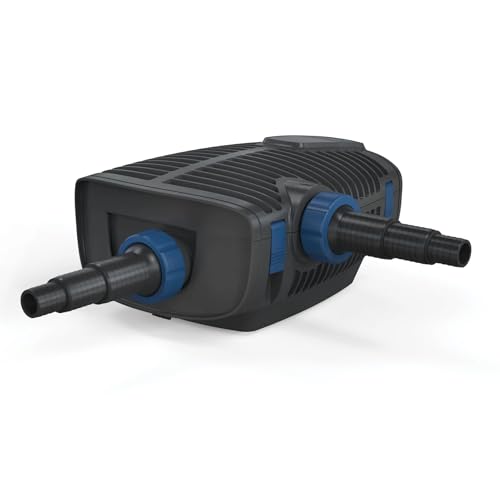
Verdict
Our read is that this pump's reliability is a coin with two well-worn sides, and which side you land on has a lot to do with how you feed and maintain it. On the Garden Pond Forum, owners describe Oase pumps as reliable background infrastructure, one calling his "Very reliable pump - had it for 4 years , just awsome" even after a hot spell nearly ran it dry without costing a fish. Others in the same community went through a mag-driven pump failure and switched brands, and there are threads about an AquaMax with a destroyed impeller and another with a delayed start on power-up, which is the tail we price into the score. The forum's collective read on pumps in general lines up with ours on two points: mag-drive units can run a decade when they're treated as serviceable machines with replaceable impellers, and the thrifty move on a tight budget is a variable-speed pump dialed down. Owners of the Danner Pond-Mag and the small TetraPond pump we list alongside it report similar longevity for far less money on smaller ponds. None of that shifts our verdict: the AquaMax earns its keep on efficiency for a stocked, year-round pond, and the way to be happy with it's to buy the warranty, keep the intake clean, and size it to your head height rather than the box.
Read full take ↓Similar pond pumps
The Oase AquaMax Eco Premium is the pump we reach for when efficiency is the priority, and it earns that spot honestly: it's a solids-handling pond pump built to move a lot of water on very few watts. Set against the discount pumps that flood the category, it draws less power for the same flow, and on a device that runs every hour of the season, that draw is where the real money is. That's the case for it. The case against is written by owners, whose reliability reports run a wide spread, from units still going strong after four years and more to Eco pumps that failed more than once or came apart at the impeller. So we rate it high on what it does and dock it for how consistently it keeps doing it.
Two numbers decide whether this pump is right for your pond, and neither is the one on the box. The first is flow at your actual head height, because the rated gallons per hour is measured with zero lift and drops sharply once the water has to climb a waterfall. The second is wattage, because a pump that runs 8,760 hours a year is judged by your electric bill as much as by your falls. Line those two up and the AquaMax is close to the most efficient way to run a stocked pond; miss them and you have bought an expensive pump that underdelivers at the top of your stream.
The short version
What works:
- It moves serious flow for its wattage, and on a pump that never switches off, watts are the cost that matters.
- Solids handling, so it passes fish waste and debris instead of choking on it, which suits a bottom-fed koi pond.
- Strong output for filters and waterfalls when it's sized to your head, with adjustable flow on the variable models.
- A mag-style drive with few wearing parts, and on many units a replaceable impeller rather than a whole-pump write-off.
What to watch:
- Reliability is inconsistent: many long quiet runs, but a real tail of early failures and repeat Eco-unit deaths.
- The price is high, several times a basic waterfall pump, so the efficiency has to earn that premium back over years.
- Rated flow is a zero-head figure; at a 6-ft waterfall you'll see roughly half of it.
- Debris can ruin an impeller if the intake is left to choke, so it wants a clean cage and occasional attention.
Which ponds and setups it fits
Buy the AquaMax Eco Premium if you run a stocked koi or goldfish pond, you keep the pump going year-round or most of the year, and your power rates make efficiency worth paying for up front. It's at its best feeding a bottom drain or skimmer on a mid-size to large pond, where the solids-handling design keeps it from clogging and the low draw shows up on your bill month after month.
Look elsewhere if your pond is small or seasonal. On a few-hundred-gallon water garden that runs only in summer, the efficiency payback never arrives, and a cheap magnetic-drive pump like the TetraPond Water Garden Pump does the job for a fraction of the outlay. If you want the longest track record over the last watt of savings, an old-school mag-drive such as the Pondmaster Pond-Mag is the more predictable buy. And if you're running a small fountain or a spitter, this is far more pump than you need.
The number that decides it: flow at your head, not the box
The gallons per hour printed on any pond pump, this one included, is measured at zero head, meaning the outlet sits level with the water and the pump lifts nothing. Real ponds don't work that way. The moment the water has to climb to the top of a waterfall, output falls, and it falls fast. A useful rule for planning: at about 6 feet of lift, a typical pump delivers roughly half its rated flow, and fittings, elbows, and long hose runs take more off the top. So a pump that reads impressive on the shelf can arrive at your falls moving half the water you counted on.
The fix is to size on flow at your head, not on the sticker. Measure the vertical rise from the pond surface to the top of your waterfall, add for the plumbing, and pick the pump that still clears the flow you want at that number. For a koi pond, size to turn the whole volume over about once an hour, and twice an hour if the stocking is heavy. This is the one calculation most disappointed buyers skipped, and it's why a strong pump can still feel weak at the top of the stream: the efficiency was real, the sizing wasn't.
Why watts matter more than the sticker
A pond pump is one of the few appliances in a home that runs continuously. Leave it on through the season and it logs around 8,760 hours a year. That single fact changes how you read the spec sheet. The number that reaches your wallet isn't the headline flow, it's the wattage, because you pay for every one of those hours.
Put real figures on it. Two pumps that move the same water, one at 60 watts and one at 120, differ by 60 watts around the clock. Over a year that gap is about 525 kilowatt-hours, which at typical residential rates lands somewhere near 60 to 90 dollars. Run both for three or four seasons and the efficient pump has handed back a meaningful slice of its own purchase price in power it didn't burn. This is the core of the AquaMax Eco Premium case: it's built to win on flow-per-watt, and on a device that never sleeps, flow-per-watt is what compounds. The premium over a cheap pump is real, and so is the payback, as long as the pump lives long enough to collect it.
The reliability spread, and how to buy around it
This is the asterisk on the score. Owner reports on this pump line don't cluster, they split. On one side are people running Oase pumps quietly for four years and more, treating them as background infrastructure. Abe, on the Garden Pond Forum, described his Oase as a "Very reliable pump - had it for 4 years , just awsome," even after a hot week dropped his water level and left it gurgling without losing a fish. On the other side are owners who went through a mag-driven pump failure and replaced the unit, plus threads about an AquaMax with a destroyed impeller and another with a delayed start on power-up. Same product family, very different luck.
You can't engineer luck out of a purchase, but you can tilt it. Buy from a seller that honors Oase's warranty and keep the paperwork, because a pump with a real failure tail is exactly the kind you want covered. Keep the intake cage clean so debris never gets a chance to score or jam the impeller, the failure mode that turns up most in the unhappy reports. And know that on many of these pumps the impeller is a replaceable part, so a rough start doesn't always mean a new pump. Treated as a serviceable machine rather than a sealed appliance, it fares better.
How it compares
- Versus a classic mag-drive like the Pondmaster Pond-Mag: the Pondmaster trades efficiency for a track record. Danner's mag pumps are simple and long-lived, with a ten-year track record, but they draw more power and don't handle solids, so they want a skimmer or pre-filter in front. Choose the AquaMax when the electric bill and solids handling matter most; choose the Pondmaster when a proven, repairable pump matters more than the last watt.
- Versus a cheap magnetic-drive pump like the TetraPond: on a small pond the TetraPond is the smarter money. It's efficient in its own right, cheap to buy, and it lasts five years and more from a single unit. It won't feed a big koi waterfall, but under 500 gallons the AquaMax is overkill you'll never recoup.
- Versus a variable-speed budget pump: the money-saving school of thought, voiced often on the forums, is to buy a low-cost variable-speed pump with extra capacity and dial it down. It's sound advice on a tight budget, and it captures part of the efficiency argument, though not the solids handling or the build the AquaMax brings.
Setting it up
Place the pump on a solid, level base at the deepest practical point, ideally fed through a skimmer or intake cage so the solids-handling design has something to protect it. Match the outlet to your hose size and avoid unnecessary elbows and long horizontal runs, each of which quietly steals flow. Never run it dry, which kills a pond pump quickly, and put everything electrical near the water on a GFCI-protected circuit. If yours is a variable-speed model, start higher than you think you need and dial the flow down until the waterfall looks right, which is also where you find the lowest wattage that still does the job. For sizing help and the head math, our other pond pump reviews walk through turnover and lift for a koi pond.
Give a new pump and filter a few weeks to settle before you judge the water, and check the intake cage on a schedule rather than waiting for the flow to drop. A pump that's fed clean water and matched to its head height is one you'll mostly forget about, which is what you pay the premium for.
Our call
The AquaMax Eco Premium is the efficiency benchmark in this category, and if you run a stocked pond around the clock, the low wattage is a real, recurring saving rather than a spec-sheet boast. We'd buy it for a mid-size to large koi pond where it feeds a skimmer and runs most of the year, and we'd size it on flow at our head height, not on the box.
What keeps it off the top of our scale is consistency. The efficiency isn't in question; the reliability is. Cover it with a warranty, keep the intake clean, and treat the impeller as a serviceable part, and most owners come out ahead. Skip it if your pond is small or seasonal, where the payback never lands and a cheaper pump makes more sense. It's a strong pump with a caveat you can buy around.
Our Ratings
Overall score
This is the axis that holds the score down. Plenty of owners run these pumps quietly for four years and more, but there is a real tail of early failures, repeat Eco-unit deaths, and destroyed impellers in the owner reports. The drive is simple and the impeller is often replaceable, which softens the blow, yet the spread is wide enough that we would not buy one without a warranty behind it.
On what it is built to do, this pump leads. It moves a lot of water for its wattage and handles solids without choking, so a stocked koi pond fed from the bottom stays clear without a pump that clogs weekly. It loses a little only because the rated flow is a zero-head number that halves at a real waterfall, so the performance you get depends entirely on sizing it to your head height.
Expensive up front, several times the cost of a basic waterfall pump. The efficiency pays that premium back in power it does not burn, which on a pump running 8,760 hours a year can total 60 to 90 dollars a year against a thirstier rival, so over a few seasons the math works. What keeps value in check is the reliability risk: the payback only lands if the pump lives long enough to collect it.
OASE AquaMax Eco Premium on Amazon.
The Evidence Behind Our Verdict
Our read is that this pump's reliability is a coin with two well-worn sides, and which side you land on has a lot to do with how you feed and maintain it. On the Garden Pond Forum, owners describe Oase pumps as reliable background infrastructure, one calling his "Very reliable pump - had it for 4 years , just awsome" even after a hot spell nearly ran it dry without costing a fish. Others in the same community went through a mag-driven pump failure and switched brands, and there are threads about an AquaMax with a destroyed impeller and another with a delayed start on power-up, which is the tail we price into the score.
The forum's collective read on pumps in general lines up with ours on two points: mag-drive units can run a decade when they're treated as serviceable machines with replaceable impellers, and the thrifty move on a tight budget is a variable-speed pump dialed down. Owners of the Danner Pond-Mag and the small TetraPond pump we list alongside it report similar longevity for far less money on smaller ponds. None of that shifts our verdict: the AquaMax earns its keep on efficiency for a stocked, year-round pond, and the way to be happy with it's to buy the warranty, keep the intake clean, and size it to your head height rather than the box.
Our rating above is our own editorial call. What follows is the field evidence we weighed to reach it: first-hand reports from pond owners on dedicated pond and koi forums, which we lean on more than manufacturer-influenced published reviews because unsponsored owners tend to be the more candid signal.
What Pond Forums Say
“Very reliable pump - had it for 4 years , just awsome: Was away for a hot week in summer, water level went down enough to stop the prime pump was trying to restart every 10 minutes , gurgling for few days my neighbour said, but not one fish lost, top it up and all is good.”Source →
“I have 2 Danner pumps and would recommend them; one has been going for 10 years now.”Source →
“Save money and go low cost variable speed pump. The jaboa pumps are reliable and energy efficient, go for a larger capacity and then dial it down.”Source →
“I just had to replace the first one I bought 6 or 7 years ago. Others I tried were lasting a year at most. I have a second that has been running for 5+ years.”Source →
“I have an Aquamax 8000 that appears to be in excellent condition (belonged to my dad), however, when its switched on theres a 4 second delay before the impeller turns and pumps, is this normal for this pump? If not, any suggestions? Apart from initial delay it works fine The impeller and chamber are clean.”Source →
“@trockbox I just went through that w/my magdriven pump recently and had to replace it. I got a Laguna and love it. Uses much less power than my old mag one. Had that mag for prolly 15yrs or more.”Source →
Frequently asked questions
Is the OASE AquaMax Eco Premium worth it?
Expensive up front, several times the cost of a basic waterfall pump. The efficiency pays that premium back in power it does not burn, which on a pump running 8,760 hours a year can total 60 to 90 dollars a year against a thirstier rival, so over a few seasons the math works. What keeps value in check is the reliability risk: the payback only lands if the pump lives long enough to collect it.
How reliable is the OASE AquaMax Eco Premium?
This is the axis that holds the score down. Plenty of owners run these pumps quietly for four years and more, but there is a real tail of early failures, repeat Eco-unit deaths, and destroyed impellers in the owner reports. The drive is simple and the impeller is often replaceable, which softens the blow, yet the spread is wide enough that we would not buy one without a warranty behind it.
How well does the OASE AquaMax Eco Premium perform?
On what it is built to do, this pump leads. It moves a lot of water for its wattage and handles solids without choking, so a stocked koi pond fed from the bottom stays clear without a pump that clogs weekly. It loses a little only because the rated flow is a zero-head number that halves at a real waterfall, so the performance you get depends entirely on sizing it to your head height.
What do real owners say about the OASE AquaMax Eco Premium?
Our read is that this pump's reliability is a coin with two well-worn sides, and which side you land on has a lot to do with how you feed and maintain it. On the Garden Pond Forum, owners describe Oase pumps as reliable background infrastructure, one calling his "Very reliable pump - had it for 4 years , just awsome" even after a hot spell nearly ran it dry without costing a fish. Others in the same community went through a mag-driven pump failure and switched brands, and there are threads about an AquaMax with a destroyed impeller and another with a delayed start on power-up, which is the tail we price into the score.
Options Worth Checking Out
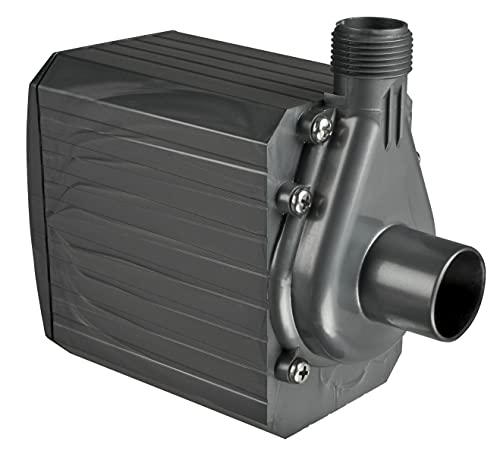
Danner Pondmaster Pond-Mag 1800 GPH
The mag-drive to choose when a long track record matters more than the last watt. Danner runs simple electromagnets with a replaceable impeller, with a decade of service behind them. It handles no solids, so feed it through a skimmer or pre-filter.

Jebao PP-377 Submersible Pond Pump
The budget pick for a small fountain, spitter, or compact feature, not a koi waterfall. At around 105 GPH it's a sliver of the AquaMax, but it costs a sliver too, and Jebao small pumps have a fair record for the money. Keep the intake screen clear.

TetraPond Water Garden Pump (50-500 gal)
The efficient alternative for ponds under 500 gallons. This magnetic-drive TetraPond pump draws little power for a waterfall or filter feed, and lasts five years from one unit. It won't drive a big koi waterfall, but it's cheap to run.

