hygger 24V DC Pond Pump Review
By The Pond Review · Updated September 2026
Independent editorial review. We never accept payment for coverage, though we may earn a commission if you purchase through our links.

Verdict
Owner sentiment on the pond forums is split, and the split tracks with what a DC pump is asked to do and whether its controller has been protected and held up. The keepers running one on a low-head return are content: one describes housing the control unit in a "weather/water resistant plastic box" with only the pump in the water, feeding a bog and running most of the day at low flow, and another wants "a variable speed pump that I could run at 25% when i only need circulation, then crank up to 100% when we want to enjoy the waterfall." The skeptics are just as clear, and on their own terms right. One keeper who ran aquarium-grade DC power heads in reef tanks calls them "complete junk, last a few months at best then crap out" and now buys a pricier pump he trusts. A retired garden-center water-garden manager put the economics behind that, asking whether it is cheaper to buy "a $140 pump that must be replaced twice per season, or a $250 pump that runs 10 to 15 years." Another notes the pond market barely serves this niche, since "most of the brands out there cater to aquarium owners" and the ones built for ponds "had dubious user reviews." A fourth keeps plain AC pumps outright, pointing out his Danner and a Harbor Freight spare both move 4,000 GPH without variable flow, which "imo, it's not necessary." Our read lines up with the content owners on the arithmetic and with the skeptics on the risk: bought as an efficient, high-flow, low-head return pump with its controller kept dry and sourceable, the hygger is a lot of pump for little money; left exposed or pushed up a tall waterfall, it will disappoint, and the doubters have earned their caution.
Read full take ↓Similar pond pumps
The hygger 24V DC pump is an aquarium sump-return pump pressed into pond service, and that is not the knock it sounds like. Rated around 2,650 GPH with its own speed controller, it is one of the cheapest ways to move a lot of water on very few watts, which is what matters most on a pump that runs twenty-four hours a day. It is the step up in flow from the small DC pumps like the Jebao DCP-4000 or a POPOSOAP: same low-voltage efficiency and feed-time flow control, more gallons per hour. On a low-head return line feeding a filter or a bog, its running cost sits far below an AC mag-drive of similar useful output.
The catch comes straight from its origin. This was built for an indoor aquarium, so the controller and transformer are not weather-rated, and if you leave that box out in the rain it will not last a season. DC pumps in general carry a mixed reputation among pond keepers, some of whom have watched aquarium-grade units quit in months and swore off the whole class. And like every open-impeller DC pump, its delivered flow falls off a cliff above roughly ten feet of head. Buy it for a big, low-head return where you want maximum efficiency and adjustable flow, keep its controller bone dry, and it earns its place. Ask it to climb a tall waterfall or survive unprotected outdoors, and it will disappoint.
The short version
What works:
- High flow for a DC pump, around 2,650 GPH, at a fraction of the watts an AC pump would draw for the same output on a low-head line.
- The controller adjusts flow on the fly, including a slower feed-time setting, with no valve to throttle.
- 24V low voltage is inherently safer around water than a 120V pump, and the DC sine-wave motor runs cool and quiet.
- Priced like the aquarium pump it is, well under a pond-branded pump of the same flow.
What to watch:
- The controller and transformer are not weather-rated. This is an indoor aquarium part, and it must be housed dry or it fails.
- Delivered flow drops off hard above about 10 feet of head. The 2,650 GPH is a near-zero-head number.
- Open impeller: it is a clean-water return pump, not a solids handler. Feed it leaves and sludge and it clogs.
- DC pumps have a mixed reliability reputation, and a dead proprietary controller is not something you replace at a local store.
Who it is for, and who should skip it
Buy the hygger if you run a pump around the clock on a low-head return line, moving filtered or bog-cleaned water back into a mid-size or larger pond, and you want the most flow per watt you can get plus the ability to slow the current at feeding time. As a high-flow DC return pump on a line under roughly ten feet of head, it is hard to beat on running cost, and the controller is a genuine convenience.
Skip it if your pump has to lift water high to a waterfall, where the DC flow falloff eats the output you paid for, or if it will sit anywhere it can pull in debris and clog. Skip it too if you cannot give the controller a dry, protected home, or if you want a pump you can replace at any hardware store the day it quits. For keepers who value a locally sourced, weatherproof AC mag-drive over efficiency, that is a fair call, and the pump's aquarium roots make the point sharper here than on a pond-branded DC pump.
The number that matters: flow per watt, not peak GPH
The listing leads with the 2,650 GPH peak, because it is a big number, but on a 24/7 pump the figure that sets your electric bill is flow per watt at your actual head, not the headline flow at zero head. The arithmetic is simple: take the watts the pump draws, multiply by 8,760 hours in a year, divide by 1,000 for kilowatt-hours, and multiply by your power rate. That is what it costs to run for a year, and it is the number to compare between pumps, because a DC pump moving your required flow on a third of the watts of an AC pump is the cheaper machine even when it costs more up front.
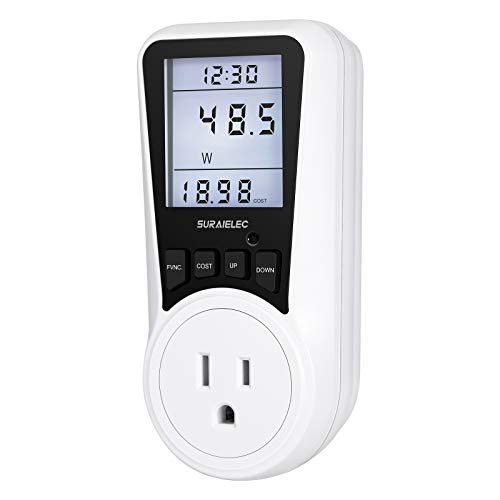
There is an honest complication the forums flag repeatedly. The wattage printed on a DC pump is the pump end alone, and to hit its rated flow the power runs through a transformer and controller that draw their own current, which almost no seller publishes. As one keeper put it, you should "forget the pumps power usage and see what the transformer is using," and measure at the wall if you can. Even with that hidden draw counted, the hygger's total consumption stays well below an AC mag-drive's for the same useful flow, which is the entire reason to run one.
Where the delivered flow goes
The open impeller that makes this pump so efficient has a hard ceiling on head. This whole class of DC pump moves water very efficiently while total dynamic head stays under about ten feet, and above that the delivered flow drops off sharply. So the 2,650 GPH is a best-case, near-zero-head figure. Route the water through a filter, up some lift, and through a few elbows, and real delivery is meaningfully lower, then past roughly ten feet of head it collapses.
Before trusting any pump's headline number, add up your total dynamic head: the static lift from pond surface to outlet plus the friction losses from pipe, fittings, and whatever it feeds. If your waterfall sits high above the water, this is the wrong tool and a pump engineered to hold flow against head will serve you better up top. Keep the lift low and the hygger delivers close to what you expect while barely moving your power meter.
An aquarium pump on pond duty: protect the controller
The single most important thing to understand about this pump is that it was designed for an indoor aquarium, and the pond keepers who run DC pumps successfully all do the same thing: they house the controller and transformer in a dry, weather-resistant box. One owner's setup is the template, with the control unit "housed in a weather/water resistant plastic box" and only the pump itself in the water. Leave that electronics box exposed to rain, snow, or splash and you have bought a one-season pump.
The reliability picture is mixed, and it is worth hearing the skeptics plainly. Keepers who have run aquarium-grade DC pumps in reef tanks are often blunt about them: one reports buying several reef power heads that were "complete junk, last a few months at best then crap out," and now prefers a pricier pump he knows will last. A retired water-garden manager at a garden center framed the economics of the cheap end just as bluntly, asking what is more economical, "a $140 pump that must be replaced twice per season, or a $250 pump that runs 10 to 15 years before needing a replacement impeller (about $45)?" That reputation is real, and it is why some keepers stick with a dumb AC pump. Our read: the wet end of these pumps is simple and rarely the problem, the controller is the part that fails, and your job is to keep it dry, keep it out of the sun, and favor a unit whose replacement controller you can order. Treat the brain as the consumable and the risk becomes manageable rather than a gamble.
Wiring it safely
The 24V low-voltage design is safer around water than a 120V pump, since a low-voltage fault carries far less danger to fish or people, and that is a real point in its favor. It does not retire the basics, though, because the transformer still plugs into household current. Put it on a GFCI-protected outlet, which the National Electrical Code requires for outdoor and near-water receptacles, and mount the transformer and controller well above any standing water where they cannot be splashed or submerged. Give the cord a drip loop so water runs off and falls away rather than tracking down into the connection. Low voltage at the pump does not mean no voltage at the wall.
How it compares
If the hygger is more flow than your return needs, or you want a different set of tradeoffs, our other pond pump reviews and our best energy-efficient pond pump guide cover the field. Here is how the closest options stack up.
- Versus the Jebao DCP-4000: the smaller, cheaper DC sibling, same idea with less flow. If the hygger moves more water than your return needs, the DCP-4000 does the low-head efficient-return job for less money and slightly fewer watts. Step up to the hygger only when you genuinely need the higher GPH.
- Versus a POPOSOAP 1600 GPH DC pump: the budget DC option for a smaller pond. Same low-voltage efficiency and speed control at a lower flow and price. If your pond is modest, the extra flow of the hygger is watts you do not need.
- Versus a Pondmaster (Danner) AC mag-drive: the pump the skeptics keep. It draws more power and offers no flow control, but there is no external controller to fail, it shrugs off weather, and Danner pumps are widely available and rebuildable. On a low-head return the efficiency case favors the hygger, as long as you can protect its controller; if you cannot, the AC pump is the calmer choice.
Our verdict
On the job it was built for, a high-flow, efficient, adjustable return pump on a line under about ten feet of head, the hygger is a lot of pump for the money and the running-cost math sits firmly on its side. Size it to the flow you need at your real head, run it behind filtration, and it moves serious water while barely touching your power bill, with a controller that lets you back the flow off at feeding time.
What holds it short of a clean recommendation is its aquarium heritage. The controller is not weather-rated and the DC category's reliability reputation is uneven, so this is a pump you must protect rather than plant-and-forget, and one to buy where you can source a replacement controller. Give the electronics a dry home, keep the head low, and the hygger delivers pond-scale flow at aquarium-scale efficiency. Leave it exposed or ask it to climb a waterfall, and it will let you down.
Our Ratings
Overall score
The weak spot, and the score is honest about it. The wet end is simple, but this is an aquarium part: the controller and transformer are not weather-rated and must be housed dry, and the DC category carries a mixed reliability reputation, with keepers reporting aquarium-grade units that quit in months. Protect the controller and buy where you can source a replacement and the risk is manageable, but it is real and it is higher than on a weatherproof AC pump.
As a high-flow, efficient, adjustable return pump on a low-head line it performs strongly, moving around 2,650 GPH on a fraction of an AC pump's watts, with a useful feed-time flow control. It loses points for the DC head falloff above about 10 feet, where delivered flow collapses, and because the open impeller limits it to clean-water return duty rather than pulling solids.
The running-cost case is strong: over a year at 24/7, its draw is a fraction of a comparable AC mag-drive's, and it is priced like the aquarium pump it is, well under a pond-branded pump of the same flow. Docked because the hidden transformer draw muddies the on-paper efficiency, and because a controller failure with no local replacement can turn a cheap pump into a total loss.
hygger 24V DC Pond Pump on Amazon.
The Evidence Behind Our Verdict
Owner sentiment on the pond forums is split, and the split tracks with what a DC pump is asked to do and whether its controller has been protected and held up. " The skeptics are just as clear, and on their own terms right. One keeper who ran aquarium-grade DC power heads in reef tanks calls them "complete junk, last a few months at best then crap out" and now buys a pricier pump he trusts.
" Our read lines up with the content owners on the arithmetic and with the skeptics on the risk: bought as an efficient, high-flow, low-head return pump with its controller kept dry and sourceable, the hygger is a lot of pump for little money; left exposed or pushed up a tall waterfall, it will disappoint, and the doubters have earned their caution.
Our rating above is our own editorial call. What follows is the field evidence we weighed to reach it: first-hand reports from pond owners on dedicated pond and koi forums, which we lean on more than manufacturer-influenced published reviews because unsponsored owners tend to be the more candid signal.
What Pond Forums Say
“The control unit is housed in a weather/water resistant plastic box and the pump is in the pond pulling water and debris from an undergravel suction grid and then pumped into an adjacent bog filter that runs directly back into the pond.”Source →
“I’d love to have a variable speed pump that I could run at 25% when i only need circulation, then crank up to 100% when we want to enjoy the waterfall.”Source →
“Seems like most of the brands out there cater to aquarium owners. Have had a hard time finding many that are built for ponds (Aquascape has a few, I guess). And the ones that I could find had dubious user reviews.”Source →
“for comparison’s sake, CW, my Danner uses 230w and pumps 4k gph and costs $239 on Amazon. As a spare pump, I also have one from Harbor Freight; 270w , 4K gph, cost = $134. Now, none are variable flow but imo, it’s not necessary.”Source →
“I have bought 3-4 power heads for use in my reef tanks and they are complete junk, last a few months at best then crap out. So to me I prefer to do as you suggested and buy a more expensive pump that I know lasts.”Source →
“What's more economical, a $140 pump that must be replaced twice per season, or a $250 pump that runs 10 to 15 years before needing a replacement impeller (about $45)?”Source →
Frequently asked questions
Is the hygger 24V DC Pond Pump worth it?
The running-cost case is strong: over a year at 24/7, its draw is a fraction of a comparable AC mag-drive's, and it is priced like the aquarium pump it is, well under a pond-branded pump of the same flow. Docked because the hidden transformer draw muddies the on-paper efficiency, and because a controller failure with no local replacement can turn a cheap pump into a total loss.
How reliable is the hygger 24V DC Pond Pump?
The weak spot, and the score is honest about it. The wet end is simple, but this is an aquarium part: the controller and transformer are not weather-rated and must be housed dry, and the DC category carries a mixed reliability reputation, with keepers reporting aquarium-grade units that quit in months. Protect the controller and buy where you can source a replacement and the risk is manageable, but it is real and it is higher than on a weatherproof AC pump.
How well does the hygger 24V DC Pond Pump perform?
As a high-flow, efficient, adjustable return pump on a low-head line it performs strongly, moving around 2,650 GPH on a fraction of an AC pump's watts, with a useful feed-time flow control. It loses points for the DC head falloff above about 10 feet, where delivered flow collapses, and because the open impeller limits it to clean-water return duty rather than pulling solids.
What do real owners say about the hygger 24V DC Pond Pump?
Owner sentiment on the pond forums is split, and the split tracks with what a DC pump is asked to do and whether its controller has been protected and held up. " The skeptics are just as clear, and on their own terms right. One keeper who ran aquarium-grade DC power heads in reef tanks calls them "complete junk, last a few months at best then crap out" and now buys a pricier pump he trusts.
Options Worth Checking Out

Jebao DCP-4000 DC Sine Wave Pump
The smaller, cheaper DC sibling with the same low-voltage efficiency and speed controller, at lower flow. If the hygger moves more water than your return line needs, the DCP-4000 does the low-head efficient-return job for less money and a few fewer watts.

POPOSOAP 1600 GPH 24V DC Pond Pump
The budget DC option for a small to mid pond. Same 24V low-voltage efficiency and controllable speed at lower flow and a lower price. If your pond is modest, the hygger’s extra flow is just watts you do not need, and this covers it on fewer.
Pondmaster Pond-Mag AC Mag-Drive Pump
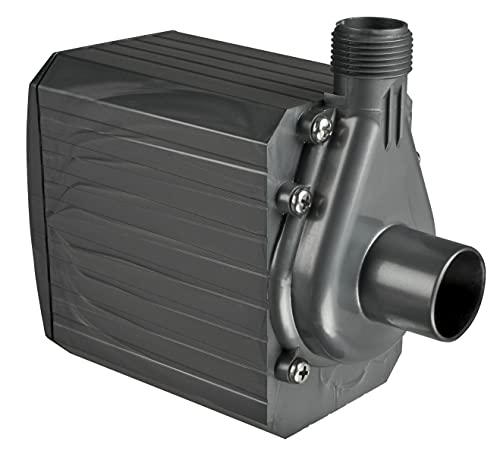
The pump the skeptics keep. A Danner AC mag-drive draws more power and gives no flow control, but there is no external controller to fail, it shrugs off weather, and it is widely available and rebuildable. The trade for keepers who value replaceability over efficiency.