The Best Pond Vacuum
By The Pond Review · Updated August 2026
Independent editorial guide. We never accept payment for coverage, though we may earn a commission if you purchase through our links.
Quick Take
Buy a pond vacuum to pull the muck off the bottom once or twice a year, and buy nothing more into it than that. It isn't a filter, it doesn't run all season, and it won't clear green water. For a real muck load the OASE PondoVac 4 is our default, because it's dual-chamber: it discharges continuously, so you keep vacuuming instead of stopping every couple of minutes to drain a tank. The Pond Guy ClearVac is the same continuous idea for less money, and the OASE PondoVac Classic and Matala Pond Vacuum II are the budget picks for a small pond with a thin layer of muck.
Before you spend, get the one number right that the box hides. Suction is set by how high you stand the unit above the water and how deep you're working, not by the wattage on the label, and every pond vacuum fights you in shallow water and on a stony bottom. Match the vacuum to your pond, net out the leaves and sticks first, and skip the vacuum entirely if your pond stays clean on its own. A shop-vac isn't a free substitute if using it means draining the pond or dragging a hard nozzle across a soft liner.
We have matched four vacuums to real ponds below, from the continuous-discharge unit for heavy muck to the budget picks for a light annual clean. See picks ↓

A pond vacuum does one job: it lifts the layer of decomposing sludge off the bottom of the pond. That's muck, the black organic goo that builds up from fish waste, dead leaves, and spent plant matter, and left alone it feeds algae and pulls oxygen out of the water. A vacuum is how you get it out without draining the whole pond and starting the water balance over. That's the entire use case, and reading it correctly is most of buying the right one.
What a vacuum isn't is a filter. It doesn't run all season, it doesn't process ammonia, and it does nothing about green water, which is suspended algae a UV clarifier clears, not a vacuum. So this is a once- or twice-a-year tool, a spring and fall deep clean, and the money question isn't how powerful it's but whether it can keep working long enough to finish the job in one session.
Our take: a pond vacuum is for muck, not filtration
We treat a pond vacuum as a seasonal cleaning tool and nothing else, and that reframing kills most buying mistakes before they happen. The muck on the bottom of a pond is decomposed organic waste, and a vacuum is the way to remove it without a full drain-down that would cost you the water chemistry and the bacteria colony you spent a season building. Use it in spring to clear the winter's fallen leaves, and again in fall before the pond goes quiet. That's the rhythm most keepers settle into once the novelty wears off.
The mistake is expecting a vacuum to do a filter's work. It won't keep the water clear day to day, it won't touch an ammonia spike, and it won't fix green water, which is a UV clarifier's job because the algae is suspended in the water column, not sitting on the floor. A vacuum only reaches what has settled. Buy it for the deep clean, keep the filter and the UV for the season-long work, and each tool does the thing it's built for. Plenty of ponds with a good skimmer and net barely need a vacuum at all, and if yours stays clean, that's a purchase you can skip.
The decision that matters: dual-chamber or single-chamber
There's only one choice that changes how a pond vacuum feels to use, and it's dual-chamber versus single-chamber. A single-chamber vacuum works like a wet-dry vac: it fills its tank, shuts off, you wait while it drains, and then you start again. On a light muck layer that stop-start is a minor annoyance. On a real season of sludge it turns a clean into a slog, because you spend as much time watching a tank drain as you do vacuuming.
A dual-chamber vacuum solves exactly that. It has two tanks and a pair of float switches, so when one side fills it toggles to the other and empties the first while you keep working. The discharge is effectively continuous, and you never stop. That's why the OASE PondoVac 4 sits at the top of this list: on a heavy bottom it finishes in one unbroken pass where a single-chamber unit would have you stopping every couple of minutes. If your muck load is light, the cheaper single-chamber OASE PondoVac Classic is enough and you won't feel the difference much. If you have real muck, the dual-chamber unit is worth the extra money, and it's the one place on this page we'd spend up.
What sets the suction
The number on the box is wattage, and wattage is close to the wrong thing to shop on. What determines how well a pond vacuum lifts muck is geometry: how high the unit sits above the water surface, and how deep you're trying to reach. These vacuums work on a head-height principle: the suction has to overcome the total lift, which is how deep you reach below the surface plus how far the unit sits above it. The more total lift, the weaker the pull at the nozzle, so both a deep pond and a high-standing machine cost you suction. Two vacuums with the same motor will perform differently on two different ponds for that reason alone.
This is why every vacuum struggles in shallow water, where the head keeps breaking the surface and pulling air instead of muck, and why deep ponds ask more of the machine than the wattage suggests. Match the vacuum to your pond's depth and layout rather than to the biggest number on the shelf. And whatever you buy, net out the leaves, sticks, and pine needles first: the hose clogs on the big stuff, not the fine muck, and a vacuum that keeps jamming on debris you could have scooped out in five minutes isn't a vacuum problem, it's a prep problem.
Where a shop-vac stops being a shortcut
Plenty of people will tell you a shop-vac does the same job for free, and on a small preformed pond with a thin layer of silt they aren't entirely wrong. A cheap wet-dry vac with a big tank and modest suction will pull light gunk off a smooth bottom, and if you already own one it's a fair thing to try before you spend. We'll say that much for it.
Where we part company with that advice is the two places it quietly costs you. A shop-vac has one tank, so on any real muck load you're draining it constantly, and every tank you empty is pond water you're removing, so a long clean turns into an unplanned partial drain-down that leaves you topping the pond back up and rebalancing it. And a shop-vac's hard, narrow nozzle is made for a garage floor, not a flexible pond liner; dragged across a soft liner over a stony bottom it's exactly the tool to nick or puncture it. A dedicated pond vacuum has a soft wide head and controllable suction for that reason. If the shop-vac route means draining the pond or risking the liner, it isn't the free option it looks like.
Rocks, gravel, and shallow water
The single biggest predictor of whether a pond vacuum will satisfy you is the bottom of your pond. A smooth liner or a concrete pool is close to ideal, because you can keep the head flat and slide it along and the muck pulls straight into the hose. A gravel or rock bottom is the opposite: the vacuum can't get under the stones where the muck settles, the head catches on the rock, and you end up moving gravel around instead of removing sludge. Keepers with rocked bottoms consistently find the vacuum a fight, and some conclude it barely works for them at all.
So set expectations by your build before you buy. If your pond is rocked or heavily gravelled, a vacuum will only reach the muck sitting proud of the stones, and you may do better netting and stirring, or accepting that some muck stays put and lets the bottom-dwelling microbes deal with it. If your bottom is smooth and you can work in reasonable depth, a vacuum is transformative, and owners describe pulling out an impressive volume of sludge in a single session. Know which pond you have, and buy, or skip, accordingly.
How often you'll use it
This is a low-mileage tool. Most ponds want a vacuum twice a year, spring and fall, and a well-skimmered pond can go a full year between cleans. That matters for how much to spend: a machine that lives in the shed eleven months of the year doesn't need to be the most expensive thing you own, so the case for the PondoVac 4 rests entirely on whether your muck load justifies the continuous discharge, not on frequency of use.
It also shapes the routine. Net the large debris first, work in sections keeping the head close to the bottom, and expect to lose some water to the process no matter which unit you run, so plan a partial top-up and a check of the water afterward. The keepers who are happy with their vacuum are the ones who treat it as an occasional deep clean and let the filter, skimmer, and plants carry the season. The ones who are frustrated bought it expecting a filter, or bought it for a rocked pond it was never going to clear.
Matching the vacuum to your pond
Here's how we'd choose among the four. If you have a real muck load and a mostly smooth bottom, buy the OASE PondoVac 4. The dual-chamber continuous discharge is the feature that makes a heavy clean tolerable, and it's the unit we'd put on a stocked backyard pond that builds a genuine layer of sludge over the year. It's the most expensive pick here, and on a heavy bottom it earns it.
If you want that same continuous style for less, the Pond Guy ClearVac is the value middle: a dual-chamber vacuum at a lower price than the OASE, and plenty for a normal spring and fall clean. For a small pond with only a thin layer of muck, the single-chamber OASE PondoVac Classic saves money and you'll barely notice the stop-drain cycle on a light load, and the Matala Pond Vacuum II is the lowest-cost dedicated pond vacuum here for a modest pond with a smooth bottom. Buy the continuous unit if your muck is real, buy a budget single-chamber if it's light, and match all of it to a bottom you can reach.
The picks
Products we recommend for this guide.

OASE PondoVac 4 Pond & Muck Vacuum
Our top pick if you have real muck. A dual-chamber vacuum that discharges continuously, so it never stops to drain and you keep vacuuming. The most expensive unit here, but on a heavy bottom it clears in one pass where single-chamber vacuums stall.

The Pond Guy ClearVac Pond Vacuum
The value middle pick: the same continuous idea as the PondoVac 4 for less. It discharges as it fills, so you clean without the fill-stop-drain cycle, and it handles a normal spring and fall deep clean on a stocked pond without a full drain-down.
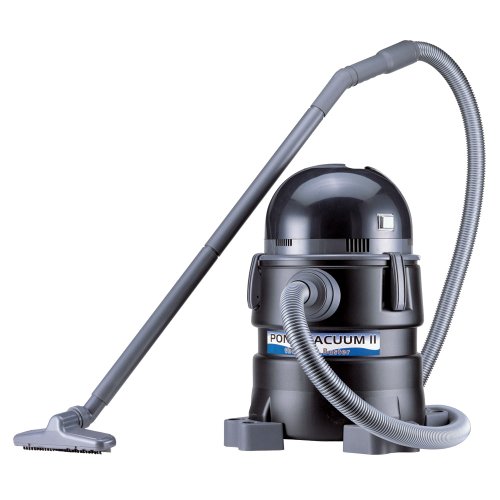
Matala Pond Vacuum II Muck Vac
The lowest-cost dedicated pond vacuum here, for a modest pond with a smooth bottom and a thin muck layer. It doesn't discharge continuously the way the PondoVac 4 does, so plan on pauses, and expect it to fight you on a rocked bottom.
What owners say
Real owner reports from the threads and editorial sources we drew on for this guide.
“I only need to use the pond vacuum in the Spring and in the Fall. Sometimes I get ambitious and will use it in the Summer if I notice a lot of gunk on the bottom of the pond. I have a 1,000 gallon pond which no longer has stones on the bottom, so vacuuming is very easy. I have used the pond vacuum when there were stones (9 years), but it is a little bit of a pain, even though it worked fine.”
“Oase PondVac 4 is the latest system, which has one great improvement over the previous generations of Oase PondVacs in that it's continual operation. You don't have to turn it off to drain it, it drains itself and continues running.”
“The oasis pond vac actions just like a wet dry vac except it has two chambers in the body with two float switches. So when the one side fills up it toggles to the other side. At that point the first side is draining as the second side fills. Back and forth it goes. You could use a wet dry vac but would have to stop and drain it constantly.”
“I had the same experience with my Oase 5! I cleaned 2 ponds (9200gl) and I never had to stop to empty the debris.”
“Before you use the vacuum you'll have to clean the junk out otherwise the vacuum will clog up very quickly. If you have rocks on the bottom then forget the vacuum it just won't work, rocks may look nice but they limit the amount of cleaning that you can do there is no way that you can use a net.”
“There is nothing wrong with the vacuum itself. It works very well. I just can't bring myself to vacuum up the ecosystem inhabiting the bottom of my pond. I'll probably keep the vacuum for emergencies.”