OASE PondoVac 4 Review + Verdict
By The Pond Review · Updated August 2026
Independent editorial review. We never accept payment for coverage, though we may earn a commission if you purchase through our links.

Verdict
Owner sentiment on the pond forums tracks almost perfectly with how the vacuum is used and set up. Owners who put it on a leaf-choked pond after a hard winter describe it doing exactly what it promises, pulling rocks, dirt, leaves and sludge and draining to the lawn, and one keeper who raised the unit to help the discharge found "drainage was a breeze." The recurring caution is suction that drops away, and experienced owners point at the same culprit we do: a slider on the wand or a stuck flapper that breaks the seal, not a dead motor, which is why so many "faulty" units are a one-minute fix. The vacuum-versus-no-vacuum debate runs underneath all of it, with some keepers deciding the bottom is better left to the microbes than cleaned, and others valuing that a pond vacuum discharges pond water as it works so a clean-out doubles as a water change. Our own read is that the tool is excellent and narrow: match it to a smooth-bottomed pond that needs it, set it low and close to the water, and know to check the flapper before you panic, and the complaints mostly belong to the ponds and setups it was never good at.
Read full take ↓Similar pond vacuums
The OASE PondoVac 4 is the pond vacuum we reach for by default, and the reason is its dual chamber. Two internal tanks alternate: one fills and vacuums while the other drains, so it discharges continuously and you keep sucking muck instead of stopping every thirty seconds to empty. Single-chamber vacuums, and the shop-vac rigs people improvise, make you do that stop-start dance all afternoon. The PondoVac 4 doesn't, and on a leaf-choked spring pond that difference is what you're paying for.
It's also a powerful tool, which is where the limits start. The discharge flapper that lets one chamber drain can stick, and when it does your suction drops to a fraction of what you paid for until you clear it. It struggles in shallow water, where it pulls air instead of sludge. Pine needles and large debris jam the wand. It wants a smooth-bottomed pond it can glide across, not a gravel-and-rock stream full of things to snag. None of that makes it a bad tool. It makes it a tool you match to the pond and the season, and set up correctly, rather than one you point at anything and expect to win.
The short version
What works:
- The dual-chamber design discharges continuously, so you vacuum in one long pass instead of the empty-and-restart cycle of single-chamber vacs.
- Real suction. Owners pull rocks, leaves, dirt and sludge out of a neglected pond without babying it.
- Drains to waste on its own through the discharge hose, so a spring clean-out doubles as a partial water change.
- Simple to break down and rinse when you're done, with nothing electronic beyond the motor to fail.
What to watch:
- The discharge flapper can stick, and a stuck flapper is the number-one reason a PondoVac suddenly "loses suction."
- It's poor in shallow water and around gravel, rock and pine needles, where it either pulls air or clogs.
- Suction depends far more on placement than on the wattage on the box. Set it wrong and a strong motor still barely pulls.
- It's expensive, and for a lot of small ponds a shop vac or a cheaper single-chamber vac does enough.
Who it's for, and who should skip it
Buy the PondoVac 4 if you have a mid-to-large pond with a reasonably smooth liner bottom, you clean it seriously once or twice a year, and you're tired of a shop vac filling in ninety seconds and needing two people to keep going. This is the vacuum that turns a spring sludge-out from a full-day, two-person ordeal into a job you can finish solo without cursing. It's the category default for a reason.
Skip it if your pond is small and lightly stocked, where the price is hard to justify against a wet vac you already own, or a floating skimmer that keeps debris out in the first place. Skip it if your bottom is heavy gravel or a rock-lined stream, where the wand snags and the suction fights the substrate rather than the muck. And think twice if you're the kind of pond keeper who has decided, sensibly, that the bottom should be left alone for the microbes to work. A vacuum is a tool for the ponds that need it, not a habit every pond has to acquire.
The spec the wattage line hopes you skip
Marketing for pond vacuums leans on motor wattage, because a bigger number reads like more suction. At the pond it's close to the wrong metric. What governs how hard a PondoVac pulls is geometry: the height of the unit above the water surface and the working depth you're drawing from. The pump has to lift a full chamber of water and sludge up to the discharge, and every foot of extra lift is suction you no longer feel at the wand.
So the arithmetic that matters is the one you do with the vacuum's feet, not its spec sheet. Set the unit as low as the ground and hose run allow, and keep it close to the pond so the water doesn't have far to climb. A keeper on the pond forums did exactly this and it read as a triumph rather than a trick: he raised the vac to help the discharge hose drain to his lawn and the drainage "was a breeze," because he was helping the outflow, not fighting the intake lift. Put the unit high on a deck to make the hose reach and you have quietly traded away a chunk of the suction you paid for. The wattage didn't change. The physics did.
Why the suction "disappears," and the flapper to blame
The most common PondoVac complaint isn't weak suction out of the box, it's suction that was strong and then dropped to almost nothing. Nine times in ten that isn't a dead motor. It's the discharge mechanism. The dual-chamber trick depends on a flapper valve sealing one tank while it drains and the other vacuums, and when that flapper sticks or a slider on the wand sits open, the seal breaks and the pull collapses. The fix is mechanical and quick once you know to look, which is exactly why so many owners think their unit is faulty when it's doing something you can clear in a minute.
This is also where the "shallow water" limit comes from. In a few inches of water the wand keeps breaking the surface and gulping air, which does the same thing a stuck flapper does: it kills the seal and the suction with it. Keep the head submerged in enough water to stay sealed and it pulls; skate it across a shallow shelf and it sputters. Match that to a pond with a smooth bottom and you have the conditions this vacuum was built for. Aim it at a shallow, pine-needle-strewn, rock-bottomed pond and you have handed it every one of its weaknesses at once.
Living with it, and the self-draining discharge
The best thing about the continuous discharge isn't just speed, it's that the water going to waste is pond water you were going to change anyway. Set the outflow onto a flower bed or lawn and a clean-out becomes a partial water change and an irrigation run at the same time, no buckets. Longtime vacuum owners describe this as the real payoff over a shop vac: the muck leaves and the water leaves with it, in one pass, without a second person standing by to empty a tank.
Cleanup afterward is honest work but not hard. Break the wand and hoses down, rinse the chambers, and the unit stores like any other. There's little to go wrong over the years beyond the motor and the seals, and the seals are the part to keep an eye on, since a tired flapper is what turns a strong vacuum into a weak one. Treat the flapper and the placement as the two things that decide your results and the PondoVac 4 mostly gets out of its own way.
How the alternatives stack up
- The Pond Guy ClearVac: the closest real alternative, another dual-chamber vacuum at a lower price. If you want the continuous-discharge behavior without paying OASE money, this is the cross-shop, and for many ponds it does the same job. The PondoVac 4 edges it on raw suction and refinement, but the gap is smaller than the price gap.
- The Matala Muck Vac: a powered vacuum in its own right: a 1.5 HP motor with automatic fill-and-drain cycles that empty the tank as you work, which makes it a real rival to the PondoVac 4 at a lower price. The tradeoffs are a shorter suction reach and a rougher build than the OASE. The value pick when you want powered suction for less.
- The OASE PondoVac Classic: the cheaper single-chamber OASE. Same brand, same build quality, but one tank instead of two, which means it stops to drain and you do the empty-and-restart cycle the 4 was designed to end. Fine for a small pond and a patient owner; frustrating on a big spring clean-out.
Setting it up so it pulls hard
Place the unit low and close to the water, not up on the deck, so the discharge lift is short and the intake keeps its suction. Run the outflow hose to a bed or lawn that can take the pond water and let the clean-out double as a water change. Keep the wand head fully submerged rather than skimming a shallow shelf, and if the pull suddenly drops, check the discharge flapper and the wand slider before you blame the motor. If your pond is small and lightly loaded, a floating skimmer that keeps debris out year-round may save you from needing a vacuum this size at all.
Where it lands
The PondoVac 4 is the pond vacuum we'd buy first, and the continuous discharge is why: on a real clean-out it does the work of a shop vac and a second helper at once, and it drains itself to waste while it goes. It's powerful and it's well made. It's also expensive, fussy about placement, and unhappy in shallow water or over gravel, and the flapper that makes the dual-chamber magic work is the same part that'll one day make the suction seem to vanish.
Match it to a smooth-bottomed pond that needs vacuuming, set it low and near the water, and know to reach for the flapper before you panic, and it earns its price. Ask it to skate a shallow rock-lined stream, or buy it for a small pond a wet vac would clear, and you'll have paid OASE money for a tool fighting the wrong pond. The vacuum is very good. The trick is being honest about whether your pond is the kind it's good at.
Our Ratings
Overall score
The motor and body hold up for years, but the reliability story is the discharge flapper. It is the part that makes the continuous-discharge trick work, and it is the same part that sticks and turns strong suction into almost none. That single failure point, easy to clear but easy to hit, is what keeps this well under the top of the scale.
When it is placed right and working in enough water, it is the most capable pond vacuum in the class: the dual-chamber discharge lets you vacuum in one continuous pass and the suction pulls rocks, leaves and sludge. It loses ground only where it is asked to work shallow, over gravel or through pine needles, where it pulls air or clogs rather than muck.
You are paying a real premium over a shop vac or a single-chamber vacuum, and for a small, lightly stocked pond that premium is hard to justify. It earns the money only on a mid-to-large pond you clean seriously, where the continuous discharge saves you a helper and a full day. Priced for the ponds that need it, expensive for the ones that do not.
OASE PondoVac 4 on Amazon.
The Evidence Behind Our Verdict
Owner sentiment on the pond forums tracks almost perfectly with how the vacuum is used and set up. " The recurring caution is suction that drops away, and experienced owners point at the same culprit we do: a slider on the wand or a stuck flapper that breaks the seal, not a dead motor, which is why so many "faulty" units are a one-minute fix. The vacuum-versus-no-vacuum debate runs underneath all of it, with some keepers deciding the bottom is better left to the microbes than cleaned, and others valuing that a pond vacuum discharges pond water as it works so a clean-out doubles as a water change.
Our own read is that the tool is excellent and narrow: match it to a smooth-bottomed pond that needs it, set it low and close to the water, and know to check the flapper before you panic, and the complaints mostly belong to the ponds and setups it was never good at.
Our rating above is our own editorial call. What follows is the field evidence we weighed to reach it: first-hand reports from pond owners on dedicated pond and koi forums, which we lean on more than manufacturer-influenced published reviews because unsponsored owners tend to be the more candid signal.
What Pond Forums Say
“The pondovac 4 sucked up rocks, dirt, leaves, and sludge with no problems and drained it into my lawn. i elevated the vac about 2 feet off the ground and drainage was a breeze.”Source →
“On mine there is a little slider on the wand. If that is open you lose suction. You may have a bad one.”Source →
“I use to use a pond vacuum until I read an article about keeping the pond bottom clean. It said that lakes and ponds never have the bottom cleaned b/c the microbes in the bottom soil eat the debris therefore it stays balanced.”Source →
Frequently asked questions
Is the OASE PondoVac 4 worth it?
You are paying a real premium over a shop vac or a single-chamber vacuum, and for a small, lightly stocked pond that premium is hard to justify. It earns the money only on a mid-to-large pond you clean seriously, where the continuous discharge saves you a helper and a full day. Priced for the ponds that need it, expensive for the ones that do not.
How reliable is the OASE PondoVac 4?
The motor and body hold up for years, but the reliability story is the discharge flapper. It is the part that makes the continuous-discharge trick work, and it is the same part that sticks and turns strong suction into almost none. That single failure point, easy to clear but easy to hit, is what keeps this well under the top of the scale.
How well does the OASE PondoVac 4 perform?
When it is placed right and working in enough water, it is the most capable pond vacuum in the class: the dual-chamber discharge lets you vacuum in one continuous pass and the suction pulls rocks, leaves and sludge. It loses ground only where it is asked to work shallow, over gravel or through pine needles, where it pulls air or clogs rather than muck.
What do real owners say about the OASE PondoVac 4?
Owner sentiment on the pond forums tracks almost perfectly with how the vacuum is used and set up. " The recurring caution is suction that drops away, and experienced owners point at the same culprit we do: a slider on the wand or a stuck flapper that breaks the seal, not a dead motor, which is why so many "faulty" units are a one-minute fix. The vacuum-versus-no-vacuum debate runs underneath all of it, with some keepers deciding the bottom is better left to the microbes than cleaned, and others valuing that a pond vacuum discharges pond water as it works so a clean-out doubles as a water change.
Options Worth Checking Out

The Pond Guy ClearVac Pond Vacuum Cleaner
The real cross-shop: another dual-chamber vacuum with the same continuous-discharge behavior for less money. The PondoVac 4 edges it on raw suction and refinement, but for many ponds this does the same job at a friendlier price.
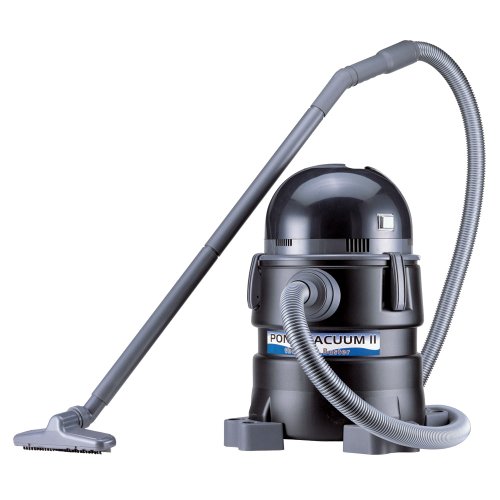
Matala Pond Vacuum II Muck Vac
A powered 1.5 HP electric vacuum with automatic fill-and-drain cycles, a direct rival to the PondoVac 4 for less. Strong suction and a 4.5-gallon tank makes it a real muck-mover; the tradeoff is a shorter reach and a rougher build than the OASE.

OASE PondoVac Classic Pond Vacuum Cleaner
The cheaper single-chamber OASE: same brand and build, but one tank instead of two, so it stops to drain and you do the empty-and-restart cycle the 4 was designed to end. Fine for a small pond and a patient owner.


