The Best Pond Skimmer
By The Pond Review · Updated August 2026
Independent editorial guide. We never accept payment for coverage, though we may earn a commission if you purchase through our links.
Quick Take
A pond skimmer pulls floating debris off the surface before it sinks, waterlogs and rots into the load your biological filter has to process. For most backyard ponds our default is the OASE SwimSkim, a self-contained floating skimmer you drop in and plug in with no digging and no cut liner. If you can rebuild the pond edge, a box or weir skimmer gives you real suction and a bigger basket for heavy leaf fall, and the Savio HighFlow is the one we'd build in.
The one decision that shapes everything else is floating versus box. A floater retrofits any pond in an afternoon but pulls with weaker suction and can pop up and run dry. A box or weir skimmer moves real water across a wide mouth, but you dig it into the bank and plumb the pump through it. Match the type to whether you can rebuild the edge, then size the skimmer's rated flow to your pump and your leaf load rather than to how many gallons the pond holds.
We've matched five skimmers to real ponds below, from the drop-in floater we'd start with to the built-in boxes for leaf-heavy water. See picks ↓

A skimmer does one job, and it does it at the surface. It skims leaves, pollen, spent blossoms and the oily film that collects on still water, catching them in a basket or sponge before they sink to the bottom, waterlog and start to rot. That last part is the point. Anything that sinks and decays becomes waste your biological filter has to break down, and on a leaf-heavy pond that hidden load is what turns the water tea-brown and starves it of oxygen by late summer.
So a skimmer isn't a filter and it isn't optional trim. It's the front line that keeps debris out of the water column in the first place. The buying question that matters isn't which brand, it's which type your pond can take, because a floating skimmer and a built-in box skimmer solve the same problem in very different ways and suit very different ponds.
Our take: a skimmer is surface defense, not filtration
A skimmer earns its keep by pulling leaves, pollen and film off the surface before they sink and rot into your bio load. Frame the buy that way and the rest of the decision falls into place. The debris that floats today is easy to catch with a basket and a bit of surface flow. The same debris, once it waterlogs and drops to the liner, is a diver's job and a spike in the ammonia your filter has to chew through. A skimmer moves that work from the bottom of the pond, where it's expensive, to the surface, where it's a sponge you rinse.
This is why we treat the skimmer as a partner to the filter, not a competitor. The filter processes what dissolves into the water; the skimmer keeps the solids from ever getting there. On a pond under trees, the two together do far more than an oversized filter alone, because the filter never has to break down the leaves the skimmer already lifted out. If you're still choosing the filter side of that pair, our best pond filter for a koi pond guide covers the sizing math there; this guide is about keeping the surface clean so that filter has less to do.
Floating versus box: the fork that decides everything
Every skimmer on the market is one of two things, and the split is the first thing to settle. A floating skimmer sits out in the water like a lily pad with a pump under it. You drop it in and plug it in, and its own built-in pump draws the top inch or two of water through a basket or sponge and returns it aerated to the pond. Nothing gets dug, nothing gets cut, and you can move it or pull it out in seconds. The trade is suction and reach: a floater pulls a small mouth of water gently, so it clears film and light litter well and struggles with a real drift of leaves.
A box or weir skimmer is the built-in answer. It's a housing you set into the pond edge at water level, with a hinged weir door that the pump pulls water over, dragging the surface film and debris into a large basket behind the door. The suction is real and the mouth is wide, so it handles leaf fall a floater can't. The cost is installation: you're rebuilding a section of the bank, cutting and sealing the liner to the faceplate, and committing the skimmer to that spot for good. One pulls a lot of water and asks you to dig; the other asks for nothing and pulls less. That's the fork.
Match the type to whether you can rebuild the edge
The way to choose is to look at your pond edge before you look at any product. If the pond is already built, planted and holding fish, and you have no appetite for cutting the liner and re-landscaping a corner, a floating skimmer is the retrofit that fits. It's the only kind that installs into a finished pond without tearing part of it up, and for a pond that mostly deals with pollen, dust and the odd handful of leaves, that's all you need.
If you're building the pond now, or you're willing to open up a section of bank, a box or weir skimmer is the stronger install and the one serious keepers build in from the start. It gives you suction, a big basket you empty every few days instead of every day, and a clean plumbed path from surface to pump. So the question isn't which skimmer is best in the abstract. It's whether you can rebuild the edge. Answer that first and the field narrows to two or three products on its own.
Size the flow to your pump and your leaf load, not your gallons
Here's the arithmetic the listings hope you skip. Skimmers get sold with a gallon rating, a Savio rated for so many thousand gallons, a box rated to 7,000, and it invites you to match that number to your pond volume and stop thinking. Volume is close to the wrong number. A skimmer's real job is rated by two things: the flow of the pump you feed it, and how much debris lands on your surface. A skimmer moves only as much water as the pump behind it pushes, so an underpowered pump makes a big skimmer skim gently and a strong pump can overrun a small floater until it sucks air.
So size it as a system. Take your real pump flow at the head height it runs at, not the box figure measured at zero lift, and pick a skimmer whose rated flow brackets it. Then weight the choice by your leaf load. A pond in the open with a light dusting of pollen can run the smallest floater on the list. A pond under a maple or a pine that drops for weeks needs a wide-mouth box and a basket with room, or you'll be out there emptying a clogged floater twice a day. Rate the skimmer for the debris it'll see, then confirm your pump can drive it.
Where a floater shines, and where it just clogs
We part company with the advice that any skimmer will do. On the right pond a floating skimmer is a quiet, cheap win: it clears surface film, pollen and fine crud, adds a little water movement and oxygen, and asks nothing of your landscaping. Owners running the OASE floater on modest ponds describe a sixty-second rinse every day or two and clear water for it. For a small, fairly open pond, a drop-in floater is the right call and the SwimSkim is the one we reach for.
On the wrong pond the same skimmer is a frustration. A weak floater under a heavy tree doesn't keep up with the leaf fall; it clogs, the flow chokes off, and the debris you hoped it would catch drifts past and sinks anyway. Two floater quirks are worth planning for. They tend to pop up and ride above the surface at first, from air trapped in the housing, and the fix is a small weight to hold the intake at water level so it doesn't run dry. And they draw floating plants toward the intake, so keep your lilies and floaters clear of it. For pollen and film a floater is plenty. For a maple-shaded pond in October, buy the box.
Matching the skimmer to your pond
Here's how we'd choose among the five. For a small to mid-size pond that mostly deals with pollen, dust and light litter, and that's already built, the OASE SwimSkim is our default: drop it in and plug it in, weight it if it rides high, and rinse the sponge every couple of days. The Jebao SK-30 is the budget way into the same idea, a lower-flow floater that stirs the bottom less on a small pond, fine for fine surface crud and underpowered for real leaves.
If you can rebuild the edge, step up to a built-in. The Savio HighFlow is the serious weir skimmer, a wide 16-inch faceplate and a big debris basket that keeps skimming a leaf-heavy pond without a twice-daily empty. The Atlantic Water Gardens PS7000 is the standard box skimmer, a floating weir door that keeps working through water-level swings and a basket-and-mat stage for solids, rated to a large pond. The OASE Aquaskim 40 sits between the two worlds, an in-pond skimmer that handles level fluctuation and a wider surface than the SwimSkim without cutting a wall in. Match it to the edge you have and each of these has a pond it fits.
Installing it and living with it
A floating skimmer is a same-afternoon job: set it in the water, plug it in and adjust the weight until the intake sits right at the surface without popping up or diving under. From there it's a sponge you lift and rinse every day or two in leaf season, less when the surface is quiet. Keep it away from the plants and check it after a windstorm, when a slug of debris can clog the intake fast.
A box or weir skimmer is a build. You set the housing into the bank at exactly water level, cut and seal the liner to its faceplate, and plumb the pump line through it, which is why it goes in when the pond is being built or reworked rather than as a weekend add-on. Once it's in, upkeep is easier than the floater: you lift the basket and shake it out every few days, and the weir door keeps skimming as the level rises and falls. One shared habit across both types: pull or idle the skimmer when the water gets cold and the surface starts to ice, since a surface unit is exposed to freeze damage in a way a submerged pump isn't.
How we'd spend the money
If it were our pond, the deciding question would come before the budget: can we rebuild the edge or not. On a finished pond we aren't tearing up, we'd buy the OASE SwimSkim, weight it, and run it alongside the filter and pump we already have, and for a small open pond the bill stops there. It handles the pollen-and-film job that most backyard ponds have, and it costs a fraction of a built-in.
On a pond under real trees, or one we were building from scratch, we'd spend the money on a proper weir skimmer and do the dig once. The Savio or the Atlantic box costs more and asks for installation, but it pulls the leaves a floater lets past, and it keeps them off the bottom where they turn into the load your filter and your dissolved oxygen both pay for. Buy the floater for surface film and a light litter, buy the box for a leaf problem, and size either one to the pump that drives it. Skip that last step and even the right skimmer skims gently and disappoints.
The picks
Products we recommend for this guide.
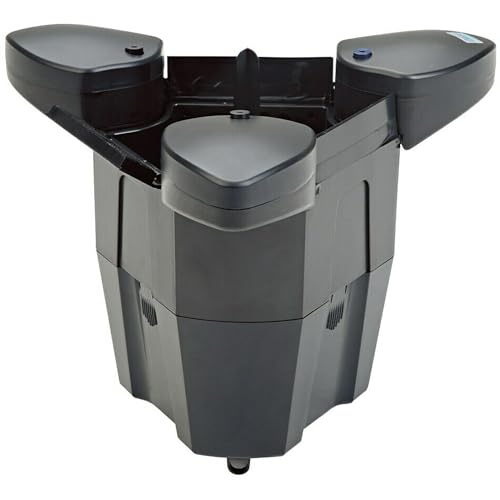
OASE SwimSkim Floating Pond Skimmer
Our default floating skimmer: drop it in and plug it in, and its built-in pump pulls surface film, pollen and light litter while adding oxygen. No dig, no cut liner. Weight it if it rides high, and rinse the sponge every day or two.

Savio HighFlow Standard Skimmer
A serious in-wall weir skimmer with a 16-inch faceplate and large debris basket, built into a rebuilt pond edge. Real suction across a wide mouth pulls the leaves a floater can't, and the big basket means fewer trips to empty it on a leafy pond.

Atlantic Water Gardens PS7000 Big Bahama Skimmer
A 9-inch weir box skimmer rated to 7,000 gallons, with a floating weir door that keeps skimming through water-level swings and a basket plus mat for solids. You dig it into the edge and plumb the pump through it, the standard skimmed-pond build.

OASE Aquaskim 40 In-Pond Skimmer
OASE's in-pond skimmer for ponds where you'd rather not cut a wall in. It handles level fluctuation better than most floaters and skims a wider surface than the SwimSkim, a middle path between a drop-in float and a full box built into the bank.

Jebao SK-30 Floating Pond Skimmer, 660GPH
The cheapest way to start skimming: a 660 GPH floating unit that draws less water, so it stirs the bottom less on a small pond. Fine for pollen and surface crud, underpowered for real leaves, and like all floaters it may need weighting to stay sunk.
What owners say
Real owner reports from the threads and editorial sources we drew on for this guide.
“I installed this skimmer OASE SwimSkim Floating Pond Skimmer. It has worked very well for me. I clean it about every other day. It takes about 60 seconds to clean it. I did not want to cut my liner, this is the reason I went this route.”
“In my experience, floating skimmers are entirely too small to provide any meaningful mechanical filtration especially if any sizeable debris (leaves) is to be encountered. Much easier and cheaper to remove any debris manually by netting.”
“I did have problems with it floating above the water several times at first, but I solved that by attaching a weight to it. The skimmer would be more useful for a smaller pond; mine is 16' by 24'. It tends to draw my floating plants to it, but I like the fact that it helps with water movement.”
“My off-brand does better with that type stuff than it does with leaves - not enough power. But keeps the fine surface crud controlled.”
“Those are essentially what is called a "no-niche" skimmer, that is a retro-fit skimmer out there in the water rather than in a wall.”