OASE SwimSkim Pond Skimmer Review + Verdict
By The Pond Review · Updated August 2026
Independent editorial review. We never accept payment for coverage, though we may earn a commission if you purchase through our links.
Verdict
Owner sentiment on the pond forums lines up almost exactly with pond size and expectation. The keepers who put a SwimSkim or a floating skimmer on a small, calm pond and asked it to handle film and light debris are content: one owner runs the OASE on a 3,500 gallon pond and is very pleased, crediting it with keeping duckweed, traffic fumes, leaves, and stray food off the surface, and notes the basket sits just under the water. The keepers who wanted it to do a real skimmer's work are the unhappy ones. Several call floating skimmers too small to matter for leaves and say netting by hand is easier and cheaper. Two failures come up again and again in their own words: the unit popping up and running dry, which one longtime owner of the Oase Swim Skim warns can strand a trapped fish and burn out the pump, and the intake pulling in small fish, which one keeper watched happen to two to three inch goldfish even at low flow. The fix owners reach for, weighting the unit down, is real and it works, but it doesn't change the ceiling. Our read is the same one the size-matched owners land on: this is a surface-film-and-pollen tool for a small still pond, not a leaf skimmer, and it needs watching around small fish.
Read full take ↓Similar pond skimmers
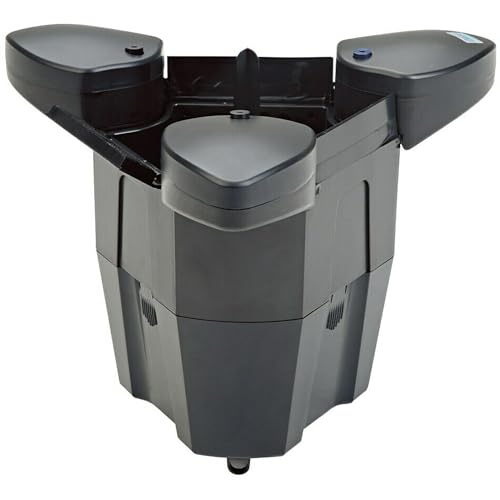
The OASE SwimSkim is a plug-and-drop floating skimmer that also aerates the pond through jets in its base, and that combination is its real appeal. If you have a small, calm pond you can't rebuild around a wall-mounted box skimmer, this drops in, plugs in, and starts pulling the film off the surface with zero install. For the pond it fits, nothing else is this easy.
But be honest about what you're buying. Its suction is weak: it won't pull leaves across the pond to itself, and against real leaf fall it's outmatched. It also shares the failure every floating skimmer shares, where it pops up and runs dry. The intake lifts out of the water, the basket empties, and the pump keeps running on air, which can trap a fish inside and burn out the pump if you miss it. Buy it for surface film and pollen on a calm pond, not for a canopy of trees dropping leaves.
What a skimmer is for
Start with the point of the device, because it explains both the appeal and the limit. A skimmer pulls floating debris off the surface of the pond before it waterlogs, sinks, and rots on the bottom. That matters because every leaf and clump of pollen that settles and breaks down becomes part of your bio load, the waste your filter and bacteria have to process. Catch the debris while it still floats and you take that load out of the water entirely. Let it sink and you have handed it to the filter as muck.
A traditional skimmer does this with real suction. It sits in the pond wall, a pump pulls a steady current across the surface, and a weir and basket collect whatever the current carries in. The SwimSkim throws that model out. It floats in open water, skims the film immediately around it, and drops in with no excavation, no plumbing, and no liner work. The trade is blunt: you give up suction and reach in exchange for zero install. On a pond you can build a proper skimmer into, that's a bad trade. On a small pond that's already finished and planted, it can be the only trade on offer.
The short version
What works:
- Drops in and runs with no install: no digging, no wall cut, no plumbing. On a finished pond that can't take a box skimmer, that alone is the reason to own one.
- Aerates while it skims. Jets in the base push water and add surface movement and oxygen, a real second job on a small, still pond.
- Cheap next to a box skimmer once you count the install a box skimmer needs.
- Effective against surface film, pollen, and light floating debris on calm water.
What to watch:
- Suction is weak. It skims the film right around it and won't draw leaves across the pond.
- It pops up and runs dry. When the intake lifts clear of the water the pump runs on air, which can burn the pump and trap a fish.
- Floating plants and duckweed get drawn to it and can clog the basket.
- In real leaf fall it's outmatched, and you'll still be netting by hand.
Who it's for, and who should skip it
Buy the SwimSkim if your pond is small, calm, and already built, the surface problem is film, pollen, or dust rather than a steady rain of leaves, and you want gentle aeration in the bargain. It's at its best on a still water-garden pond with no easy way to retrofit a wall skimmer. The owner who is happy with it tends to have exactly this pond.
Skip it on a large pond, where a single floating unit is far too small to matter and a wall skimmer or manual netting does more for less. Skip it under heavy trees, where leaf fall will overwhelm the weak intake. And think hard before running it on a pond with small fish, because the pop-up-and-run-dry failure can pull a small fish into the intake, which we get to below.
Why the suction is the catch
The single real limit is reach. A floating skimmer only works on the water it can pull, and the SwimSkim pulls a modest circle around itself. Debris on the far side of the pond stays on the far side. Experienced pond keepers are blunt about this: a floating skimmer is too small to provide meaningful mechanical filtration once any sizeable debris is in play, and for leaves it's easier and cheaper to net by hand. We agree, with one qualifier they sometimes skip. For the job it's right for, film and pollen and fine floating dust on a small calm pond, the modest reach is enough, because the debris is spread thin and the whole surface drifts slowly past a unit that's also moving water. Ask it to gather a canopy's worth of autumn leaves and it'll disappoint you every time.
The pop-up problem, and the fish it can cost
This is the failure every floating skimmer shares, and it's worth understanding before you buy rather than after. The unit floats at a set depth so its intake sits just below the surface. Air trapped under the housing, a light basket, or a lopsided load can lift the intake clear of the water. When that happens the skimmer runs dry: the pump keeps pulling but there's no water to move. Two bad things follow. A pump running dry can overheat and burn out, and any fish that was drawn into the basket is now stranded in a draining chamber.
That second risk isn't theoretical. Owners of this class of skimmer describe small fish, two to three inch goldfish, being pulled in even at low flow. The safety rule here's the manufacturer's own, run these pumps wet and never dry, so the real defense is placement and habit: weight the unit so it sits stable, check that the intake stays submerged, and don't run a floating skimmer unwatched over a pond of small fish. The keepers who solved the popping did it with an added weight, and it's the first fix we'd reach for. The OASE basket sits just under the surface by design, which helps, but no floating skimmer is immune to running dry if it lifts.
Aeration is the quiet upside
The feature that sets the SwimSkim apart from a plain floating basket is what it does with the water it pulls. It returns it through jets in the base, which adds circulation and surface movement to a pond that might otherwise sit dead still. On a small pond with no waterfall or dedicated air pump, that movement is worth having: it breaks up the surface film mechanically, discourages the stagnant top layer that mosquitoes and scum love, and adds a little oxygen at the surface where gas exchange happens. It isn't a substitute for a proper aerator on a stocked pond, and we wouldn't size fish stock around it. On a lightly planted water garden it's a second job the unit does for free.
How it compares
- Versus the Jebao SK-30: the closest like-for-like, and cheaper. It's another drop-in floating skimmer, and in our source thread the original poster chose it over the OASE partly because it moves less water and so stirs up less bottom muck. You give up the OASE's aeration jets and get the same weak suction and the same pop-up habit. Pick it to save money, not to solve the floating skimmer's core limits.
- Versus the OASE Aquaskim 40: the fixed-install answer from the same brand. It mounts into the pond wall with a floating weir that tracks the water level, so it skims with real suction across the surface instead of a small floating circle. It asks for a liner install and a proper pump, so it's a build-in rather than a drop-in, but it's what to buy if you like OASE and your pond can take a wall skimmer.
- Versus the Savio HighFlow box skimmer: the premium step up, and the real long-term answer for a serious pond. A wall-mounted box with a 16-inch weir and a large basket pulls debris across the whole pond and holds far more before it clogs. It costs several times as much and needs to be dug into the liner, so it's only on the table if you're building or rebuilding the edge.
Setting it up and living with it
Drop the SwimSkim into open water away from the pond edge, plug it in, and let it find its level. If it rides high or keeps popping to the surface, add a weight to hold it down at the intake; owners solve the pop-up this way and it's the difference between a unit that works and one that runs dry. Empty the basket often, more so in autumn, because it fills fast with fine debris and duckweed, and a full basket both stops skimming and shifts the unit's balance. Keep a fishing line or careful placement between it and any raft of floating plants you want to keep, since it'll draw them in. For the leaves it can't handle, keep the hand net: on the right pond the SwimSkim reduces the netting, it doesn't end it. If your pond needs more than surface work, our box skimmer picks cover the wall-mounted options.
Where we land on it
The SwimSkim is a narrow tool that's very good inside its lane and frustrating outside it. On a small, calm, finished pond, where a wall skimmer isn't an option and the surface problem is film and pollen, it drops in, skims the top, and stirs the water, and that's a real and honest job. Its aeration is a bonus that most floating baskets don't offer.
The way to be unhappy with it's to ask it to be a real skimmer. It won't pull leaves across the pond, and it'll pop up and run dry if you ignore it, which on a pond of small fish is a risk you carry every day it runs. Buy it for the pond it fits and weight it down so it stays put, and it earns its place. Buy it to skim a leaf-covered pond and you'll be back to the net inside a week.
Our Ratings
Overall score
The build is simple, but the class carries a real reliability flaw: it pops up and runs dry when the intake lifts clear of the water, which can burn out the pump and strand a fish inside. Owners tame it by weighting the unit down, and the basket riding just under the surface helps, but it needs watching. A floating pump that can run itself dry is not something we can score highly on reliability.
It does one thing adequately and several things poorly. On a small calm pond it skims surface film, pollen, and light floating debris well enough, and it moves water while it does it. But the reach is short: it will not pull leaves across the pond, it is outmatched by real leaf fall, and floating plants clog the basket. Middling on purpose, because the performance depends entirely on keeping it to the narrow job it is built for.
For its niche the price is fair: it undercuts a wall-mounted box skimmer once you count the install a box skimmer needs, and it adds aeration a plain floating basket does not. It scores here as its best category because zero-install is a real dollar saving on a finished pond. It loses ground only because you are paying skimmer money for weak-skimmer results, and the running maintenance is frequent.
OASE SwimSkim Pond Skimmer on Amazon.
The Evidence Behind Our Verdict
Owner sentiment on the pond forums lines up almost exactly with pond size and expectation. The keepers who put a SwimSkim or a floating skimmer on a small, calm pond and asked it to handle film and light debris are content: one owner runs the OASE on a 3,500 gallon pond and is very pleased, crediting it with keeping duckweed, traffic fumes, leaves, and stray food off the surface, and notes the basket sits just under the water. The keepers who wanted it to do a real skimmer's work are the unhappy ones.
Several call floating skimmers too small to matter for leaves and say netting by hand is easier and cheaper. Two failures come up again and again in their own words: the unit popping up and running dry, which one longtime owner of the Oase Swim Skim warns can strand a trapped fish and burn out the pump, and the intake pulling in small fish, which one keeper watched happen to two to three inch goldfish even at low flow. The fix owners reach for, weighting the unit down, is real and it works, but it doesn't change the ceiling.
Our read is the same one the size-matched owners land on: this is a surface-film-and-pollen tool for a small still pond, not a leaf skimmer, and it needs watching around small fish.
Our rating above is our own editorial call. What follows is the field evidence we weighed to reach it: first-hand reports from pond owners on dedicated pond and koi forums, which we lean on more than manufacturer-influenced published reviews because unsponsored owners tend to be the more candid signal.
What Pond Forums Say
“I have the Oase skimmer in my 3,500gal pond.l am very pleased with it.lt keeps the duckweed at bay and traffic fumes, leaves etc., no spare food hanging around too. The basket sits just under the water so no fish can get sucked in.l needed to buy a second basket to change over as it picks up all sorts, especially through Autumn etc.Duckweed can clog as well.”Source →
“Well, I've had my skimmer for a couple of weeks now, and the results are mixed. I did have problems with it floating above the water several times at first, but I solved that by attaching a weight to it. The skimmer would be more useful for a smaller pond; mine is 16' by 24'. It tends to draw my floating plants to it, but I like the fact that it helps with water movement.”Source →
“This fella mentions the skimmer will initially have a hard time staying sunk in the water, that is it will keep popping out of the water, due to air bubbles, but this should work it self out.”Source →
“Most have a habit of “popping up,” which causes the skimmer to run dry…..a problem, if there are fish stuck inside, and can burn out the pump if you don’t catch it in time. I have an Oase Swim Skim (I think that’s what it’s called).”Source →
“I have a very similar skimmer and took it out, it ate a lot of my 2-3” goldfish even at low flow rates. Bigger fish are probably ok.”Source →
“In my experience, floating skimmers are entirely too small to provide any meaningful mechanical filtration especially if any sizeable debris (leaves) is to be encountered. Much easier and cheaper to remove any debris manually by netting.”Source →
Frequently asked questions
Is the OASE SwimSkim Pond Skimmer worth it?
For its niche the price is fair: it undercuts a wall-mounted box skimmer once you count the install a box skimmer needs, and it adds aeration a plain floating basket does not. It scores here as its best category because zero-install is a real dollar saving on a finished pond. It loses ground only because you are paying skimmer money for weak-skimmer results, and the running maintenance is frequent.
How reliable is the OASE SwimSkim Pond Skimmer?
The build is simple, but the class carries a real reliability flaw: it pops up and runs dry when the intake lifts clear of the water, which can burn out the pump and strand a fish inside. Owners tame it by weighting the unit down, and the basket riding just under the surface helps, but it needs watching. A floating pump that can run itself dry is not something we can score highly on reliability.
How well does the OASE SwimSkim Pond Skimmer perform?
It does one thing adequately and several things poorly. On a small calm pond it skims surface film, pollen, and light floating debris well enough, and it moves water while it does it. But the reach is short: it will not pull leaves across the pond, it is outmatched by real leaf fall, and floating plants clog the basket.
What do real owners say about the OASE SwimSkim Pond Skimmer?
Owner sentiment on the pond forums lines up almost exactly with pond size and expectation. The keepers who put a SwimSkim or a floating skimmer on a small, calm pond and asked it to handle film and light debris are content: one owner runs the OASE on a 3,500 gallon pond and is very pleased, crediting it with keeping duckweed, traffic fumes, leaves, and stray food off the surface, and notes the basket sits just under the water. The keepers who wanted it to do a real skimmer's work are the unhappy ones.
Options Worth Checking Out

Jebao SK-30 Floating Pond Skimmer
The budget floating alternative, and the skimmer the poster in our source thread chose over the OASE. Cheaper, with gentler flow that stirs up less bottom muck, but the same plug-and-drop class with the same weak suction and pop-up habit.

OASE Aquaskim 40 Pond Skimmer
The OASE box-and-weir option, the fixed-install skimmer to buy if you like OASE but want real suction. It mounts into the pond wall with a floating weir that follows the water level, so it skims properly, but it's a build-in, not a drop-in.

Savio HighFlow Standard Skimmer
The premium answer if you can dig it in. A real wall-mounted box skimmer with a 16-inch weir and a proper basket, so it pulls surface debris across the whole pond the way a floater never will. It needs a liner install and a much bigger budget.


