Aquascape AquaForce 1000 Review + Verdict for Ponds
By The Pond Review · Updated August 2026
Independent editorial review. We never accept payment for coverage, though we may earn a commission if you purchase through our links.
Verdict
On the pond forums, where this hobby's real owner talk happens, the steady note on Aquascape's pumps is longevity. One keeper reports two Aquascape pumps "in use for 9 and 10 years respectively"; another, speaking to the solids-handling line specifically, says that with "the solids handling ones, I only have to clean the intake/pump once a season," which is exactly the low-maintenance filter-feed duty the AquaForce 1000 is built for; a third calls "the Aquaforce line from Aquascape" about "as close as you're going to get on that budget for pump with a record of reliability." The honest counterweight owners raise about Aquascape is flow ratings that read optimistically at zero head, the reason we size this pump by its 10-foot maximum head and the flow you actually get there, not the 1,070 GPH on the box. Direct long-run reports on the 1000 specifically are thin, so we score it primarily on Aquascape's published specs and its class-leading 55-watt draw, with the forum consensus as a second lens: keep the pre-filter cage clean, register the 3-year warranty, and size it for filter-feed rather than lift.
Read full take ↓Similar pond pumps
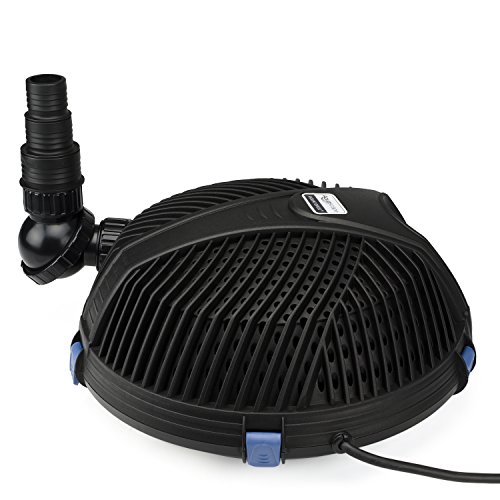
The Aquascape AquaForce 1000 is the pump you buy when the water you need to move is not clean. Our verdict: this is the solids-handling specialist, and the most efficient pump we cover. It is built to sit in a skimmer or a pump vault and push debris-laden water up to a pressure filter or a waterfall filter without the clogging or impeller-scoring that kills a magnetic-drive pump on the same job, and its asynchronous motor does it on a remarkable 55 watts. Buy it as the pump feeding a pressurized or waterfall filter on a pond up to roughly 1,000 gallons, and it will move dirty water cheaply and quietly for years.
Two honest limits decide the fit. First, its maximum head is only 10 feet, and the "1,070 GPH" is a zero-head figure, so this is a low-lift pump for filter-feeding and short falls, not a tall waterfall, that is the Alpine PAL3100's job. Second, "solids-handling" means it passes soft solids up to a quarter inch through a pre-filter cage, not that it is maintenance-free, let the cage clog and the pump overheats. Its up-front price is the highest of the small pumps we cover, but at 55 watts it costs the least to run by a wide margin, roughly $77 a year against $200 for a comparable magnetic drive. Keep the cage clean, size it for filter duty rather than lift, and it earns its price back on the meter.
The short version
What works:
- Genuinely solids-handling: it passes soft debris up to a quarter inch, so it can feed a pressure or waterfall filter from a skimmer or vault without the clogging that stalls a clean-water mag-drive.
- The most efficient pump we cover. An asynchronous motor moves up to 1,070 GPH on just 55 watts, so the yearly running cost is a fraction of a comparable AC magnetic drive.
- Oil-free and simple, with a protective pre-filter cage included, a wide flat base you can set straight on the pond floor, a 25-foot cord, and a 3-year warranty.
What to watch:
- Only 10 feet of maximum head. This is a low-lift filter-feed pump, not a tall-waterfall pump, and the 1,070 GPH is a zero-head number you will never see at real lift.
- The pre-filter cage needs regular cleaning. Let it blind over with debris and the pump loses flow and can overheat, the one recurring owner complaint.
- The highest up-front price of the small pumps here. You buy it for the running cost and the solids-handling, not the sticker.
Which ponds and setups it fits
Buy the AquaForce 1000 as the pump feeding a pressurized filter or an Aquascape-style waterfall filter, sitting in a skimmer box or a pump vault where it has to move water carrying fine debris. It suits a pond up to roughly 1,000 gallons at once-an-hour turnover, about 500 gallons of koi once you double the rate for their load, and it is happiest doing the exact job a solids-handling pump exists for: pushing dirty water a filter is about to clean, on very little electricity.
Look elsewhere in two clear cases. If you need real lift, a tall or wide waterfall well past a few feet of head, this pump runs out of push at 10 feet; size up to the Alpine PAL3100 and its 21.5-foot head. And if you are pumping already-clean water behind a filter and longevity is all you care about, a sealed magnetic drive like the Pondmaster Pond-Mag is the buy-it-once pick, and cheaper up front, though it will cost you more to run.
The numbers that matter
Start with flow and head together, because this pump lives or dies on the pairing. The "1,070 GPH" is measured at zero head, with the outlet open and nothing to lift, and Aquascape's own maximum head is 10 feet, the shut-off height where flow falls to zero. Useful output sits between the two: feed a filter a couple of feet up and you keep most of the flow; push a five- or six-foot fall and you are near the top of what this pump can do. Size so the flow you actually get still turns your pond over about once an hour, twice for koi, and treat 10 feet as a hard ceiling, not a target.
Then price the watts, because this is where the AquaForce wins. At 55 watts running around the clock it draws about 480 kilowatt-hours a year, which lands near $77 at 16 cents per kilowatt-hour. A comparable AC magnetic drive pulls two to three times that, so over a decade of 24/7 running the AquaForce's low draw more than pays back its higher purchase price. The asynchronous motor is the reason, and it is the pump's single strongest argument.
Why the efficiency matters
Most pond pumps in this size and price use a magnetic drive, an AC motor that spins an impeller through a magnetic coupling. It is reliable and simple, but it is not efficient, which is why a mag-drive of similar flow burns 145 watts or more. The AquaForce uses an asynchronous motor instead, the same induction-motor principle that runs efficient appliances, and it delivers its flow on a third of the power. On a pump that runs every hour of every day, that gap is not a rounding error, it is the difference between roughly $77 and $200 a year, and it compounds for as long as you own the pump.
The efficiency also buys a quieter, cooler-running pump, which is part of why owners reach for these on water features they sit beside. The trade you are making is up-front cost: the asynchronous design costs more to buy than a basic mag-drive, so the AquaForce only makes financial sense if you run it continuously, exactly how a filter-feed pump is used.
Solids-handling, honestly
"Solids-handling" is a specific, limited claim, and it is worth understanding before you buy. The AquaForce is built to pass soft solids up to a quarter inch, the fine muck and debris that a clean-water mag-drive would choke on or grind into its impeller, so it can pull water from a skimmer or the bottom of a vault and push it to a filter. What it is not is a trash pump, it will not swallow leaves, twigs, or gravel, and the included pre-filter cage exists precisely to keep that larger material out of the impeller.
That cage is also the maintenance you sign up for. As debris collects on it the pump loses flow and works harder, and a badly clogged cage is the most common way owners run one hot, the recurring complaint in owner reports is a pump that overheats or weakens when the cage is left to blind over. Rinse it on the same schedule you clean your filter and the pump runs cool and steady; ignore it and you will blame the pump for a maintenance problem.
How it compares
- Versus the Pondmaster Pond-Mag 1800: the clean-water sibling. The Pond-Mag is a sealed magnetic drive built for longevity behind a filter, cheaper up front and with a longer 5-year warranty, but it burns roughly $200 a year and will clog or score its impeller on the debris the AquaForce is built to move. Buy the Pond-Mag for clean-water reliability, the AquaForce when the water is dirty or the power bill is the priority.
- Versus the Alpine PAL3100: the lift size-up. Where the AquaForce tops out at 10 feet of head, the Alpine pushes 21.5 feet on a 276-watt motor, so a tall or wide waterfall that starves the AquaForce has the head it needs, at nearly five times the running cost. Buy the Alpine when the fall is the constraint, the AquaForce when efficiency and solids-handling are.
- Versus the Jebao DCP-4000: the other efficiency route. A DC sine-wave pump is even thriftier and lets you dial the flow, but it leans on an external controller, its most common failure point, and it is a clean-water pump. The AquaForce trades the controller for a fixed-speed asynchronous motor and adds solids-handling the DC pump does not have.
Setting it up
Work out the flow you need at your head first: measure the lift from the water surface to your filter inlet or the top of the fall, and confirm the AquaForce still turns your pond over about once an hour at that height, remembering the 10-foot ceiling. Set it on its flat base in a skimmer, a pump vault, or on the pond floor with the pre-filter cage attached, never run it without the cage. Plug it into a GFCI outlet, a submersible pump in a pond is a shock hazard before it is a flow problem, and if it feeds a fall above the water line, add a check valve so the basin does not drain back when it shuts off. Then put cleaning the cage on the same schedule as your filter, and the pump will look after itself.
Where we land
The Aquascape AquaForce 1000 is a specialist, and judged as one it is very good. It is not the pump for a tall waterfall, and it is not the cheapest to buy. But as the pump feeding a pressure or waterfall filter, moving the debris-laden water a magnetic drive cannot, on the lowest running cost of anything in its class, it does a job the other pumps we cover cannot. Its 55-watt draw is the standout number, and its 10-foot head is the limit you plan around.
Match it to filter-feed and skimmer duty rather than lift, keep the pre-filter cage clean so it never runs hot, and put it on a GFCI. Do that and it will move your dirty water cheaply and quietly for years, and cost you less at the meter than anything else on the pad.
Our Ratings
Overall score
An oil-free asynchronous motor with a protective pre-filter cage and a 3-year warranty from a major pond brand. The design is simple and the solids-handling tolerance is real, but two things keep this off the top of the scale: the cage demands regular cleaning or the pump runs hot, and owner sentiment includes a recurring note that Aquascape pumps can fail not long after the warranty lapses. Maintainable and dependable in service, without the decade-long track record of a sealed mag-drive.
It does its specialist job, feeding a filter with debris-laden water on very little power, better than anything else we cover, and the 55-watt draw is class-leading. The score sits mid-scale rather than higher because the envelope is narrow: a 10-foot maximum head rules out tall waterfalls, and the 1,070 GPH is a zero-head figure, so you buy it for filter-feed and skimmer duty, not for lift.
The highest up-front price of the small pumps we cover, offset by the lowest running cost by a wide margin. At 55 watts it burns roughly $77 a year where a comparable magnetic drive burns $200, so on a pump that runs 24/7 the purchase premium pays back within a couple of years and keeps paying. The value is real but conditional: it only makes financial sense run continuously, as a filter-feed pump is.
Aquascape AquaForce 1000 on Amazon.
The Evidence Behind Our Verdict
On the pond forums, where this hobby's real owner talk happens, the steady note on Aquascape's pumps is longevity. One keeper reports two Aquascape pumps "in use for 9 and 10 years respectively"; another, speaking to the solids-handling line specifically, says that with "the solids handling ones, I only have to clean the intake/pump once a season," which is exactly the low-maintenance filter-feed duty the AquaForce 1000 is built for; a third calls "the Aquaforce line from Aquascape" about "as close as you're going to get on that budget for pump with a record of reliability." The honest counterweight owners raise about Aquascape is flow ratings that read optimistically at zero head, the reason we size this pump by its 10-foot maximum head and the flow you actually get there, not the 1,070 GPH on the box. Direct long-run reports on the 1000 specifically are thin, so we score it primarily on Aquascape's published specs and its class-leading 55-watt draw, with the forum consensus as a second lens: keep the pre-filter cage clean, register the 3-year warranty, and size it for filter-feed rather than lift.
Our rating above is our own editorial call. What follows is the field evidence we weighed to reach it: first-hand reports from pond owners on dedicated pond and koi forums, which we lean on more than manufacturer-influenced published reviews because unsponsored owners tend to be the more candid signal.
What Pond Forums Say
“I also use aquascape, while I have only used their pumps for a couple of years, there are no problems, and with the solids handling ones, I only have to clean the intake/pump once a season!”Source →
“The Aquaforce line from Aquascape has a 5200 GPH for about $330. That's probably as close as you're going to get on that budget for pump with a record of reliability.”Source →
“We've only used Aquascape pumps and have been happy with them - we've got two that have been in use for 9 and 10 years respectively. Needed two new pumps this spring for two new projects and bought Aquascape.”Source →
Frequently asked questions
Is the Aquascape AquaForce 1000 worth it?
The highest up-front price of the small pumps we cover, offset by the lowest running cost by a wide margin. At 55 watts it burns roughly $77 a year where a comparable magnetic drive burns $200, so on a pump that runs 24/7 the purchase premium pays back within a couple of years and keeps paying. The value is real but conditional: it only makes financial sense run continuously, as a filter-feed pump is.
How reliable is the Aquascape AquaForce 1000?
An oil-free asynchronous motor with a protective pre-filter cage and a 3-year warranty from a major pond brand. The design is simple and the solids-handling tolerance is real, but two things keep this off the top of the scale: the cage demands regular cleaning or the pump runs hot, and owner sentiment includes a recurring note that Aquascape pumps can fail not long after the warranty lapses. Maintainable and dependable in service, without the decade-long track record of a sealed mag-drive.
How well does the Aquascape AquaForce 1000 perform?
It does its specialist job, feeding a filter with debris-laden water on very little power, better than anything else we cover, and the 55-watt draw is class-leading. The score sits mid-scale rather than higher because the envelope is narrow: a 10-foot maximum head rules out tall waterfalls, and the 1,070 GPH is a zero-head figure, so you buy it for filter-feed and skimmer duty, not for lift.
What do real owners say about the Aquascape AquaForce 1000?
On the pond forums, where this hobby's real owner talk happens, the steady note on Aquascape's pumps is longevity. " The honest counterweight owners raise about Aquascape is flow ratings that read optimistically at zero head, the reason we size this pump by its 10-foot maximum head and the flow you actually get there, not the 1,070 GPH on the box. Direct long-run reports on the 1000 specifically are thin, so we score it primarily on Aquascape's published specs and its class-leading 55-watt draw, with the forum consensus as a second lens: keep the pre-filter cage clean, register the 3-year warranty, and size it for filter-feed rather than lift.
Options Worth Checking Out
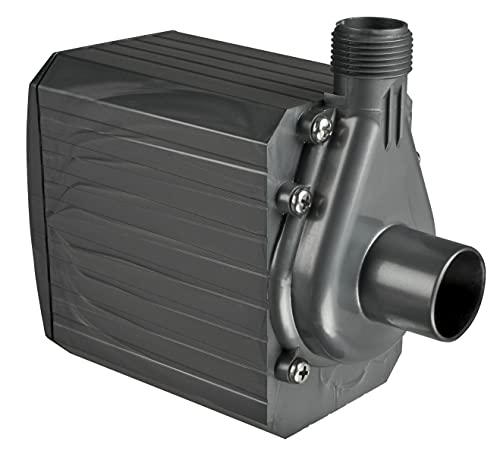
Pondmaster Pond-Mag 1800 Magnetic Drive Pump
The clean-water reliability sibling. A sealed magnetic drive built to run a decade behind a filter, cheaper up front and with a longer 5-year warranty. Buy it for clean-water return duty; it will clog on the debris the AquaForce is built to move.

Alpine Corporation PAL3100 Submersible Pump
The lift size-up. Where the AquaForce tops out at 10 feet of head, the Alpine pushes a published 21.5 feet on a 276-watt motor, enough for a tall or wide waterfall. More head, and a far bigger power bill, so buy it when the fall is the constraint.

VIVOSUN 5300 GPH Submersible Pond Pump
The cheap high-flow contrast. Far more headline GPH for far less money, but it is a clean-water pump that hides its watts and wears at the impeller. Buy it to move clean water for a short fall on a budget, not to feed a filter or to save on power.

