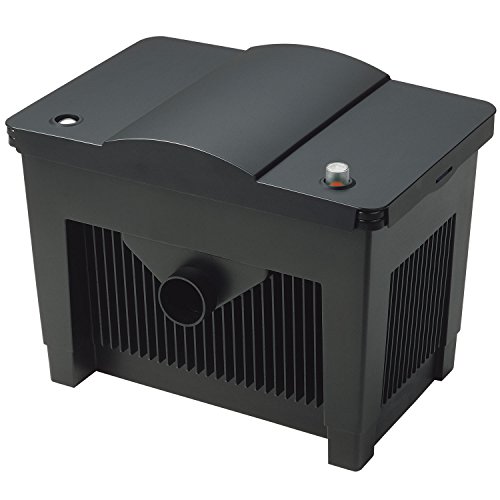
CNZ All-in-One Pond Filter Review
By The Pond Review · Updated August 2026
Independent editorial review. We never accept payment for coverage, though we may earn a commission if you purchase through our links.
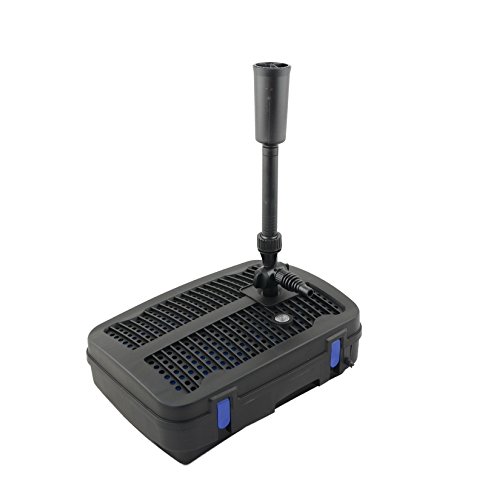
Verdict
Owner experience with all-in-one submerged units, taken as a class since no threads name the CNZ specifically, splits cleanly along one line: pond size and stocking. On a small pond the built-in UV is the hero, and owners who added one describe water that finally went "crystal clear" and stayed that way for years. Push the same style of unit past its size and the story flips to constant cleaning, with one owner in hot, sunny conditions cleaning the sponge "every couple of hours" just to keep the water from greening, and new setups needing the mechanical parts cleaned "more frequently in the beginning." The mechanical weak point owners keep hitting is the impeller and propeller hub, which clog with detritus and usually need pulling apart and clearing rather than replacing. More cautious owners note the class gets "bashed," but temper it with the same asterisk we land on: maybe not in a small-pond context. That's the verdict in one line. These are a genuine small-pond convenience and a false economy on anything holding real fish, and the money past a patio pond belongs in separates.
Read full take ↓Similar pond filters
The CNZ is an all-in-one: one box you drop in the water and run off a single plug, with a pump, a sponge filter, a 13W UV bulb and a fountain head packed into it. There's no plumbing, no separate filter to hide at the pond edge, and nothing to assemble. For a small, lightly stocked pond or a container water garden, that convenience is worth paying for. The pump circulates and runs the fountain, the UV keeps the water from going green, and at $98.99 it's an easy way to make a patio pond behave.
The catch is baked into the design, and it's the reason to read past the listing. An all-in-one is filtration by its smallest part. The sponge volume and the pump are sized to move a number of gallons, not to process the waste a real fish load makes, and the built-in UV is undersized the moment the pond grows. This is the right tool for a small goldfish or patio pond and the wrong tool the minute you add koi. We wouldn't buy one for a koi pond, and below we do the arithmetic the box hopes you skip.
The short version
What works:
- One plug and one box: pump, sponge, UV and fountain in a single drop-in unit, no plumbing and nothing to place above the water line.
- The UV does clear green water on a small pond, which is the one thing most patio-pond owners are fighting.
- Cheap for what it bundles. A pump, a standalone UV clarifier and a filter bought separately run past $98.99 easily.
- Sized to a small goldfish pond or a planted container, it's close to set-and-forget.
What to watch:
- The sponge is small and sits directly in the dirty water, so on any real fish load it clogs fast and starves the pump for flow.
- 660 GPH is a zero-head number that drops steeply the moment you lift the water or run the fountain head.
- 13W of UV clears only a few hundred gallons at proper dwell time, not the pond the listing photo implies.
- The impeller and propeller hub collect detritus and are the first thing to seize, so plan on pulling it apart to clean.
Who it's for, and who should walk away
Buy the CNZ if your pond is a small goldfish pond, a patio pond or a planted container water garden, roughly a few hundred gallons and lightly stocked, and you want clear water and a fountain from one plug with no plumbing. In that job it's a good, cheap answer, and the UV solves the green-water problem those ponds usually have.
Walk away if you keep koi, or if the pond is heavily stocked or much over a few hundred gallons. The unit won't fail so much as be permanently behind: the sponge clogs, the flow drops, the water never quite clears, and you spend the summer cleaning. That isn't a defective CNZ, it's an all-in-one being asked to do a job that needs separate, larger parts. For that pond, go separates, and we say where below.
The spec math the box hopes you skip
Start with the pump. 660 GPH is a zero-head rating, the flow with the outlet sitting at the water surface and nothing in the way. Feed a sponge that's loading up, lift the water a foot or two, and push it through a fountain head, and real delivery falls well below that. The number you filter with is a fraction of the one on the box, and it drops further as the sponge dirties, which is exactly when you need the flow most.
Now the UV. A rough rule for clarifying a pond is about 2 watts of UV per 100 gallons, and that assumes the water passes the bulb slowly enough for a killing dose. 13W lines up with something like 600 gallons on paper, but a 660 GPH pump shoves water past that small bulb far too fast for full dwell time, so the clarifying capacity in practice is a few hundred gallons, not more. It's real UV and it works on a small pond. It isn't the koi-pond clarifier the wattage might suggest.
Then the biology. Koi are big, they eat a lot and they produce a lot of waste, and biological filtration is sized to that waste, not to the water it dissolves in. A koi load needs on the order of two to four times the biomedia a drop-in sponge unit like this holds. There's no volume of media in an all-in-one box to house the bacteria a koi pond throws off. The gallons can line up perfectly and the filter can still be half the size the fish need.
Filtration by the smallest part
This is the design flaw the convenience hides. In an all-in-one, the sponge is the filter, the pump is the flow, and both are the smallest version of themselves that fits in the box. Waste travels straight into that sponge, which is why it loads up quickly, and once it clogs the pump starves and circulation falls off. On a small, lightly stocked pond there's little enough waste that the balance holds. Add real fish and the sponge can't keep up, so you clean it constantly to buy back flow you keep losing.
The reality shows up plainly in how often owners are cleaning. Set one up on a pond that's behind, and as one keeper of a submersible filter-pump put it, "You'll need to clean the mechanical filtration components more frequently in the beginning." On an undersized unit that beginning never ends. Another owner running an all-in-one in hot, sunny conditions was blunt about it: the unit "needs the sponge cleaned every couple of hours atm just to stop pond going green again." That's a small filter fighting a load it was never sized for, and no amount of scrubbing fixes the arithmetic.
The UV works, but only at small-pond scale
Give the CNZ credit where it earns it. On a small pond, a built-in UV is the difference between water you can see fish through and pea soup, and owners who add UV to a struggling small pond describe the same clean result. One who fought green water for years summed up the fix: "Once we purchased a filter with uv light, our problem was solved. The water has become crystal clear. That was two years ago." That's the CNZ's best case, and it's a good one.
The limit is scale, not whether it works. At a few hundred gallons and a modest fish load the UV keeps up. Past that, either the water volume outruns the wattage or the flow outruns the dwell time, and the bloom wins. So the UV is a genuine feature that quietly reinforces the same verdict as the pump and the sponge: this is a small-pond tool. Buy it for the pond it fits, and it clears the water. Buy it for a koi pond and the UV is the third undersized part, not the saving grace.
Living with the pump and the sponge
Mechanically these units are simple, which is both the appeal and the weak point. There's a small impeller and a propeller hub, and they collect detritus off the same dirty water the sponge is straining. When one stops, it's usually not dead, it's clogged: pull it apart, clear the shaft, reassemble, and it runs. A longtime owner of a comparable all-in-one described exactly that: "Once I removed the propeller hub and some minor detritus from the shaft and put it back together, like you, it all started working again." Handy to know, and a fair picture of the upkeep. This is gear you take apart, not gear you forget.
Plan on that maintenance as part of the deal rather than a defect. The sponge rinses in a bucket of pond water and goes back in, the UV bulb is a consumable you replace roughly yearly, and the impeller wants an occasional clean. None of it's hard on a small pond. It only turns into a chore when the unit is oversized past its pond, at which point the cleaning is constant and the right fix is a bigger, separate system, not more scrubbing.
When to go separates instead
The moment you add real fish, stop trying to make one box do three jobs and split them. A gravity or pressure box filter holds the biomedia volume a fish load needs, a properly sized UV clarifier gives the water the dwell time to clarify, and a standalone pump moves enough flow at head to feed both. It costs more and takes plumbing, but it's the difference between chasing clear water all summer and having it. Our pond filter reviews cover the box we'd start with, our UV clarifier reviews cover the standalone bulb sized to your gallons, and our submersible pump reviews cover the pump to run them. Three parts, each sized to its job, instead of one box sized to none.
Where we land
The CNZ is an honest bargain for the pond it fits: a small goldfish, patio or container pond where one plug, clear water and a fountain for under a hundred dollars is exactly the ask. The UV works, the setup is nothing, and the convenience is genuine. Scored for that buyer, it's a solid small-pond pick and nothing to apologize for.
It only disappoints when it's bought for a pond it was never sized for. An all-in-one is filtration by its smallest part, and no koi pond is small in the ways that matter. If you have fish, or plans for them, the money is better spent on separates that can grow with the load. Right tool for a patio pond, wrong tool the moment you add koi, and the label won't tell you which pond you have.
Our Ratings
Overall score
Simple, which cuts both ways. A small impeller and propeller hub collect detritus off the dirty water and are the first thing to clog or seize, so this is gear you take apart to clean rather than forget. The UV bulb is a yearly consumable and the sponge wears. Nothing here is built to last the way separate, larger gear is, and that is the price of packing four functions into one cheap drop-in box.
Convenience-first, and scored that way. On a small, lightly stocked pond it circulates, runs a fountain and clears green water from one plug, which is a real result. But it is filtration by its smallest part: the sponge and pump are sized for gallons, not fish waste, and the 13W UV clears only a few hundred gallons at proper dwell. Push it past a patio pond and performance falls off a cliff, which caps the score at a fair small-pond six.
For the small-pond buyer this is the strongest part of the case: pump, sponge, UV and fountain for $98.99 undercuts buying those pieces separately. Docked because the value evaporates the moment you outgrow it, since the box cannot scale to a fish load and the money then has to be spent again on separates. Good value for the right pond, wasted money for the wrong one.
CNZ All-in-One Pond Filter on Amazon.
The Evidence Behind Our Verdict
Owner experience with all-in-one submerged units, taken as a class since no threads name the CNZ specifically, splits cleanly along one line: pond size and stocking. On a small pond the built-in UV is the hero, and owners who added one describe water that finally went "crystal clear" and stayed that way for years. " The mechanical weak point owners keep hitting is the impeller and propeller hub, which clog with detritus and usually need pulling apart and clearing rather than replacing.
More cautious owners note the class gets "bashed," but temper it with the same asterisk we land on: maybe not in a small-pond context. That's the verdict in one line. These are a genuine small-pond convenience and a false economy on anything holding real fish, and the money past a patio pond belongs in separates.
Our rating above is our own editorial call. What follows is the field evidence we weighed to reach it: first-hand reports from pond owners on dedicated pond and koi forums, which we lean on more than manufacturer-influenced published reviews because unsponsored owners tend to be the more candid signal.
What Pond Forums Say
“Once we purchased a filter with uv light, our problem was solved. The water has become crystal clear. That was two years ago. It's nice to actually be able to see the fish swimming, even in the bottom.”Source →
“I did notice that the UV was still working and there was a slight hum from the motor. Once I removed the propeller hub and some minor detritus from the shaft and put it back together, like you, it all started working again.”Source →
“You'll need to clean the mechanical filtration components more frequently in the beginning.”Source →
“There are some affordable all-in-ones that have UV that I've seen. I've also seen folks kind of bash them, but maybe not necessarily in a 50-gallon pond context (if that makes sense).”Source →
“the one I'm using needs the sponge cleaned every couple of hours atm just to stop pond going green again”Source →
Frequently asked questions
Is the CNZ All-in-One Pond Filter worth it?
99 undercuts buying those pieces separately. Docked because the value evaporates the moment you outgrow it, since the box cannot scale to a fish load and the money then has to be spent again on separates. Good value for the right pond, wasted money for the wrong one.
How reliable is the CNZ All-in-One Pond Filter?
Simple, which cuts both ways. A small impeller and propeller hub collect detritus off the dirty water and are the first thing to clog or seize, so this is gear you take apart to clean rather than forget. The UV bulb is a yearly consumable and the sponge wears.
How well does the CNZ All-in-One Pond Filter perform?
Convenience-first, and scored that way. On a small, lightly stocked pond it circulates, runs a fountain and clears green water from one plug, which is a real result. But it is filtration by its smallest part: the sponge and pump are sized for gallons, not fish waste, and the 13W UV clears only a few hundred gallons at proper dwell.
What do real owners say about the CNZ All-in-One Pond Filter?
Owner experience with all-in-one submerged units, taken as a class since no threads name the CNZ specifically, splits cleanly along one line: pond size and stocking. On a small pond the built-in UV is the hero, and owners who added one describe water that finally went "crystal clear" and stayed that way for years. " The mechanical weak point owners keep hitting is the impeller and propeller hub, which clog with detritus and usually need pulling apart and clearing rather than replacing.
Options Worth Checking Out
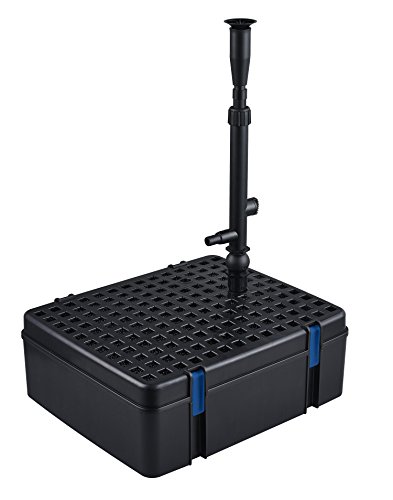
Jebao All-in-One Pond Filter with 13W UV
Effectively the same OEM box as the CNZ, down to the 13W UV, but with a gentler 530 GPH pump the sponge can actually keep pace with, so it clogs less on a small stocked pond. Cheaper too, and the one we'd start a patio pond with.
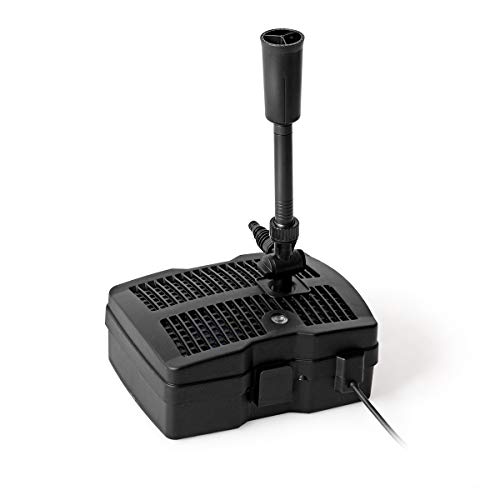
Goplus 4-in-1 Submersible Pond Filter, 660 GPH
The cheapest way into a UV all-in-one, and the grab for a fountain-first patio pond or a lightly planted container. Its 9W UV is weaker than the CNZ 13W, so count on it clearing a couple hundred gallons at most, not a fish load.

EasyPro ESF1250 Pump/Filter/UV Combo
The all-in-one built like real gear, at more than twice the price. A stronger pump, more sponge volume and a sturdier UV that lasts seasons the cheap combos don't. Still an all-in-one and still small-pond only, but the one that holds up.