Aquascape Pond Dye Review
By The Pond Review · Updated August 2026
Independent editorial review. We never accept payment for coverage, though we may earn a commission if you purchase through our links.

Verdict
Owner opinion on the koi forums splits cleanly, and it splits by pond. Keepers with deeper, fish-stocked ponds who dose lightly report the dye doing its one real job: one notes flatly that string algae needs sunlight and the dye reduces the light it gets. The skeptics are mostly the planted-pond and natural-look crowd, who doubt the tint does much for algae at all and would rather add plants and pull the hair algae by hand, which on their ponds is the better call. Running underneath both camps is the same physical fact nobody disputes: a dye dark enough to block light is dark enough that you stop seeing your fish, and it stains what it touches going in. Our read matches the split the owners land on. Dye is real for shade and for slowing algae on the right pond, oversold as any kind of cure, and always a trade of visibility for suppression. The larger-pond users make the last point for us, reaching for dye when a wall of plants was never the plan and shade is the cheapest lever they have.
Read full take ↓Similar pond dyes
Pond dye is one product where the marketing and the mechanism pull in different directions. What it does is real and narrow: it shades the water so less sunlight reaches the algae and the pond bottom, which slows new algae growth and hides the muck, dead leaves and equipment sitting down there. What it isn't is an algaecide, and it won't touch a green-water bloom that's already turning your pond pea-soup. Aquascape's Water Tint Blue is a competent version of exactly that, a cosmetic-plus-mild-suppression tool sold as more.
So the buying decision comes down to your pond, not the bottle. Dye works by cutting light penetration, which means it helps most on a deeper, fish-only pond where the shade slows algae and the fish don't mind the dimmer water. It's the wrong choice on a planted pond or one running submerged oxygenators, because the same shade that starves the algae starves your plants in the same breath. Match it to the pond and the tint earns its keep. Misjudge it and you have paid to hurt the pond you were trying to help.
What pond dye does, and what it doesn't
The mechanism is light. Dye tints the water so a smaller fraction of sunlight makes it down through the column, and algae, like every plant, runs on that light. Cut the light and you slow the rate at which new algae can grow, and you darken the view so the sludge, dead leaves and pump on the bottom drop out of sight. That's two jobs, one biological and one cosmetic, and Aquascape's tint does both.
The trouble starts with the third job people expect. Dye isn't an algaecide; it kills nothing. It slows what hasn't grown yet, and it doesn't clear what already has. If your pond is already a green-water bloom, the water is full of suspended single-celled algae getting all the light they need before the dye can matter, and tinting them a darker shade does nothing to clear them. For that you need a UV clarifier or an algaecide, not a colorant. Reach for dye as prevention on water that's still fairly clear, never as a rescue for water that has already gone green.
The short version
Where it earns its money:
- Shades a deeper, fish-only pond so less light reaches the algae, which slows new growth over a season.
- Hides sludge, leaves and submerged equipment, and gives the surface the dark, still, mirror-like look many owners want.
- Non-toxic to fish, pets and wildlife at the label dose, and a bit of shade is easy on fish under hot open sun.
- Bought as a concentrate rather than a ready-mixed tint, it's cheap per treated gallon.
Where it lets people down:
- It isn't a cure. It clears no existing bloom and kills no string algae you can already see.
- Wrong tool for a planted pond or one with oxygenators; the shade starves your plants too.
- You'll see your fish less, and overdosing sends them to the bottom and stains what it splashes.
- The small ready-mixed tint bottle is the expensive way to buy shade.
The pond that dye is right for
Because it works by shading, the best candidate is a deeper, fish-only pond. Depth gives the dye a tall column of water to darken, so the shading adds up before the light reaches the bottom, and a fish-only pond has no plants to collateral-damage. Koi and goldfish don't care that the water is dimmer, and on a hot open pond a little shade is arguably kinder to them than full sun. This is the setup where a keeper reasonably reports the string algae easing back over a season, because the dye is doing the one thing it can do, in the one place it can do it.
The forum consensus, once you set the aesthetic squabbles aside, lines up here. Where dye gets used and defended is on larger, deeper, fish-stocked water, the half-acre bluegill-and-bass ponds where a wall of plants was never the plan and shade is the cheapest lever on hand. Scaled down to a backyard koi pond of decent depth, the same logic holds. Aquascape's tint is a reasonable pick for that pond, dosed with restraint.
The pond that dye is wrong for
Flip every one of those conditions and dye becomes a mistake. On a planted pond or a water garden running submerged oxygenators, the shade you're buying to starve the algae starves your lilies, your marginals and your oxygenating plants at the same time, because they're all competing for the same light. You can't dim the water for the algae alone. Worse, healthy plants are the best algae control there's, since they outcompete algae for the nutrients feeding it, so dosing dye on a planted pond can leave you with more algae once the plants sag, not less.
A shallow pond is the other bad fit. With a foot or two of water there isn't enough column for the tint to shade much before light hits the bottom, so you dose heavily to see any effect, which drags you straight into the too-dark problems below. And if your water is already clear and you like it, the sensible move is to skip the dye; you'd be adding an artificial blue to solve a problem you don't have.
The value math: ounces per gallon
Here's the arithmetic the pretty bottle hopes you skip. Dye is dosed by concentration, a small volume treating a large volume of water, so the number that decides value is cost per treated gallon, not the sticker price on the bottle. Aquascape's Water Tint Blue is an 8.5 ounce bottle, and like most ready-mixed tints it's meant to treat on the order of a few thousand gallons per bottle. A 4X concentrate such as the Airmax DyeMond does the same shading job at roughly a quarter of the dose, so a single quart treats many times the water of that little tint bottle for not much more money.
Run it out and the ranking is clear: per treated gallon, the concentrate is the cheap option and the ready-mixed tint is the expensive convenience. The tint bottle pays for itself only on a small pond you dose once or twice a year, where a quart of concentrate would sit half-used on a shelf. On anything bigger, or dosed across a season, buy the concentrate and measure it out. Owners dosing real ponds already work this way; a keeper treating a large pond counts in milliliters, not capfuls, because at that scale the per-gallon cost is what decides it.
Real for looks, oversold as an algae cure
Adopt the split the owners keep landing on, because it's the right one. As a look and as light suppression, dye delivers. It gives a lot of ponds the deep, still, mirror-like surface their owners are after, and on the right pond it measurably slows algae by starving it of light. As an algae cure it's oversold. It won't clear an existing bloom, it won't kill the string algae you can already see, and it's no substitute for pulling that hair algae out by hand or fixing the nutrient load feeding it. Treat dye as one mild lever among several and it stops disappointing people.
The skeptics on the forums aren't wrong either, and they're worth hearing. Plenty of experienced keepers don't use dye at all, preferring the natural look and leaning on plants and manual removal, and on a planted pond that's the better program. The dye camp and the plant camp are mostly arguing about different ponds. Match the tool to yours and both camps turn out to be right.
You'll see your fish less
Every buyer should price in one guaranteed cost. Dye works by making the water darker, so by definition you'll see your fish less. Tint the water dark enough to shade the bottom and slow the algae, and the koi you spent good money on are harder to watch unless they're near the surface. There's no dial that darkens the water for the algae but keeps it clear for viewing, because it's the same water either way.
It gets worse if you overdose, which is easy to do. Push the concentration too high and the fish will hold near the bottom in the gloom and stay out of sight, and the dye stains anything it splashes on the way in, hands, decking and clothing included. The habit that keeps you happy is to under-dose on purpose: add less than you think you need, tint the water until you can just barely make out the bottom of the shallow end, and stop there. You get most of the shading with water you can still enjoy.
Is it safe for fish and plants
On safety the answer is reassuring, with one condition attached. Reputable pond dyes, Aquascape's included, are non-toxic to fish, pets, wildlife and people at the label dose, and treated water stays safe for the fish living in it and for the birds and animals that drink from the pond. The load-bearing phrase is "at the label dose." The safety margin is built around the dosing rate printed on the bottle, so measure to your pond's true gallons and follow that rate rather than eyeballing color, and keep the concentrate off your skin and out of your eyes while you handle it. This is a product-selection and dosing question, and the label is the authority here, not the forum.
The plant caveat isn't a toxicity problem but the mechanism working as designed: dye is safe for your submerged plants and will still hold them back, because it's taking their light. That's a reason not to use it on a planted pond, not a safety warning. On a fish-only pond dosed to label, dye is one of the lower-risk things you can add to the water.
Where we land
Pond dye is a real tool with a narrow, honest job: shade a deeper fish-only pond to slow algae and hide the muck, and give the surface a darker, calmer look. Aquascape's Water Tint Blue does that job. What sinks people is buying it to do a job it can't, whether that's clearing a green-water bloom, killing visible string algae, or fixing a planted pond it'll only dim. Match it to a fish-only pond, dose it light, and it earns a modest keep.
On value, though, the small ready-mixed tint bottle is the costly way to buy shade. If you're treating anything beyond a small pond, or dosing across a whole season, a black 4X concentrate does the identical light-cutting work for far less per treated gallon, which is why our alternative picks lead with the concentrate rather than another bottle of tint. Buy the tint for a one-time touch-up on a small pond; buy the concentrate for the actual job.
Our Ratings
Overall score
A dye is a predictable, low-drama product. It tints consistently, stays non-toxic at the label dose, and there is nothing in a bottle of colorant to fail. What keeps it off the top is that the effect is inherently mild and easy to overshoot, so the result leans hard on getting the dose right for your true gallons.
As shade and light suppression on the right pond it does the job, slowing new algae and hiding the muck, and it delivers the dark, still surface people buy it for. It loses ground because that is the ceiling: it clears no existing bloom, kills no visible string algae, and on a planted pond the same shade works against you.
The weak column. The small ready-mixed tint bottle is the costliest way to buy shade per treated gallon, and a 4X black concentrate does the identical light-cutting for far less. Worth its price only for a one-time touch-up on a small pond, where a quart of concentrate would sit half-used.
Aquascape Pond Dye on Amazon.
The Evidence Behind Our Verdict
Owner opinion on the koi forums splits cleanly, and it splits by pond. Keepers with deeper, fish-stocked ponds who dose lightly report the dye doing its one real job: one notes flatly that string algae needs sunlight and the dye reduces the light it gets. The skeptics are mostly the planted-pond and natural-look crowd, who doubt the tint does much for algae at all and would rather add plants and pull the hair algae by hand, which on their ponds is the better call.
Running underneath both camps is the same physical fact nobody disputes: a dye dark enough to block light is dark enough that you stop seeing your fish, and it stains what it touches going in. Our read matches the split the owners land on. Dye is real for shade and for slowing algae on the right pond, oversold as any kind of cure, and always a trade of visibility for suppression.
The larger-pond users make the last point for us, reaching for dye when a wall of plants was never the plan and shade is the cheapest lever they have.
Our rating above is our own editorial call. What follows is the field evidence we weighed to reach it: first-hand reports from pond owners on dedicated pond and koi forums, which we lean on more than manufacturer-influenced published reviews because unsponsored owners tend to be the more candid signal.
What Pond Forums Say
“In order for string algae to grow well it needs sunlight. The dye will reduce the light it gets and will help control it.”Source →
“I always questioned the effectiveness of it on algae prevention, but when you’re combat agricultural fertilizer runoff and other things during storms I guess you‘ll try anything.”Source →
“its a dye and if its capable of stopping light penetration then its going to be dark enough so that you won't be able so see the fish unless they are on the surface”Source →
“makes the water blue, goes away eventually, might cut down algae. I don't use it. If your water is already nice and clear I would not use it, but I don't like the artificial blue look”Source →
Frequently asked questions
Is the Aquascape Pond Dye worth it?
The weak column. The small ready-mixed tint bottle is the costliest way to buy shade per treated gallon, and a 4X black concentrate does the identical light-cutting for far less. Worth its price only for a one-time touch-up on a small pond, where a quart of concentrate would sit half-used.
How reliable is the Aquascape Pond Dye?
A dye is a predictable, low-drama product. It tints consistently, stays non-toxic at the label dose, and there is nothing in a bottle of colorant to fail. What keeps it off the top is that the effect is inherently mild and easy to overshoot, so the result leans hard on getting the dose right for your true gallons.
How well does the Aquascape Pond Dye perform?
As shade and light suppression on the right pond it does the job, slowing new algae and hiding the muck, and it delivers the dark, still surface people buy it for. It loses ground because that is the ceiling: it clears no existing bloom, kills no visible string algae, and on a planted pond the same shade works against you.
What do real owners say about the Aquascape Pond Dye?
Owner opinion on the koi forums splits cleanly, and it splits by pond. Keepers with deeper, fish-stocked ponds who dose lightly report the dye doing its one real job: one notes flatly that string algae needs sunlight and the dye reduces the light it gets. The skeptics are mostly the planted-pond and natural-look crowd, who doubt the tint does much for algae at all and would rather add plants and pull the hair algae by hand, which on their ponds is the better call.
Options Worth Checking Out
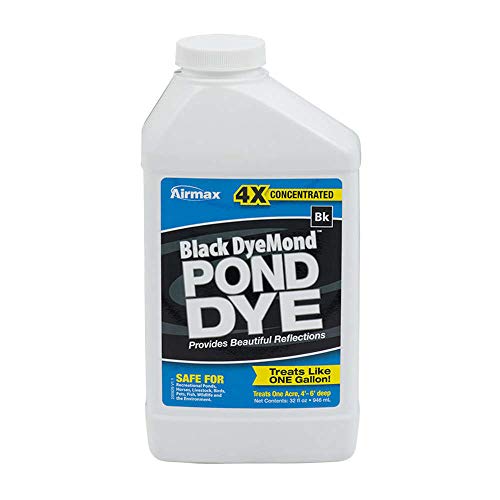
Airmax DyeMond Black Pond Dye 4X Concentrate, 1 Quart
Our pick when you want the shading done cheaply. A black 4X concentrate, so a quart treats far more water than a tint bottle for little more money, and black shades the column better than blue while reading as natural still water.
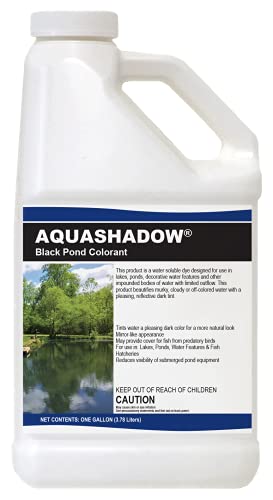
Aquashadow Black Pond Dye, 1 Gallon
The premium jug for a big, deep pond. A full gallon of UV-blocking black colorant that treats a lot of water in one buy and hides submerged equipment; priced well above the small bottles, but cheaper per gallon once you scale up.

Generic 4X Black Pond Dye Concentrate, 32 oz
The budget concentrate for cheap shade and nothing more. A no-name 4X black colorant in a 32oz bottle at the lowest price per treated gallon here; you trade brand backing for the same light-cutting tint the pricier jugs sell.


