The Best Pond Thermometer
By The Pond Review · Updated August 2026
Independent editorial guide. We never accept payment for coverage, though we may earn a commission if you purchase through our links.
Quick Take
Buy the thermometer you'll read from indoors, because the value of a pond thermometer is measured at the seasonal transitions when you'd otherwise be putting on boots to check a dial in the cold. Our default is the Inkbird IBS-P01R: a waterproof sensor floats in the pond and sends the water temperature to a display you keep inside, with a Bluetooth sensor bundled in for indoor air. For most keepers the indoor readout is what gets the feeding and treatment calls made on the right day instead of a week late.
One thing to be honest about before you buy. All of these are floating sensors, so they read the surface, and in spring and fall the surface and the water down where the fish hold pull apart by several degrees. If your decisions hinge on that bottom number in deep cold, a sinkable probe is the better tool. If you mainly want a reliable, readable-from-indoors sense of where the pond is through the feeding and treatment seasons, a good floating unit covers it, and a five-dollar dial covers the keeper who is happy to walk to the water.
We have matched four thermometers to how you check your pond below, from the wireless unit we'd start with to the cheap dial that never fails quietly. See picks ↓

Water temperature is the master variable a pond keeper acts on. It decides when you switch koi to a wheat-germ cool-water food, when you stop feeding for the year, whether a salt or algaecide treatment is even safe to run, and when ice becomes a real risk to the fish. Every one of those calls turns on a number, and for most of the year that number lives outside in the cold.
So a pond thermometer is less a gadget than the thing that gets those seasonal decisions made on time. Our view is that you should buy for the reading you'll look at, not the feature list, and be clear-eyed about the one limit every affordable unit shares: it floats, and the fish don't live at the surface.
Why water temperature is the number you act on
Almost every seasonal decision in a fish pond is a temperature decision wearing a calendar's clothes. Water temperature is also the number to watch rather than air temperature, because water changes slowly while the air whips around above it: a pond can sit at 55 degrees through a run of near-freezing nights, and the fish respond to the water, not the forecast. Judge the pond by the thermometer in it, and most of the year the readings move gently enough that you have time to act on them.
That's the case for owning one at all. The decisions it informs aren't cosmetic. They're about what you feed, what you dose, and whether the fish come through winter, and each of them has a temperature line you can't see by looking at the water. A thermometer is how you know which side of the line you're on.
The threshold that matters most: feeding in the cold
The single most important reason to own a pond thermometer is the feeding threshold, and this is where we lean on authority rather than the forums. Extension guidance from the fisheries and aquaculture programs is consistent: as the water falls through the 50s Fahrenheit, koi and goldfish keepers switch from a high-protein growth food to an easily digestible wheat-germ cool-water formula, and once the water settles below about 50 degrees, roughly 10 Celsius, they stop feeding altogether. The reason is physiology, not fussiness. A fish is cold-blooded, so its gut slows down with the water around it, and food it can no longer process sits and rots inside it. Feeding a koi at 45 degrees doesn't nourish it; it risks killing it.
The same logic runs through treatments. Salt, parasite medications, and many algaecides print a temperature window right on the label, because a dose that's safe and effective at one water temperature is useless or dangerous at another. Reading that window off a guess is how fish get hurt. Winter is the sharpest case of all. As the surface nears freezing the fish drop to the bottom and go dormant, and the job shifts to keeping a gas-exchange hole open rather than warming anything. A de-icer keeps that hole open so trapped gases can escape; it doesn't heat the pond, and nothing you buy should pretend to. Knowing you have crossed into that regime is worth more than any single reading all year.
Measure at fish depth, not the surface
Here's the first-principles limit, and it's the one to be honest about before you spend anything. The number you care about is the temperature of the water where the fish are, near the bottom of the pond. A probe you can sink to that depth gives it to you directly. A floating sensor gives you the surface instead. For much of the year those two numbers sit close enough that it doesn't matter. In spring and fall they diverge, sometimes by several degrees, because the sun warms the top while the depths lag behind, and it's precisely in those transition weeks that you're making the feeding and treatment calls the thermometer exists to inform.
This doesn't make a floating thermometer useless, but it sets the terms. Treat the surface reading as a lead indicator, and on a deep pond expect the bottom to trail it going into fall and to catch up going into spring. The gap bites hardest in deep winter, when a floating sensor can also freeze into the surface ice and take your reading offline at the exact moment you most want to know what the bottom water is doing. If your calls hinge on that bottom number in the cold, a sinkable probe, or a keeper's trick of running a sensor down into the filter pit where bottom-drain water passes, is the better answer, and we'd say so plainly rather than sell you a float as if it read the depths.
Why a reading you can see from indoors is worth paying for
Given that limit, why lead with a wireless unit at all? Because the failure that costs fish isn't a tenth of a degree of accuracy; it isn't looking. In July nobody needs help knowing the pond is warm. A thermometer earns its keep in the shoulder seasons and in winter, when the water is doing something you need to respond to and the alternative is pulling on boots to read a dial in the cold. In practice that means you check it less often and later than you should. A sensor that puts the water temperature on a display in your kitchen, the way the Inkbird does, turns checking the pond into a glance, and a glance you'll take beats a precise reading you keep meaning to go and get.
That's the trade at the heart of these picks. A wireless unit buys you the indoor readout and the frequent, on-time checking that comes with it, at the price of still being a float. A five-dollar dial gives you an honest surface number for the cost of walking to the water every time. Neither hands you the bottom number for free. Decide first whether you'll reliably walk out in January, and let that answer choose your thermometer.
The failure modes you're paying to avoid
Look past the badge on any of these and the failure modes are the same across the category. Durability is the big one. The recurring story on the pond forums, across brand after brand, is floating sensors that fog up internally and die, sometimes just outside warranty, and probes that corrode after a couple of seasons in the water. Price one of these as a thing you replace every few years, not a lifetime buy. Radio range is the second limit on the wireless units: these are low-power transmitters, and a pond at the back of a yard with a house wall in the way can outrun the signal, so test the link before you trust it.
Two quieter traps round it out. On many wireless kits the transmitter meant to sit poolside isn't itself waterproof, only the sensor is, which is why you find keepers sealing the transmitter in a zip-lock bag to get it through the weather. And a cheap float has a way of drifting to the middle of the pond or off toward the liner where you can't reach it, so tie a line to it and pull it in to read. A floating thermometer that wanders and one that fogs are the two things the money and the small habits are spent avoiding.
How to choose among our picks
Start with how you check your pond. If you won't trudge out in the cold as often as you should, buy the Inkbird IBS-P01R and put the water temperature on a screen indoors; the bundled air sensor is a small bonus, and the indoor readout is what makes the difference at the feeding and treatment lines. If you'd rather read the pond on the phone you already carry than keep a dedicated display, the TempPro sends the same floating-surface reading to an app for less, with the identical surface-not-bottom caveat.
If you check the pond in person anyway and only want a temperature while you're there, skip the radios. The eLander is the five-dollar dial that never fails quietly: no batteries, no signal, nothing to fog, and you read it by walking to the water. The digital floating unit sits a step above it with a battery-lit, double-sided readout you can see from either bank, at the cost of a battery that fades first in a cold snap. Match the thermometer to whether you'll walk out, and each of these has a pond it fits.
Setting it up so you can trust the reading
Whatever you buy, a little setup keeps it honest. Float or site the sensor where it won't get sucked against a skimmer or pump intake, tie a line to a bare float so it can't wander out of reach, and put fresh batteries in before the cold arrives rather than during it. On a wireless unit, do the one test that matters before the return window closes: check that the reading reaches the display from the pond, through whatever walls sit between them. If the signal drops out across your yard, that's the failure that sends a unit back, and it's far better found in week one than in the first hard freeze. For the winter half of the job, our pond de-icer picks cover keeping a gas-exchange hole open once the thermometer tells you the water has gone cold.
Where we land
A pond thermometer is a small purchase that pays off every fall and spring, and the way to buy one well is to be clear about what it's for. It exists to tell you which side of a temperature line you're on, so the wheat-germ switch, the stop-feeding call, and the treatment window get made on the right day. That's why we lead with the reading you'll look at, and why our default is the wireless unit that puts the number indoors.
What none of these will do is hand you the bottom number, because they float, and none will outlive its class, because nothing here does. Buy for the reading you'll check, judge it on waterproofing and, for the wireless picks, on range, expect to replace the float eventually, and reach for a sinkable probe if your decisions hinge on the water down where the fish spend the winter. Do that and a cheap thermometer earns its keep at the two transitions where a pond keeper needs one most.
The picks
Products we recommend for this guide.
Inkbird IBS-P01R Wireless Pool & Pond Thermometer
Our top pick because you read it from a warm kitchen. A waterproof sensor floats in the pond and radios the water temperature to an indoor display, with a Bluetooth sensor bundled in for indoor air. It floats, so read it as surface, not fish depth.

TempPro TempAir Wireless Floating Pond Thermometer
The wireless pick when a phone readout beats a dedicated screen. This floating IPX8 sensor sends water temperature to an app for well under the Inkbird's price, with the catch every float shares: you get the surface, not the water the fish hold in.
eLander Pro Large Floating Pool & Pond Thermometer
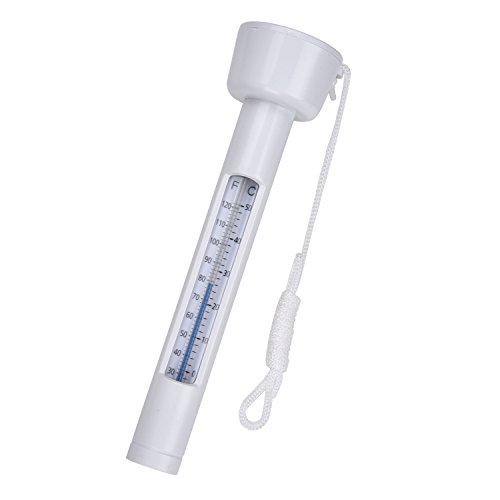
The cheap analog reality check, a large floating dial you read at the water. Nothing to charge, no signal to drop through a wall, nothing to fog or corrode. It shows the surface only, and only when you walk to it, but it won't quit mid-winter.

Floating Digital Pond & Pool Thermometer (IPX8)
A floating digital thermometer with a double-sided readout you can see from either bank, run off a battery instead of a printed dial. Cheap and waterproof to IPX8, it still asks you to walk out, and the battery fades first in a cold snap.
What owners say
Real owner reports from the threads and editorial sources we drew on for this guide.
“Water temperature changes slowly, as opposed to air temperature which can change rapidly. We've had nights in the low 30s for 10 days but the pond temperature is still right at 55 degrees.”
“I bought a Davis weather transmitter with a temp probe. So quit using the other one. With the Davis I can see the temp via the internet. It is part of my home weather station data.”
“I have used 2 different kind that I got from Amazon, but couldn't tell you their names. I wanted dual probes, wireless, digital but couldn't find a reliable one within price range.”
“Id stay away from a floating thermometer. yes i'd be willing to bet theres no glass .but in my pond i'm always doing something and plastic or glass i'd not want that shard to puncture the liner. they have remote thermometers where only a metal probe is in the water.”
“To prevent it from getting way out in the pond where you can’t check it, attach a line to it so you can pull it close, or even pull it out to check the temp. They can build a lovely coating of biofilm, but that cleans easy with a scrubbie, and is in fact good for the fish, if unsightly.”