Inkbird IBS-P01R Pond Thermometer Review
By The Pond Review · Updated August 2026
Independent editorial review. We never accept payment for coverage, though we may earn a commission if you purchase through our links.

Verdict
None of these voices are Inkbird owners, and we aren't going to pretend otherwise: the sourcing here's longtime pond keepers talking about wireless thermometers as a class, naming Oregon Scientific, La Crosse, AcuRite and Malibu. Read that way it's useful, because the failure modes are the same whatever badge is on the float. The recurring one is durability, not accuracy. Floating sensors fog up internally and die, sometimes just outside warranty; probes corrode after a couple of seasons; and the transmitter that's supposed to sit poolside is often not itself waterproof, which is why you see keepers sealing it in a zip-lock bag. The keepers who are happiest are the ones who got the sensor reading the water they care about, like the one who runs a probe down into the filter pit to read the bottom-drain water, or the one who just values that his unit reports air and pond temperature accurately, year after year. The wish that keeps surfacing is the one the Inkbird only half answers: knowing the temperature at the bottom of the pond, especially once the surface freezes over. That's our read on where this class earns its money and where it falls short, and the Inkbird sits squarely inside it. Buy it for the indoor readout at the seasonal transitions, judge it on whether the float survives your winters and the signal reaches your house, and don't expect a floating sensor to hand you the bottom number that matters most in deep cold.
Read full take ↓Similar alternatives
Water temperature is the master variable a pond keeper acts on. It decides when you switch koi to a wheat-germ cool-water food, when you stop feeding for the year, whether a salt or parasite treatment is even safe to run, and when ice becomes a real risk to the fish. Every one of those decisions turns on a number, and for most of the year that number lives outside in the cold. A thermometer you can read from a warm kitchen isn't a gadget so much as the thing that gets those seasonal calls made on time instead of a week late.
The Inkbird IBS-P01R sells as a pool thermometer, but the pond job is identical: a waterproof sensor floats in the water and sends the reading to a display you keep indoors. That indoor readout is the whole value, and at seasonal transitions it earns its small price. The catch is that it floats, so it reports the surface, and the surface isn't where the fish are. Buy it for the convenience of the reading, judge it on waterproofing and radio range rather than its feature list, and don't ask a floating sensor to give you the one number, the bottom number, that matters most in deep cold.
The short version
What works:
- The reading shows up indoors, which is the entire point. You make the feeding and treatment calls on the day the water crosses the line, not the next time you happen to walk out.
- A sealed floating sensor with nothing to plug in at the water and no cable to route, so setup is drop-it-in-and-done.
- The bundle throws in a separate indoor Bluetooth temperature-and-humidity sensor, so you can watch air and water together if that's useful to you.
- The pool label is a non-issue. Water is water, and the measurement a pond keeper needs is exactly the one a pool owner needs.
What to watch:
- It floats, so it reads the surface. In spring and fall the surface and the bottom pull apart, and the fish live at the bottom number.
- Wireless range is the limit owners hit on any unit like this. A pond at the far end of a yard, with a house wall in the way, can outrun the signal.
- Waterproofing is the durability question for the whole class. Floating sensors fog and die and probes corrode, and a couple of seasons is a fair thing to expect, not a decade.
- Batteries fade in the cold, which is exactly when you're leaning on the thing most.
Why water temperature is the number you act on
Almost every seasonal decision in a fish pond is a temperature decision wearing a calendar's clothes. Extension guidance from the fisheries and aquaculture programs is consistent on the feeding side: as the water falls through the 50s Fahrenheit, koi and goldfish keepers switch from a high-protein growth food to an easily digestible wheat-germ cool-water formula, and once the water settles below about 50 degrees they stop feeding altogether. The reason isn't fussiness. A fish's gut slows down with the water around it, and food it can no longer process sits and rots inside it. The date on the calendar doesn't tell you when that line is crossed. The thermometer does.
The same logic runs through treatments. Salt, parasite medications and many algaecides print a temperature window right on the label, because a dose that's safe and effective at one water temperature is useless or dangerous at another. Reading that window off a guess is how fish get hurt, so the number on the display is what tells you whether a treatment is on the table at all. Winter is the sharpest case. As the surface nears freezing the fish drop to the bottom and go dormant, and the job shifts to keeping a gas-exchange hole open rather than warming anything. A de-icer keeps that hole open; it doesn't heat the pond, and nothing you buy should pretend to. Knowing you have crossed into that regime, and that the water down where the fish are is holding above freezing, is worth more than any single reading all year.
What the money buys: a reading you can see from indoors
Strip the IBS-P01R down and it's a floating waterproof sensor that transmits wirelessly to a small display you keep inside, with the bundled IBS-TH2 Bluetooth sensor added for indoor air. That's the product, and the convenience is the product. In July nobody needs help knowing the pond is warm. The unit earns its keep in the shoulder seasons and in winter, when the water is doing something you need to respond to and the alternative is pulling on boots to read a dial in the cold, which mostly means you check it less often and later than you should.
So the fair way to judge it isn't by counting features. It's by asking two plain questions. Does the sensor survive being left in the water season after season, and does the signal reach the room where the display sits? Everything else is secondary. A thermometer that reads to a tenth of a degree is worthless if it's fogged and dead by the second winter, or if the reading never makes it across the yard and through the wall.
Surface temperature isn't fish-depth temperature
Here's the first-principles limit, and it's the one to be honest about before you buy. The number you care about is the temperature of the water where the fish are, near the bottom of the pond. A wireless probe you can sink to that depth gives you it directly. A floating sensor, which is what the IBS-P01R is, gives you the surface instead. For much of the year those two numbers sit close enough that it doesn't matter. In spring and fall they diverge, sometimes by several degrees, because the sun warms the top and the depths lag behind, and it's precisely in those transition weeks that you're making the feeding and treatment calls the thermometer exists to inform.
This doesn't make the Inkbird useless, but it does set the terms. Treat the surface reading as a lead indicator, and on a deep pond expect the bottom to trail it going into fall and to catch up going into spring. The place the gap bites hardest is deep winter, when a floating sensor can also freeze into the surface ice, taking your reading offline at the exact moment you most want to know what the bottom water is doing. If your decisions hinge on that bottom number in the cold, a sinkable probe is the better tool and we'd say so plainly. If you mainly want a reliable, readable-from-indoors sense of where the pond is through the feeding and treatment seasons, a good floating unit covers it.
The limits every wireless unit shares
Look past the badge on the float and the failure modes are the same across the category. Radio range is the first. These are low-power transmitters, and a pond at the back of a yard with a house wall between it and the display can be too far, so the sensible move is to test the link before you trust it. Durability is the second and the bigger one. The recurring story on the pond forums, across brand after brand, is floating sensors that fog up internally and die, sometimes just outside warranty, and probes that corrode after a couple of seasons in the water. It's worth pricing one of these as a thing you replace every few years, not a lifetime buy.
The third is a quieter trap: the transmitter that's meant to sit at the poolside is often not itself waterproof, only the sensor is, which is why you find keepers sealing the transmitter in a zip-lock bag to get it through the weather. And batteries lose capacity as the temperature drops, so a unit that reads fine in October can get flaky in a January cold snap. None of these are reasons to skip a wireless thermometer. They're the reasons to buy on waterproofing and range, keep the receiver warm and in range, and not be surprised when the float wants replacing down the line.
How it compares
- Versus a floating dial like the eLander: the dial is the five-dollar reality check. No batteries to die, no radio to lose, nothing to fog, and you read it by walking to the water. It only ever gives you the surface and only when you go and look, but it never fails quietly. If you'd check the pond in person anyway and only want a temperature while you're there, the cheap float is honest value and the Inkbird is paying for convenience you may not use.
- Versus another wireless float like the TempPro: this is the closer call, because it's the same idea for less money, sending the water temperature to your phone from a floating IPX8 sensor. It carries the identical surface-not-bottom caveat, so the decision comes down to whether you want the Inkbird's standalone display and bundled indoor sensor, or would rather read it on the phone you already carry and keep the difference.
Setting it up and testing it before the window closes
Float the sensor where it won't get sucked against a skimmer or pump intake, put fresh batteries in before the cold arrives rather than during it, and site the display where you'll see it. Then do the one test that matters: check that the reading reaches the display from the pond, through whatever walls sit between them, before the Amazon return window closes. If the signal drops out across your yard, that's the failure that sends a unit back, and it's far better found in week one than in the first hard freeze. For the winter side of the job, our pond de-icer picks cover keeping a gas-exchange hole open once the thermometer tells you the water has gone cold.
Where we land on it
The Inkbird IBS-P01R is a convenience tool, and it's fair to buy it as one. It puts the water temperature in front of you indoors, which is the difference between making the wheat-germ switch, the stop-feeding call and the treatment window on the right day and making them late. For a keeper who wants that readout without trekging to the pond in the cold, at a bundle price that includes an indoor sensor, it does the job the category is for.
What it won't do is hand you the bottom number, because it floats, and it won't outlive its class, because nothing here does. Two things drove that read. First, the decisions a pond thermometer exists to inform are all temperature thresholds, which is why the reading is worth having at all. Second, a floating sensor reports the surface while the fish live at the bottom, so it's a strong lead indicator rather than the last word in the seasons where the two diverge. Judge it on waterproofing and range, expect to replace it eventually, and it's a sound small purchase that pays off every fall and spring.
Our Ratings
Overall score
This is the category's weak spot and we have no Inkbird-specific track record to lean on, so we judge it conservatively on the class. Floating sensors across brands fog up and die within a season or two and probes corrode, batteries fade in the cold, and a floating unit can freeze into surface ice. Waterproofing is the whole question here, and a few years is a fair expectation, not a decade.
It does the core job well: the water temperature shows up indoors, on time, so the feeding and treatment calls get made the day the water crosses the line. It loses ground because it floats and therefore reports the surface, not fish depth, so in the spring and fall transitions, the weeks you bought it for, you are reading a lead indicator rather than the number the fish feel.
The bundled indoor sensor and standalone display justify some of the price, but at its cost a bare wireless float that sends the same water temperature to your phone runs noticeably less. You are paying for the extra hardware and the dedicated readout. Fair, not a bargain, and docked because the durability you are buying is a question mark rather than a proven number.
Inkbird IBS-P01R Pond Thermometer on Amazon.
The Evidence Behind Our Verdict
None of these voices are Inkbird owners, and we aren't going to pretend otherwise: the sourcing here's longtime pond keepers talking about wireless thermometers as a class, naming Oregon Scientific, La Crosse, AcuRite and Malibu. Read that way it's useful, because the failure modes are the same whatever badge is on the float. The recurring one is durability, not accuracy.
Floating sensors fog up internally and die, sometimes just outside warranty; probes corrode after a couple of seasons; and the transmitter that's supposed to sit poolside is often not itself waterproof, which is why you see keepers sealing it in a zip-lock bag. The keepers who are happiest are the ones who got the sensor reading the water they care about, like the one who runs a probe down into the filter pit to read the bottom-drain water, or the one who just values that his unit reports air and pond temperature accurately, year after year. The wish that keeps surfacing is the one the Inkbird only half answers: knowing the temperature at the bottom of the pond, especially once the surface freezes over.
That's our read on where this class earns its money and where it falls short, and the Inkbird sits squarely inside it. Buy it for the indoor readout at the seasonal transitions, judge it on whether the float survives your winters and the signal reaches your house, and don't expect a floating sensor to hand you the bottom number that matters most in deep cold.
Our rating above is our own editorial call. What follows is the field evidence we weighed to reach it: first-hand reports from pond owners on dedicated pond and koi forums, which we lean on more than manufacturer-influenced published reviews because unsponsored owners tend to be the more candid signal.
What Pond Forums Say
“I have it in the filter pit and the sensor is reading the temperature of the water coming from the bottom drain through the Cetus. I like it. Oregon Scientific makes a floating sensor that does not hold up at all.”Source →
“We simply cannot fault our Malibu TFH pond/pool remote thermometer its so accurate and better still it is just happily plugging away reporting temperatures both air and pond giving us an accurate report .”Source →
“Only problem is the outdoor unit is not waterproof. I put it in a zip lock bag and put the sensor in the pond. On problem is you loose the ability to sense outdoor temp them.”Source →
“It would be really nice to know what the water temps are at the bottom of my pond, especially when it freezes over.”Source →
“Unfortunately the floating unit kept fogging up and died outside of warranty. Currently have a $25 one like this [ link ] Floating unit worked fine for a week or two then died. Replaced under warranty. (three week turnaround though).”Source →
Frequently asked questions
Is the Inkbird IBS-P01R Pond Thermometer worth it?
The bundled indoor sensor and standalone display justify some of the price, but at its cost a bare wireless float that sends the same water temperature to your phone runs noticeably less. You are paying for the extra hardware and the dedicated readout. Fair, not a bargain, and docked because the durability you are buying is a question mark rather than a proven number.
How reliable is the Inkbird IBS-P01R Pond Thermometer?
This is the category's weak spot and we have no Inkbird-specific track record to lean on, so we judge it conservatively on the class. Floating sensors across brands fog up and die within a season or two and probes corrode, batteries fade in the cold, and a floating unit can freeze into surface ice. Waterproofing is the whole question here, and a few years is a fair expectation, not a decade.
How well does the Inkbird IBS-P01R Pond Thermometer perform?
It does the core job well: the water temperature shows up indoors, on time, so the feeding and treatment calls get made the day the water crosses the line. It loses ground because it floats and therefore reports the surface, not fish depth, so in the spring and fall transitions, the weeks you bought it for, you are reading a lead indicator rather than the number the fish feel.
What do real owners say about the Inkbird IBS-P01R Pond Thermometer?
None of these voices are Inkbird owners, and we aren't going to pretend otherwise: the sourcing here's longtime pond keepers talking about wireless thermometers as a class, naming Oregon Scientific, La Crosse, AcuRite and Malibu. Read that way it's useful, because the failure modes are the same whatever badge is on the float. The recurring one is durability, not accuracy.
Options Worth Checking Out
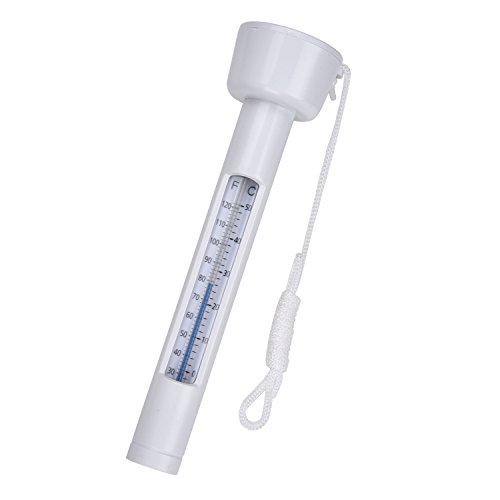
eLander Pro Floating Pool & Pond Thermometer
The five-dollar reality check. A floating dial you read at the water’s edge: no batteries to die, no radio to lose through a wall, no probe to corrode. It only gives the surface number, and only when you go out to it, but it never fails quietly.

TempPro TempAir Wireless Floating Pond Thermometer
The wireless pick if the Inkbird’s two-sensor bundle is more than you want. A floating IPX8 sensor that sends water temperature to your phone for less, with the same catch every float carries: it reads the surface, not the bottom where fish sit.


