The Best Pond Kit for Beginners
By The Pond Review · Updated August 2026
Independent editorial guide. We never accept payment for coverage, though we may earn a commission if you purchase through our links.
Quick Take
A starter kit is worth buying for one reason: it hands a beginner matched parts and a gentle first season instead of a parts-matching puzzle. Our pick for most first ponds is the TotalPond Complete Filter Kit, which pairs a 300 GPH pump with a filter box and tubing that all fit out of the box. It's a fair starter for a small goldfish or plant pond, and it's the one we'd hand someone who wants to stop researching and start digging.
The catch is the same for every kit on the market: it ships undersized for where a pond ends up. The number on the box is a fishless rating, the pump is measured at zero lift, and the trap is buying the kit for the pond you have today rather than the one you'll want next year. Read the kit as a pump, a filter, and some tubing, and size that pump against your planned gallons and fish before you trust the box. If koi are the plan, buy the filter and pump separately from the start.
We've matched four kits to real beginner ponds below, from the one we'd start with to the container garden that skips plumbing and the budget all-in-one. See picks ↓

A pond kit is a box of parts sold as a shortcut. Instead of choosing a pump, a filter, tubing, and fittings that all work together, you buy one carton, open it, and the pieces are meant to plug into each other. For a beginner staring at a wall of pumps rated in gallons they can't yet interpret, that shortcut has real value, and we recommend a kit for the right first pond without hesitation.
Our view comes with a warning the box won't print. Every kit we looked at is built to a price, which means the filtration and the pump are sized to the smallest pond the kit could plausibly serve, and beginners tend to grow their pond and their fish load fast. So a kit is a fine on-ramp, and a poor destination. Buy it to enjoy a gentle first season, and expect to outgrow it by year two.
Our take: a kit buys a gentle first season, not a final pond
We recommend a starter kit for a beginner's first small pond, and the reason is narrow and worth stating plainly: it removes the one task that stops most people before they start, matching a pump to a filter to the tubing that connects them. A kit hands you parts that already fit. You lose the paralysis of picking components you can't yet size, and you gain a working pond in an afternoon. For a small goldfish or plant pond, that trade is a good one, and the TotalPond Complete Filter Kit is the box we'd reach for first.
Where we part company with the way kits are marketed is the promise underneath the convenience. A kit is sold as a finished pond in a carton, and it isn't. It's a competent first season for a small, lightly stocked pond, after which most owners will replace or add to it. That isn't a knock on any single kit. It's the shape of the category, and knowing it going in is the difference between a kit that delights you and one that disappoints you by July.
Read the kit as a pump, a filter, and tubing
The trick to buying a kit well is to stop reading it as one product and start reading it as three: a pump, a filter, and the tubing and fittings between them. Every claim on the box collapses into those three parts. When a kit says it suits a pond "up to 1,200 gallons," that figure is doing the same work the pump's gallon rating and the filter's volume do, and it's set by the weakest of the three. Price out those parts individually and you can usually see where the kit cut its corner, which is almost always the pump.
This reframing also tells you where a kit shines. A container water garden like the Aquascape AquaGarden bundles pot, media, pump, and a small waterfall into a sealed unit with no liner and no plumbing to match at all, so the three-part problem disappears. That's the cleanest use of the kit idea we found: a patio or half-barrel pond where it arrives assembled. The moment a kit asks you to dig a liner pond and stock it with fish, the pump and filter it chose for you start to matter, and you have to check their numbers rather than trust them.
Do the pump math the box hopes you skip
Here's the arithmetic the kit box would rather you skipped. A pond pump should turn the whole pond over about once an hour for a lightly stocked pond, and closer to twice an hour once you add fish that produce real waste. A kit rated at 300 or 400 GPH therefore matches a pond of roughly 300 to 400 gallons at a gentle stocking, and less than that if you push the fish load. Kits get sold against pond sizes far larger than that math allows, because the number that sells a kit is the biggest pond it'll fill, which is well past the pond it'll keep clear.
Two corrections make the pump number honest. First, the GPH on the box is measured at zero lift, and real delivery drops fast once the water has to climb to a filter set above the pond or feed a waterfall, so a 300 GPH pump might move closer to 200 at your actual head height. Second, the pond volume a filter is rated for assumes no fish; put goldfish in and halve it, and if the plan is koi, halve it again. Run those two divisions before you buy and the pond a starter kit can keep clear is small, which is the pond a beginner should be starting with anyway.
The undersizing every kit ships with
The pattern owners hit again and again is that a kit runs underpowered for the pond it's sold against, and the pump is the first thing to go. It isn't a defect in one brand; it's how the category is priced. A kit has to bundle a pump, a filter, tubing, and fittings under a single sticker price that reads as a bargain, so the pump is spec'd to the floor of what the kit can claim. Owners who compared the pieces to buying separately kept landing in the same place: mix and match from a few suppliers and you often spend less and get a stronger pump than the kit gave you.
The other half of the pattern is that beginners outgrow the kit faster than they expect, because a first pond almost never stays a first pond. You add a few fish, the fish grow, you dig the pond a little bigger next spring, and the filtration that was adequate for a quiet water garden falls behind a stocked one. The common thread in owner reports is to check each part of a kit against its own reviews before buying, because the pump inside a kit is frequently the weakest-reviewed piece sold on its own. Buy the kit for the pond you have this season, and plan to upgrade the pump first when you grow.
Where a kit is the right buy, and where it isn't
A kit is the right buy in a few clear cases. If you want a small goldfish or plant pond and you don't want to think about matching components, a kit is exactly the tool for that, and the TotalPond kit or the Pond Boss Medium kit will get you a clean, working pond quickly. If you want a patio or container pond with no digging, a self-contained container kit like the Aquascape AquaGarden is the easiest on-ramp there's. And if you just want to try the hobby cheaply before committing, a low-cost all-in-one unit is a defensible first season you can hand down to a smaller feature later.
A kit is the wrong buy the moment koi enter the plan. Koi are big fish that eat hard and keep growing, and the filtration and pump inside a beginner kit are undersized for a koi bioload from the day you open the box. For a koi pond, buy the filter and the pump as separate, properly sized components from the start; the money you spend matching parts yourself is less than the money you waste buying a kit, outgrowing it in one season, and replacing it. If you're weighing the koi route, our guide to sizing a filter for a koi pond walks through the math in full, and our review of the standalone TotalPond filter kit covers the piece a lot of these bundles are built around.
Setting up your first kit without the rookie mistakes
Once you have a kit that fits your pond, a few habits keep the first season smooth. Give the filter time to cycle before you judge it: a new filter has no bacteria colony yet, so it does little for the first few weeks until nitrifying bacteria establish, and a bacteria starter speeds that along. Judging the water on day three is how people talk themselves into returning a kit that hadn't finished cycling. Stock the pond lightly at first and add fish slowly, so the filter's colony has time to grow into the waste load rather than being buried by it.
Handle the pump and the electrics with the same care you'd give any device that runs in water every hour of every day. Plug it into a GFCI-protected outlet, which is the electrical code requirement for any pond pump and the one corner you never cut. Set the pump where debris won't choke it, keep the intake screen clean, and expect to rinse the filter foams through summer as the fish load climbs. None of this is hard, and doing it from the first week is what separates a kit that runs quietly for a season from one that clogs and gets blamed.
How we'd spend a beginner budget
If it were our first pond and a modest budget, we'd buy the smallest kit that honestly fits the pond we're digging, cycle it properly over a few weeks, stock it lightly, and plan to replace the pump first when we grow. For a small goldfish or plant pond that path is cheap, forgiving, and gets you keeping fish this season instead of researching components until the water freezes. A kit sized to a small pond, with an upgrade already on the calendar, is money well spent.
The owners who are happy with their kits and the ones who feel burned split along three habits. The happy ones size the kit to the pond in front of them, not the biggest pond the box claims. They check each piece of the kit against its own reviews before buying, because the pump is usually the weak link. And they treat the kit as a starting point they'll grow past, so the day the pump needs upgrading feels like progress rather than a failure. Do those three things and a starter kit does exactly the job it's good at.
The picks
Products we recommend for this guide.

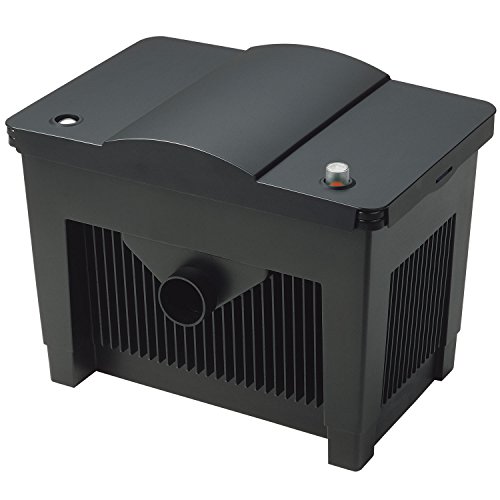
TotalPond Complete Filter Kit with 300 GPH Pump
Our starter pick: a matched 300 GPH pump, filter box, and tubing that fit out of the box, so a beginner skips the parts-matching puzzle. A fair starter for a small goldfish or plant pond; upgrade the pump first before you add koi.

Pond Boss Medium Filter Kit with Pump
A cheaper matched kit with pump and filter for a small water feature or lightly stocked pond. Read its gallon claim as a fishless number and keep the fish load light, and it gives a beginner a tidy, working first pond for very little money.

Aquascape 78325 AquaGarden Container Water Garden Kit
A self-contained container garden with pot, potting media, pump, and waterfall in one, for a patio pond or half-barrel. It skips liner and plumbing entirely, which makes it the easiest true beginner on-ramp, though it holds too little water for koi.

All-in-One Pond Filter with Pump and Fountain, 400 GPH
The lowest-cost way in: a submersible pump, filter, and fountain head in one small 400 GPH unit with three spray patterns. Fine for a tiny goldfish or plant pond, but undersized the moment koi arrive, so treat it as a cheap trial before you scale up.
What owners say
Real owner reports from the threads and editorial sources we drew on for this guide.
“When I looked, it seemed every kit had an underpowered filtration system for the size of the liner. I ended up mixing and matching from a bunch of brands and suppliers and spent less than the kits (I think).”
“I looked at the kits, but bought my own in the end. I looked up the individual pieces on amazon and online retailers. I did get the skimmer shown in the kit, sold on its own on amazon as it had good reviews, the pump from the kit had bad reviews.”
“It is about 6 x 6, 425 gallons and 30" deep. It is a complete kit with pond frame, preformed EDPM liner and pump or filter (2 options).”
“Hmm, think I'll pass on this particular kit in any case maybe kits in general. Yeah I'm definitely going to post product listings on here before buying some of the more complex pieces of equipment like pumps and UV bulbs.”
“Webb's Water Gardens online has some and I've found the customer service people to be very helpful. They know their merchandise.”