Summit Clear-Water Barley Straw Review
By The Pond Review · Updated August 2026
Independent editorial review. We never accept payment for coverage, though we may earn a commission if you purchase through our links.

Verdict
Owner sentiment on the pond forums splits cleanly, and the split isn't about the product itself. It's about what people expected from it. The satisfied reports come from keepers who ran barley in a pond that was already clear, alongside plants, light and a filter, and used it to hold the line: one describes his water staying clear as long as he swaps the small bale out once it goes green. The disappointed reports come from people who dosed it as a rescue on green water and, unsurprisingly, saw little happen and came away unconvinced it was worth the money. The most useful thread is the one that explains the whole pattern: the extract acts faster than a bale because the straw has to break down in the water first before it releases anything. Weigh both camps and the verdict is the one we lead with. Barley straw is slow, fish-safe prevention that keeps a clear pond clear, and it's close to useless against a bloom you already have, so its value lives entirely in matching it to the right job.
Read full take ↓Similar algae treatments
Summit Clear-Water Barley Straw is a two-pack of compressed straw bales you sink in your pond, and the fairest thing we can say up front is what it isn't. It isn't a cure for green water. Barley straw is slow prevention. As the straw decays it releases compounds that suppress new algae from taking hold, but that process takes weeks to start and does nothing to a bloom you already have. Almost everyone who calls it useless dropped it into pea-soup water as a rescue and waited for a fix that was never coming.
Judge it for the job it does and it earns its keep: a cheap, fish-safe maintenance habit that helps keep a clear pond clear. At around ten dollars for two bales rated to a thousand gallons each, it's one of the least expensive things you can add to a pond. Set the expectation to prevention, pair it with plants and a filter, refresh it every few months, and it becomes a quiet part of a clear-water routine. Expect it to rescue a green pond and you'll join the crowd calling it money wasted.
The short version
What works:
- Genuinely cheap prevention. Two bales for the price of a coffee, each rated to roughly a thousand gallons.
- Fish, plant and pet safe at label use, so there's no dosing math and no livestock risk to weigh.
- On a pond that's already clear, it quietly helps keep new algae from getting a foothold across the season.
- Zero equipment. No pump, no wiring, no failure points. It's straw in a net.
What to watch:
- It does nothing to an existing green-water bloom. If your pond is already pea soup, this is the wrong tool.
- It works slowly. Expect weeks before it starts, not days.
- The bales rot out and need replacing every few months, so it's a recurring habit, not a one-time buy.
- A large mass of straw rotting in warm water pulls oxygen out of the pond. Keep the dose modest and the water moving.
What barley straw does in the water
Barley straw is an inhibitor, not an algaecide. As it breaks down in oxygenated water it releases compounds that suppress the growth of new single-celled algae, so it stops fresh algae taking hold rather than killing what's already suspended in the water. On a pond that starts clear and stays lightly stocked, that's often enough to tip the balance in your favor for a season and hold it there.
This is why the happy reports nearly all sound the same. They come from people who put barley into a pond that was already clear, alongside plants and a filter, and used it to keep the water from turning rather than to turn it back. Used that way it does help, and it keeps helping as long as you keep a fresh bale working.
Why it does nothing to a pond that's already green
The single most common disappointment traces back to one fact: barley suppresses new algae and has no effect on the cells already turning your water green. By the time you can see green water the bloom is established, and barley's slow inhibition can't reverse it. Drop a bale into pea soup and nothing visible happens, which is exactly the experience behind every "it didn't work" review.
If your water is already green, reach for something that acts on the live bloom now: a UV clarifier plumbed inline, or a fish-safe algaecide to clear it, then use barley to hold the water you have won back. Our algae-control picks cover the tools that move a bloom; barley is the maintenance layer underneath them, not the fire extinguisher.
First principles: it only works while it rots
The mechanism dictates the care, and it's care the box doesn't mention. The straw has to decompose in oxygenated water to release anything, which tells you three practical things. First, it wants light and flow: a bale stuffed into a dead, shaded corner rots without oxygen and does little, so place it where water moves past it, near a waterfall return or in the skimmer path. Second, its effect has a lifespan, and once a bale rots out and turns dark and slimy it's spent, which is why owners swap bales every few months through the season instead of once a year.
Third, do the arithmetic the pack hopes you skip. The "2000 gallons" printed on it's a ceiling for prevention on a balanced pond, not a promise for a crowded or troubled one. If your pond runs dirty or heavily stocked, halve that number in your head and treat the two bales as prevention for roughly a thousand gallons of real-world water. Sized that honestly, it does the modest thing it's good at.
Straw versus the liquid extract
The liquid barley extracts are the same compounds pulled out of fermented straw and bottled, and the difference in behavior follows straight from that. Because the extraction is already done, the liquid acts faster than a bale, which first has to spend weeks breaking down before it releases anything. That's the real advantage of the bottle, and it's chemistry, not marketing.
The tradeoff is symmetrical. A bottle of ready compounds is also used up faster than a slowly rotting bale, so you dose it on a schedule and it costs more across a season. If you want the quickest start, or you dislike loose straw floating on the surface, the extract is the better buy. If you want the cheapest, most hands-off version and don't mind the slow ramp, the bale is fine. Neither is a cure for green water. Both are prevention in different packaging, and the choice is mostly about speed against cost and tidiness.
Is it safe for koi
At label use, barley straw is safe for koi, goldfish, other fish, plants and pets. There's no pesticide in it and nothing to overdose the way you can with a copper or peroxide algaecide, which is a real part of its appeal for a stocked koi pond.
The one genuine caution is about oxygen, not toxicity. A large mass of straw decomposing in warm summer water consumes dissolved oxygen as it rots, and in a small or crowded pond that can draw O2 down enough to stress fish, especially overnight and during a heat wave when oxygen is already at its lowest. Keep the straw quantity modest for your gallons, run aeration or a fountain, and don't sink several bales into a small pond at once. Used at label dose in a moving, aerated pond, it's one of the gentlest treatments you can add.
Where it earns its place
Bought for what it's, Summit barley straw is a fair, cheap piece of a clear-water routine. It's fish-safe prevention that helps a balanced pond stay balanced, for about the price of a bag of fish food. It won't save a green pond, it works on the scale of weeks, and it needs refreshing every few months as it rots, none of which is a defect so much as the nature of decomposing straw.
We'd keep a pack on hand for maintenance and reach for a UV or a fish-safe algaecide the moment the water turns, then let the barley hold the line once it clears. Manage the expectation and it's worth the ten dollars. Treat it as a rescue and it'll let you down, exactly as it let down everyone who reviewed it as one.
Our Ratings
Overall score
There is almost nothing to fail: it is compressed straw in a net, with no pump, wiring or moving parts. Its dependability comes with an asterisk baked into how it works. A bale is a consumable that rots out and goes inert in a few months, so the effect is only as reliable as your habit of refreshing it, and a bale left in a dead corner barely works at all.
As prevention on an already-clear pond it does a modest, real job: it helps keep new algae from taking hold across a season. But that is the ceiling. It works on the scale of weeks, not days, and it does nothing to a bloom that has already turned the water green, which is the job most buyers wanted done. Judged on results, it is a helper, not a fix.
This is where it makes the most sense. Two bales for around ten dollars, rated to a thousand gallons each, is about the cheapest prevention you can buy, and it is fish-safe with no dosing to get wrong. The value only holds if you use it for what it is; spend it expecting a cure and it is ten dollars that did not solve your green pond.
Summit Clear-Water Barley Straw on Amazon.
The Evidence Behind Our Verdict
Owner sentiment on the pond forums splits cleanly, and the split isn't about the product itself. It's about what people expected from it. The satisfied reports come from keepers who ran barley in a pond that was already clear, alongside plants, light and a filter, and used it to hold the line: one describes his water staying clear as long as he swaps the small bale out once it goes green.
The disappointed reports come from people who dosed it as a rescue on green water and, unsurprisingly, saw little happen and came away unconvinced it was worth the money. The most useful thread is the one that explains the whole pattern: the extract acts faster than a bale because the straw has to break down in the water first before it releases anything. Weigh both camps and the verdict is the one we lead with.
Barley straw is slow, fish-safe prevention that keeps a clear pond clear, and it's close to useless against a bloom you already have, so its value lives entirely in matching it to the right job.
Our rating above is our own editorial call. What follows is the field evidence we weighed to reach it: first-hand reports from pond owners on dedicated pond and koi forums, which we lean on more than manufacturer-influenced published reviews because unsponsored owners tend to be the more candid signal.
What Pond Forums Say
“I use the barley and it works excellent , when the small bale gets green I replace it between the barley the light and the filter My water is clear .”Source →
“Barley extract goes to work faster than the straw does. The reason straw takes longer is because it has to break down in the water before it starts to release the compounds that help clear the water.”Source →
“I hung them in a stream of water figuring the rushing water would help the process. Then I tried the liquid barley extract. I don't think either of them did much to fight algae.”Source →
Frequently asked questions
Is the Summit Clear-Water Barley Straw worth it?
This is where it makes the most sense. Two bales for around ten dollars, rated to a thousand gallons each, is about the cheapest prevention you can buy, and it is fish-safe with no dosing to get wrong. The value only holds if you use it for what it is; spend it expecting a cure and it is ten dollars that did not solve your green pond.
How reliable is the Summit Clear-Water Barley Straw?
There is almost nothing to fail: it is compressed straw in a net, with no pump, wiring or moving parts. Its dependability comes with an asterisk baked into how it works. A bale is a consumable that rots out and goes inert in a few months, so the effect is only as reliable as your habit of refreshing it, and a bale left in a dead corner barely works at all.
How well does the Summit Clear-Water Barley Straw perform?
As prevention on an already-clear pond it does a modest, real job: it helps keep new algae from taking hold across a season. But that is the ceiling. It works on the scale of weeks, not days, and it does nothing to a bloom that has already turned the water green, which is the job most buyers wanted done.
What do real owners say about the Summit Clear-Water Barley Straw?
Owner sentiment on the pond forums splits cleanly, and the split isn't about the product itself. It's about what people expected from it. The satisfied reports come from keepers who ran barley in a pond that was already clear, alongside plants, light and a filter, and used it to hold the line: one describes his water staying clear as long as he swaps the small bale out once it goes green.
Options Worth Checking Out
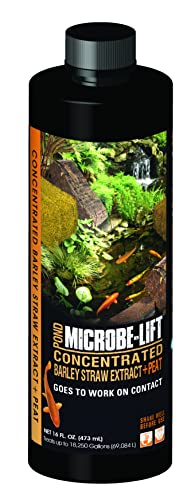
Microbe-Lift Concentrated Barley Straw Extract
The liquid form of the same idea, and the one to reach for first. Extracted barley compounds skip the weeks a bale spends breaking down, so it starts suppressing new algae faster. It runs out faster too, so you dose it on a schedule.
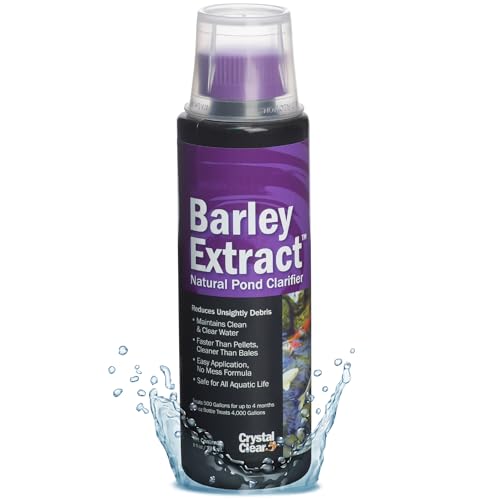
CrystalClear Barley Extract Pond Treatment
Another fast-acting barley extract, comparable to the Microbe-Lift and worth it if you want the quicker liquid without loose straw floating on the surface. Same honest limit: prevention you dose on a schedule, never a one-shot cure for green water.

API Pond AlgaeFix Algae Control
For the problem barley can't touch: a pond that's already green. This copper-free, EPA-registered algaecide acts on a live bloom in days, fish and plant safe at label dose. Use it to clear the water, then let barley keep it clear.


