Hikari Saki-Hikari Koi Food Review
By The Pond Review · Updated August 2026
Independent editorial review. We never accept payment for coverage, though we may earn a commission if you purchase through our links.
Verdict
Owner sentiment on the koi forums is consistent once you sort it by goal. Growth-minded keepers are the loudest fans: they report koi that go crazy for it and, in the same breath, a pond and filter that stay much cleaner, which is the Hikari-Germ waste story doing its work. Experienced hands frame it the way we do, as the best koi food made but very expensive, a you-get-what-you-pay-for buy. The mechanism shows up in their own words too, waste passing as a burst of fine particles rather than a solid clump, easier for a filter to carry. The gripes are just as clear and just as fair. The price draws jokes about costing more than a steak, the switch can throw a cloudy mess of fine waste that a weak settlement chamber won't catch, and keepers pushing the pure-white line hard have watched the beni look weaker and stretched. Our read is the split itself: this is the summer growth benchmark and worth the money for serious grow-out keepers with the filtration to match, while a casual pond does just as well on a mid-tier staple and keeps the difference.
Read full take ↓Similar fish foods
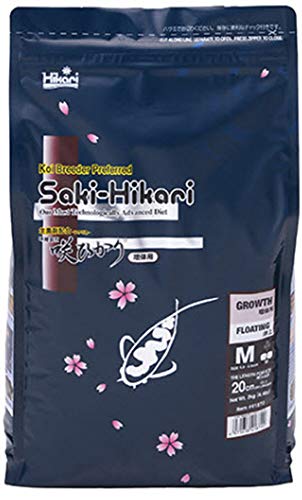
Saki-Hikari is the food serious koi keepers reach for when the point is growth, and it has earned that spot. It's Hikari's premium line, built around a dried probiotic the company calls Hikari-Germ, and the pitch behind it holds up: better gut efficiency means more of what you feed turns into fish and less of it turns into waste sitting on your filter foams. It grows koi fast and keeps the water cleaner while it does. You also pay for it, and you pay a lot.
Our short answer: this is the summer growth food to run if you're pushing young koi or you care about size and finish, and you have the filtration to back heavy feeding. If your pond is a few goldfish and a couple of koi you enjoy at a glance, a mid-tier staple feeds them fine and leaves the extra money in your pocket. The premium is real, and so is the ceiling on who needs to pay it.
The short version
What works:
- Growth is the standout. Feed it through a warm summer with clean water and young koi put on size fast.
- The Hikari-Germ probiotic breaks waste down faster, so filter media loads up slower and the pond stays clearer between cleanings.
- The formulation is consistent and high quality, and fish take to it hard and rarely leave it in the water.
- The color-enhancing versions carry spirulina and astaxanthin, the carotenoids that deepen beni and sumi.
What to watch:
- It's the most expensive food in the category, per pound, by a wide margin.
- The waste it does produce can come out fine and cloudy at first, which surprises keepers switching from a coarser food.
- Pushed hard, the pure-color and pure-white variants can stretch and weaken beni on some koi. They're short-run show foods, not year-round staples.
- No pellet fixes poor water or overfeeding. Buy filtration and a light hand before you buy premium food.
Who it's for, and who should skip it
Buy Saki-Hikari if you're growing out tosai or young koi, you feed heavily through the warm months, and your filtration and water changes can carry that load. It's also the food to lean on in the weeks before a show, when you want size and finish and you can watch the fish closely. For a keeper chasing growth, it does the one job it's built for better than anything else on the shelf.
Save your money if your pond is lightly stocked and you feed for the pleasure of it rather than for size. A healthy koi stays healthy on a decent mid-tier floating pellet, and the difference Saki-Hikari buys is one you have to be looking for to see. On a casual pond the premium goes into water and waste, not into visible fish.
The spec that decides it: protein, warmth, and what a koi eats
Strip it down and the food sorts itself out. Koi grow on two things, protein and warmth. A high-protein diet in warm water drives fast growth; the same food in cold water does close to nothing because the fish can't process it. Color is a separate lever entirely, and it comes from carotenoids like spirulina and astaxanthin in the pellet, not from the base food working magic. So the question is never "which bag is best," it's "what am I feeding for, and is the water warm enough for it to matter."
Then do the arithmetic the bag hopes you skip. A big koi in warm water eats on the order of one to two percent of its body weight a day, and a stocked pond of large fish clears a real amount of food across a four to five month feeding season. That turns cost per pound from a rounding error into a line item. Saki-Hikari sits near the top of the price range, well above a mainstream staple, so the premium compounds every day you feed. It's money well spent when growth is the goal and wasted when it isn't, and the arithmetic is how you tell which pond you have.
What the Hikari-Germ probiotic does for waste
The waste-reduction claim is the part of the pitch that survives scrutiny. Hikari-Germ is a dried beneficial bacteria blended into the food, meant to aid digestion and nutrient uptake, so more of each pellet is converted into fish and less passes through. The waste that does come out breaks down faster once it reaches the filter. In practice the koi pass a burst of fine particles rather than one solid clump, and the smaller form is easier for a filter to carry, so the water holds clearer between rinses and the media loads up more slowly.
There's a catch on the switch. Some keepers see a cloudy mess in the first days after moving to it, fine particles drifting in the pond and settling in the settlement chamber, where their old food used to produce firmer, easy-to-collect waste. That's the same fine-particle effect, and it usually settles as the pond and its bacteria adjust. If your mechanical filtration is weak, though, that fine waste is harder to trap, and the clean-water advantage narrows. Strong solids handling is what turns the probiotic story into a real benefit rather than a cloud.
Growth and color, and the tradeoff nobody advertises
Growth is where owners are unanimous, and we adopt that flat: on the growth diet, young koi put on exceptional size in a season. The tradeoff lives on the color side and it's quieter. Push a pure-color or pure-white variant hard and on some koi the beni starts to look weaker and stretched, an effect keepers tie to fast growth outrunning the pigment. It isn't a defect in the food so much as a mismatch of tool to goal.
So match the variant to what you want. Run the growth diet when size is the target and let color come later. Use a color food in measured doses when finish matters, and treat pure-white as a short pre-show tool for a few weeks, never a staple. A koi grown fast on the wrong variant can finish the summer bigger and paler than it started, which is the opposite of what most keepers are paying a premium to get.
The value arithmetic
Lay the cost out plainly. Saki-Hikari is the priciest food in the category, by enough that keepers joke it costs more per pound than a good steak, and the joke is close to true. Over a full feeding season a stocked grow-out pond goes through many pounds, so the premium isn't a one-time splurge, it's a recurring bill.
For a grow-out keeper the math still works. The size gains are real, the cleaner water offsets some filter labor, and the food is doing a job a cheaper pellet can't. For a casual pond the same spend buys a difference you won't notice, and a mid-tier staple leaves you money for filtration or water changes that would help the fish more. That's the split the forums show and the one we land on: premium food earns its keep at grow-out scale, and reads as an indulgence below it.
Feeding it safely
One rule outranks brand choice, and it comes from the extension services rather than the crowd. Stop feeding when the water drops below about 50F, or 10C. Below that a koi's metabolism slows too far to digest, and food left sitting in the gut can rot and turn dangerous. Aquaculture extension and koi-health guidance put the cold-weather cutoff in that range, and it applies to premium food and cheap food alike.
In warm water, feed only what the fish clear in about five minutes, once or twice a day, and resist the urge to pour more because the food was expensive. Overfeeding fouls a pond faster than any probiotic cleans it, and it's the most common way keepers undo the clean-water benefit they paid for. If green water or clarity is the issue, food is the wrong lever entirely, and our UV clarifier picks are where to start.
Where we land
Saki-Hikari is the growth benchmark, and it charges like one. For a serious keeper growing out koi through a warm season, with filtration to match and a show or a size goal in mind, it's worth the money and it does its one job better than anything near it. Run the growth diet for size, dose color foods to taste, and keep the pure-white line to short pre-show windows.
For a casual pond, it's more food than the fish or the water needs, and a mid-tier staple is the smarter buy. Either way the pellet is the last variable that matters. Clean water, warm water above the feeding cutoff, and a light hand on the scoop decide far more than which premium bag you open.
Our Ratings
Overall score
The formulation is consistent and the results are repeatable pond to pond, which is what reliability means for a food. It loses ground for two honest quirks: switching to it can throw a cloud of fine waste until the pond adjusts and weak mechanical filtration struggles to trap it, and the color and pure-white variants, pushed too hard, can weaken beni on some koi. Match the variant to the goal and it behaves.
On growth and waste reduction it is the best in the category. The high-protein growth diet drives fast size in warm water, and the Hikari-Germ probiotic converts more food to fish and leaves finer, faster-clearing waste, so the pond holds clearer between cleanings. It sits at the top of the scale because this is exactly what it is built to do and nothing else on the shelf does it better.
This is the most expensive food in the category, per pound, by a wide margin, and on a stocked pond it is a recurring bill rather than a one-time splurge. The premium earns out only at grow-out scale, where the size gains and cleaner water justify it. For a lightly stocked casual pond it buys a difference you have to hunt for, which is why the value score sits low.
Hikari Saki-Hikari Koi Food on Amazon.
The Evidence Behind Our Verdict
Owner sentiment on the koi forums is consistent once you sort it by goal. Growth-minded keepers are the loudest fans: they report koi that go crazy for it and, in the same breath, a pond and filter that stay much cleaner, which is the Hikari-Germ waste story doing its work. Experienced hands frame it the way we do, as the best koi food made but very expensive, a you-get-what-you-pay-for buy.
The mechanism shows up in their own words too, waste passing as a burst of fine particles rather than a solid clump, easier for a filter to carry. The gripes are just as clear and just as fair. The price draws jokes about costing more than a steak, the switch can throw a cloudy mess of fine waste that a weak settlement chamber won't catch, and keepers pushing the pure-white line hard have watched the beni look weaker and stretched.
Our read is the split itself: this is the summer growth benchmark and worth the money for serious grow-out keepers with the filtration to match, while a casual pond does just as well on a mid-tier staple and keeps the difference.
Our rating above is our own editorial call. What follows is the field evidence we weighed to reach it: first-hand reports from pond owners on dedicated pond and koi forums, which we lean on more than manufacturer-influenced published reviews because unsponsored owners tend to be the more candid signal.
What Pond Forums Say
“koi go crazy for it and my pond and filter stay much cleaner!!---its the only way to go IMHO!!”Source →
“it is their top of the line food, probably the best koi food made. But very expensive. You get what you pay for I think.”Source →
“What happens in my pond is that instead of a solid clump of poop, there is a burst of poop. I guess in the smaller form, the filters can handle it easier.”Source →
“morning was a mess..little particle waste floating in pond and in my SC...i feed hikari WG n kenzen normally but never experience result like that”Source →
“the fish love the food and will not stop eating it. The one negative comment I do have about the food is that the beni has begun to look weaker and stretched out.”Source →
Frequently asked questions
Is the Hikari Saki-Hikari Koi Food worth it?
This is the most expensive food in the category, per pound, by a wide margin, and on a stocked pond it is a recurring bill rather than a one-time splurge. The premium earns out only at grow-out scale, where the size gains and cleaner water justify it. For a lightly stocked casual pond it buys a difference you have to hunt for, which is why the value score sits low.
How reliable is the Hikari Saki-Hikari Koi Food?
The formulation is consistent and the results are repeatable pond to pond, which is what reliability means for a food. It loses ground for two honest quirks: switching to it can throw a cloud of fine waste until the pond adjusts and weak mechanical filtration struggles to trap it, and the color and pure-white variants, pushed too hard, can weaken beni on some koi. Match the variant to the goal and it behaves.
How well does the Hikari Saki-Hikari Koi Food perform?
On growth and waste reduction it is the best in the category. The high-protein growth diet drives fast size in warm water, and the Hikari-Germ probiotic converts more food to fish and leaves finer, faster-clearing waste, so the pond holds clearer between cleanings. It sits at the top of the scale because this is exactly what it is built to do and nothing else on the shelf does it better.
What do real owners say about the Hikari Saki-Hikari Koi Food?
Owner sentiment on the koi forums is consistent once you sort it by goal. Growth-minded keepers are the loudest fans: they report koi that go crazy for it and, in the same breath, a pond and filter that stay much cleaner, which is the Hikari-Germ waste story doing its work. Experienced hands frame it the way we do, as the best koi food made but very expensive, a you-get-what-you-pay-for buy.
Options Worth Checking Out

TetraPond Koi Vibrance Floating Sticks
The everyday floating stick for a lightly stocked pond. It won't grow show koi or match Saki-Hikari on clean water, but it feeds healthy goldfish and koi well through summer at a fraction of the cost, which is the smarter buy for a casual keeper.

Blue Ridge Koi Platinum Pro 41% Protein
A high-protein grow-out food at 41% that chases size like Saki-Hikari for noticeably less per pound. It skips the Hikari-Germ probiotic, so expect a little more filter load, but for keepers pushing young koi on a budget it's the value growth pick.

Aquascape Premium Color Enhancing Pellets
A color-forward pellet with added carotenoids to bring out beni and sumi. It grows koi more gently than Saki-Hikari's growth diet, so run it when finish matters more than raw size, or alternate the two to balance growth against color over a season.


