The Best Koi Food for Color and Growth
By The Pond Review · Updated August 2026
Independent editorial guide. We never accept payment for coverage, though we may earn a commission if you purchase through our links.
Quick Take
Buy one good staple for the season, not a single bag that promises to do everything. Color and growth pull in different directions: growth comes from protein and warm water, while color comes from pigment, and a food pushed hard for one can cost you the other. Our default for most koi ponds is TetraPond Koi Vibrance, a value staple that supports color and steady summer growth without pushing pigment so far it muddies a clean white.
Layer from there only if you have a reason. When the water is warm and you're pushing size, a high-protein grower like Hikari Saki Growth earns its price for a season. If you show your fish, add a color food in moderation rather than feeding it year round, because pigment overdone can bleed orange into whites and yellow a clean shiroji. And feed to the fish, not the bag: give them only what they clear in about five minutes, two to three times a day through summer, because koi grow only as fast as clean water allows.
We have matched five foods to real jobs below, from the season staple most owners should buy to the growth and color foods worth adding when you have a reason to. See picks ↓

Every koi food on the shelf promises color and growth in the same breath, and that promise is where most feeding money gets wasted. The two goals don't sit on the same axis. Growth is a protein-and-temperature problem, color is a pigment problem, and a food tuned hard for one tends to give ground on the other. No single bag maxes both without a cost, so the useful question isn't which food does everything, it's which food does the job your pond needs this season.
Our view runs against the label copy. The cheapest reliable win in koi feeding is a solid seasonal staple fed at the right rate, not a premium bag chased for both color and growth at once. Spend on a growth food when the water is warm and you're pushing size, add a color food in moderation only if you show, and let clean water and warmth do the heavy lifting the ingredient panel takes credit for.
Our take: color and growth pull in different directions
Start with the tension the marketing hides. Growth in koi is driven by protein and warmth: a high-protein food, 36 to 40 percent or more, fed in warm water, builds size. Color is a different mechanism entirely, pigments the fish can't make on their own, mainly spirulina for yellows and astaxanthin for reds, that deposit in the skin over weeks. A bag can lean toward one or the other, and the heavier it leans, the more it gives up on the far goal. That's why the useful answer to "color or growth" is usually "pick the one that matters to you this season," rather than "buy the food that claims both."
There's a second reason a color-and-growth food underperforms its promise, and it's the one owners learn the expensive way. Pigment pushed too hard doesn't just add color, it moves color where you don't want it. A heavy color food can pull orange into a white ground and yellow a clean shiroji, so a fish with good whites can come out of a color-feeding season looking worse, not better. The koi keepers who care most about finish are the ones who feed color food the least, and that isn't squeamishness, it's what pigment overload does to a good white.
Growth is protein and warm water, in that order
If growth is your goal, two things move the needle and the rest is detail. The first is protein: a grower in the high 30s to low 40s in warm water lays on size in a way a maintenance food won't. The second is temperature, and it's the one people forget. Koi are cold-blooded, their metabolism tracks the water, and they put on real weight only when the pond is warm, roughly above the high 60s Fahrenheit. Feed a 40 percent protein grower into cold water and you haven't sped up growth, you have loaded the pond with waste the fish can't use.
This is why a premium grower is a seasonal tool, not a year-round default. In the warm months, when the water is above about 68F and the fish are feeding hard, a high-protein food like Saki Growth earns its keep and its price. Outside that window it's money spent on protein the fish won't convert. Match the protein to the temperature and the feeding rate to the fish, and growth takes care of itself. Reach for the strongest grower on the shelf in April and you're mostly buying cloudy water.
Color is pigment, and more isn't an upgrade
Color food works by delivering carotenoids the koi deposits in its skin, and within reason it does what it says: spirulina supports yellows and the ground, astaxanthin deepens reds and beni. Used with restraint on a fish whose color you're trying to bring up, a color food can improve the finish. The trouble is the dose. Color isn't a "more is better" input, it's a "just enough" input, and the gap between enough and too much is where good whites go to die.
So the way we use color food is narrow on purpose. If you show your koi and want to lift the reds before a season, a color food fed in moderation is a reasonable tool. If you keep koi in a backyard pond for the pleasure of them, a quality staple with built-in color support does most of what you want and none of the harm. We'd rather feed a clean staple all season and accept slightly less punch in the beni than push a heavy color food and watch orange creep into a white we liked. Restraint is the whole skill with color, and it's the opposite of what the bag encourages.
What one bag can and can't do at once
This is the part the "color and growth" label glosses over. A single food can hold a fair amount of protein for growth and a modest amount of pigment for color at the same time, and a good staple does exactly that. What it can't do is max both. Push the protein high enough to drive serious growth and pigment loud enough to force color, in one bag, fed all season, and you get a pond full of waste and a fish whose whites are going soft. The bag that claims to do everything is doing each job at half strength, which is fine for a staple and useless for a push.
So think in jobs, not in bags. The staple job is a balanced food fed all season that keeps fish healthy, supports steady growth, and carries enough color support to hold color without wrecking whites. The growth job is a warm-water push with a high-protein food when you want size. The color job is a light, occasional lift for show fish. One food can be your staple. It shouldn't be asked to be your growth push and your color program too. Buy the staple first, then add a specialist only for the season and the fish that need it.
Do the value arithmetic before the Japanese bag
Koi food spans a wide price range, and the premium end is priced like it works magic. It doesn't. A value staple runs a few dollars a pound, a top-tier Japanese growth food several times that, and the fish in a backyard pond won't read the difference the way a show judge might. The way to keep this honest is cost per pound against a season of feeding. A well-stocked pond eating hard through summer goes through food fast, so the gap between a $10-per-pound value staple and a $30-per-pound premium bag isn't a rounding error over a season, it's the price of the filter your fish were short.
Two rules of thumb keep the money where it helps. First, read the ingredient panel, not the front of the bag: a food with fish meal high on the list and cheap fillers low is doing more than a food where corn or wheat is in the top few ingredients. Second, spend the premium only where it changes the outcome, which for most owners means a growth food for the warm-season push, not a year-round default. Japanese breeders grow enormous koi on production food for most of the year and save the expensive blends for the run-up to a show, which tells you where the money is worth spending and where it's habit.
Stop feeding when the water turns cold
This is the one place we defer to authority over preference, because getting it wrong kills fish. As the water cools in autumn, a koi's metabolism slows and its ability to digest protein falls with it. Aquaculture extension and koi-health guidance is consistent: switch to a low-protein, easily digested wheat-germ food in the cool shoulder season, and stop feeding entirely once the water drops below roughly 50F, about 10C, where it holds through winter. A koi can't digest a high-protein food in cold water, and undigested food sitting in the gut of a barely moving fish is a real danger, not a missed growth opportunity.
Practically, that means no growth food and no color food once the pond cools. The high-protein grower that built size in July is exactly the wrong food in October, and the color food is pointless when the fish are shutting down for the year. Keep a wheat-germ food for the transition, watch a pond thermometer rather than the calendar, and when the water settles below about 50F, stop. Feeding a cold koi to chase a little more color or growth is how a healthy fish doesn't make it to spring.
Matching food to your pond and season
Here's how we'd choose among the five. For most backyard koi ponds, the staple does the everyday work: TetraPond Koi Vibrance is our default, a value food that supports color and steady summer growth without pushing pigment too far, and it's the one most owners should buy first. When the water is warm and you're pushing size, add Hikari Saki Growth as the seasonal growth push, and accept that its price only pays off in warm water on fish you're actively growing.
Fill the middle from there. Blue Ridge Platinum Pro is a straight 41 percent protein grower with no color additives, the pick when you want size without any risk of yellowing a shiro's white. Aquascape Premium Color Enhancing is the color food to add in moderation for show fish, fed lightly and seasonally rather than year round. And Microbe-Lift High Growth is the bulk-value grower, a big bag that drops the cost per pound for a hungry, well-stocked pond. Match the food to the job and the season, feed to the five-minute rule, and each of these has a pond and a month where it's the right bag.
How we'd fill the feed bin
If it were our pond, we'd buy one good staple and feed it well before we bought anything else. A value staple fed at the right rate in warm water, two to three times a day, only what the fish clear in about five minutes, will grow healthy koi with honest color for a fraction of what a shelf of specialist bags costs. Clean water and warmth do more for both color and growth than any premium ingredient panel, so the money is better spent on filtration and patience than on a second and third bag.
Add a specialist only when you have a reason the staple can't cover. A warm-season growth push if you're trying to put size on young fish. A light color food in the run-up to a show if you compete. A wheat-germ food for the cool shoulder, and then nothing once the water drops below about 50F. Feed to the fish and the thermometer instead of the promise on the bag, and you'll spend less, waste less food, and keep whites you're proud of. For the premium growth food we lean on hardest in a push, our Hikari Saki Growth review walks through where the price does and doesn't pay off.
The picks
Products we recommend for this guide.

TetraPond Koi Vibrance Soft Sticks
Our staple pick and best value: soft floating sticks with a balanced color-and-growth formula, cheap enough to feed a whole koi season. It supports color and steady summer growth without pushing pigment so hard it muddies a clean white.
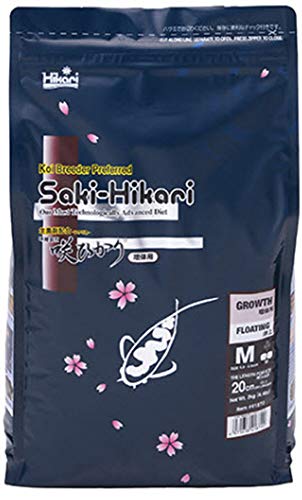
Hikari Saki Growth Koi Food
The premium choice for a serious growth season: a high-protein, probiotic warm-water formula built to add size fast once the pond holds above about 68F. It costs several times the staples, so reach for it only when you're pushing size in warm water.

Blue Ridge Koi Platinum Pro 41% Protein
A straight 41% protein grower with no color additives, so you feed size in warm water without risking the yellowing that heavy pigment food can bring to a shiro's white. Strong per-pound value at 4.5 lb for a warm-season growth push.

Aquascape Premium Color Enhancing Pellets
A color food to add in moderation, not a season-long staple. Spirulina and pigments deepen beni and reds on koi you show, but feed it lightly: pushed too hard, color food can bleed orange into whites and yellow a clean shiroji.

Microbe-Lift Legacy High Growth & Energy
The bulk-value pick: a 14.5 lb bag of 40% protein floating pellets with a color enhancer, dropping the cost per pound for a well-stocked koi pond. Feed what the fish clear in five minutes in warm water and it grows fish without a premium price.
What owners say
Real owner reports from the threads and editorial sources we drew on for this guide.
“Two seasons ago I tried OSI because it also contains silk powder and much cheaper than HiSilk,but it yellowed up my Shiro Utsuri. After a season back on HiSilk and Hikari the yellow went away.”
“It can make yellow get orange spots, it can make a lot more problems than it's worth. Don't feed color food, the best ones I would use would be foods that enhance shiroji.”
“According to Mr Kodoma that is not true any more the older color food was no good but now it is fine he says 50% color food is good”
“I've always been impressed with Saki Hikari, it has the best ingredients and supplements(sp?) but it's gotten extremely expensive over this past year.”
“black water has a great ingrediance on the label and does not break the bank like many of the japanese foods. is hakari worth it sure if your trying to grow show koi or monsters. if not then i recomend blackwater food. avoid foods where corn is in the top 5 ingrediance.”
“Funny Japanese breeders use lower cost food for production. Maybe the very expensive blends aren't needed for good colors?”