API Pond Chlorine & Heavy Metal Neutralizer Review
By The Pond Review · Updated August 2026
Independent editorial review. We never accept payment for coverage, though we may earn a commission if you purchase through our links.

Verdict
Owner discussion of this exact bottle by name is thin, so we're leaning on the product chemistry and on the one detailed thread where keepers work through API's dechlorinator behavior. What that thread shows lines up with the chemistry rather than the label. A keeper who dosed it on a newly seeded container pond dosed heavier for chloramine and reported ammonia that never rose above .5 ppm before falling away over a few days, which is a cycled biofilter processing the freed ammonia, not the bottle detoxifying it. Another keeper made the limit explicit, noting that on API's own product page "the word ammonia doesn't appear anywhere," so an ammonia lock is an assumption rather than a stated feature. Put together, our read is that this is a genuine chlorine and chloramine neutralizer with a real heavy-metal chelator, priced to be the value pick, but it's a bare conditioner: dose it to the full volume at the higher chloramine rate (about double the chlorine dose), lean on an established biofilter for the ammonia, and step up to Kordon or Microbe-Lift only when your pond isn't yet cycled or you need the slime-coat extras.
Read full take ↓Similar water conditioners
On a water change the one thing you can't get wrong is neutralizing the tap water before it touches the fish, and the trap most people fall into is thinking that means chlorine. It means chlorine and chloramine, and those aren't the same problem. Chloramine is chlorine bonded to ammonia, and most municipal utilities switched to it years ago because it's more stable in the pipes. A conditioner that only gasses off chlorine leaves the chloramine intact, and chloramine goes straight through gills.
API Pond Chlorine & Heavy Metal Neutralizer is a cheap 16 ounce bottle that does the core job: sodium thiosulfate breaks the chlorine and the chloramine bond, and a chelator locks the copper and other heavy metals that leach from household plumbing. At about fifteen dollars it's one of the least expensive ways to make a fill safe. What you give up against the pricier gallon jugs from Kordon and Microbe-Lift is the extras, a protective slime coat and an explicit ammonia lock, and whether you need those depends on your pond, not on the marketing.
The short version
What works:
- Breaks both chlorine and the chloramine bond, which is the actual job on a water change. Most tap water is chloraminated now, and a plain dechlorinator isn't enough.
- Chelates heavy metals, so the copper and zinc that leach from household pipes get locked before they reach the fish.
- Cheap. At roughly fifteen dollars for 16 ounces it's one of the lowest-cost ways to treat a fill.
- Acts instantly. You can add treated water within minutes, no aeration wait like the old evaporate-the-chlorine method.
What to watch:
- Chloramine takes about double the base dose (15 ml per 90 gallons vs 10 ml per 100), not the base rate. Underdose it and you have only handled the chlorine half.
- API doesn't advertise that it detoxifies the ammonia freed when the chloramine bond breaks. On a cycled pond your biofilter handles the small amount; on a raw fill it's a real gap.
- No slime-coat or stress additive. This is a bare conditioner, not a stress reliever.
- A 16 ounce bottle treats a limited volume. For frequent large changes the gallon jugs work out cheaper per gallon treated.
Who it's for, and who should skip it
Buy this if you keep an established, biologically cycled koi or goldfish pond, you top up and do partial changes with chloraminated tap water, and you want the core conditioning job done for the least money. For that keeper it's exactly enough: chlorine off, chloramine bond broken, metals locked, done cheaply.
Skip it if you're filling a brand new pond from empty or doing a very large change on a lightly stocked pond, where the ammonia freed from the chloramine has no established biofilter waiting to process it. There you want a conditioner that locks ammonia outright, which points to Kordon or Microbe-Lift. Skip it too if you're moving or netting fish and want the handling-stress buffer a slime-coat product gives, or if you do big changes often enough that a gallon jug is the cheaper buy over a year.
The spec that decides it: chlorine versus chloramine
This is the distinction the product name only half tells you. Free chlorine is easy. It's volatile, a dechlorinator neutralizes it on contact, and left alone it even gasses off on its own. Chloramine doesn't. It's chlorine chemically bonded to ammonia, deliberately made stable so it survives the trip through the water main, and it won't evaporate out of a bucket no matter how long you wait. If your utility uses chloramine, and most now do, letting water sit overnight does nothing.
What sodium thiosulfate does is reduce the chlorine, and in a chloramine it breaks the chlorine-nitrogen bond to do that. The heavy-metal side is a chelator, usually an EDTA-type molecule, that binds copper, zinc and lead so they can't cross the gill membrane. That matters more than people think on a home fill, because the first slug of water out of a tap that has sat in copper plumbing carries the highest metal load of the day. Both of those jobs this bottle does, which is why it earns a place at all.
The dosing math most people get wrong
Two arithmetic mistakes turn a working conditioner into a fish kill. The first is dosing to the top-up instead of the fill. You aren't treating the pond, you're treating the volume of new water going in, and if a partial change adds four hundred gallons you dose for four hundred gallons regardless of how big the pond is. People routinely eyeball a cap for a top-up that's far larger than they think.
The second is treating chloramine at the chlorine rate. On a chloraminated supply the label calls for a heavier dose, roughly double the chlorine rate: 15 ml per 90 gallons for chloramine versus 10 ml per 100 gallons for chlorine alone. One keeper filling a new container pond overstated it, saying the product "says to use 5x more to neutralize chloramines"; the real label is more modest than that, but the principle holds. Dose at the plain chlorine rate on a chloraminated supply and you have neutralized the chlorine while leaving chloramine in the water. The fix isn't complicated, but it isn't optional: know your utility's disinfectant from its annual water-quality report, and if it's chloramine, dose the higher chloramine rate to the full volume of water you're adding.
Where it stops: the ammonia question
Here's the honest limit, and it's worth being plain about because API isn't. When the chloramine bond breaks, the ammonia that was bonded to the chlorine is set free. A premium conditioner detoxifies that ammonia on the spot. API's product doesn't claim to. As one skeptical keeper pointed out, on API's own product page "the word ammonia doesn't appear anywhere," so reading an ammonia lock into it's an assumption, not a stated feature.
How much this matters comes down to your biofilter. On an established, cycled pond the freed ammonia is small and your bacteria convert it within a day or two, which is exactly what the keeper who dosed API on a seeded pond saw: ammonia "never went above .5 ppm, gradually decreasing over the course of a few days." That's a functioning nitrogen cycle doing its job, not the bottle. On a raw new fill with no bacteria yet, there's nothing to catch that ammonia, and a conditioner that locks it, a Kordon or Microbe-Lift type, buys you a safety margin this one doesn't. Treat API as a dechlorinator and metal binder, and lean on your biofilter for the ammonia, and you're using it correctly.
Using it on a water change
Measure the volume of water you're adding, not the pond. Dose to that number, at the higher chloramine rate if your supply is chloraminated, and add it to the conditioner rather than dechlorinating in place if you can, so the metals and chlorine are handled before the water reaches the fish. If you're doing a large change on a marginal or newly stocked pond, add water in stages and keep an ammonia test kit on hand for the days after. For which product suits which situation, our water conditioner picks lay out the tradeoffs between the bare-bones bottles and the ammonia-locking jugs.
How it compares
- Versus Microbe-Lift Super Dechlorinator: the step up when you want the ammonia margin API leaves vague. It detoxifies chloramine and locks the freed ammonia, not just the chlorine, and the gallon size makes big or new-pond changes cheap per gallon treated. The pick if your pond isn't fully cycled.
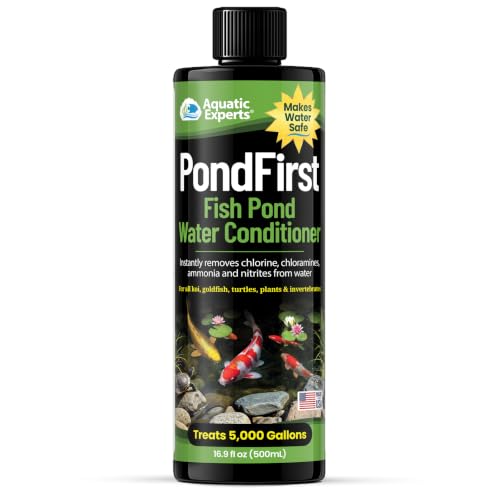
- Versus PondFirst Pond Water Conditioner: a concentrated 500 ml bottle that treats far more water per ounce than the API 16 ounce, so the similar shelf price buys more dosings. Same core job of chlorine and chloramine off before the gills, in a smaller and more concentrated package.
- Versus Kordon Pond NovAqua: the premium water-change conditioner. It neutralizes chlorine, chloramine and metals and adds a protective slime coat that eases handling and transport stress, the extra you pay for over a bare conditioner. Worth it when you net or move fish.
Worth keeping on the shelf
For an established koi or goldfish pond on a chloraminated supply, this is a competent, cheap conditioner that does the two jobs that matter most on a fill: it breaks the chloramine bond and it locks the heavy metals. Dose it to the volume of water you're adding, at the higher chloramine rate (about double the chlorine dose), and it makes tap water safe for the least money on the shelf.
The reasons to spend more are specific, not general. If your pond is new or barely cycled, pay up for a conditioner that locks the freed ammonia. If you handle or transport fish, pay up for a slime-coat formula. If you change a lot of water often, buy a gallon and save per treatment. Outside those cases, the extras on the pricier bottles are solving a problem you don't have, and this fifteen-dollar bottle is the right amount of conditioner.
Our Ratings
Overall score
Sodium thiosulfate and a metal chelator are settled, dependable chemistry, and the product acts on contact with no aeration wait. It is consistent when dosed right. What keeps the score honest is that so much of the outcome rides on the user getting the higher chloramine dose and the volume math correct, since the formula itself gives no margin for an underdose.
It does the two jobs that decide a water change: it breaks the chloramine bond, not just free chlorine, and it chelates the heavy metals that leach from household pipes. It is held off the top of the scale by what it does not do, namely lock the ammonia freed when the chloramine breaks, which leaves you leaning on the biofilter and dosing carefully rather than trusting the bottle.
At roughly fifteen dollars for 16 ounces it is one of the cheapest ways to make a fill safe, and for an established pond it is all the conditioner you need. It gives back a little only on scale: for frequent large changes the gallon jugs work out cheaper per gallon treated, and the bottle is small.
API Pond Chlorine & Heavy Metal Neutralizer on Amazon.
The Evidence Behind Our Verdict
Owner discussion of this exact bottle by name is thin, so we're leaning on the product chemistry and on the one detailed thread where keepers work through API's dechlorinator behavior. What that thread shows lines up with the chemistry rather than the label. 5 ppm before falling away over a few days, which is a cycled biofilter processing the freed ammonia, not the bottle detoxifying it.
Another keeper made the limit explicit, noting that on API's own product page "the word ammonia doesn't appear anywhere," so an ammonia lock is an assumption rather than a stated feature. Put together, our read is that this is a genuine chlorine and chloramine neutralizer with a real heavy-metal chelator, priced to be the value pick, but it's a bare conditioner: dose it to the full volume at the higher chloramine rate (about double the chlorine dose), lean on an established biofilter for the ammonia, and step up to Kordon or Microbe-Lift only when your pond isn't yet cycled or you need the slime-coat extras.
Our rating above is our own editorial call. What follows is the field evidence we weighed to reach it: first-hand reports from pond owners on dedicated pond and koi forums, which we lean on more than manufacturer-influenced published reviews because unsponsored owners tend to be the more candid signal.
What Pond Forums Say
“I used API tap water conditioner. I assume this mostly breaks the bond although it says to use 5x more to neutralize chloramines, so there may be some ammonia bonding bit in it? I did this when setting up a new container pond which I seeded with bacteria from another container pond. I tested regularly and the ammonia never went above .5 ppm, gradually decreasing over the course of a few days.”Source →
“There is no indication on the website for this product http://www.apifishcare.com/product.php?id=655#.Vvvz6DHQU2w that Ammonia is neutralized. In fact, the word ammonia does not appear anywhere on this page. So based on this. the belief that this product should neutralize Ammonia is only an assumption. Manufacturers are a sneaky lot. They manipulate words leading you to believe something that is not really stated.”Source →
Frequently asked questions
Is the API Pond Chlorine & Heavy Metal Neutralizer worth it?
At roughly fifteen dollars for 16 ounces it is one of the cheapest ways to make a fill safe, and for an established pond it is all the conditioner you need. It gives back a little only on scale: for frequent large changes the gallon jugs work out cheaper per gallon treated, and the bottle is small.
How reliable is the API Pond Chlorine & Heavy Metal Neutralizer?
Sodium thiosulfate and a metal chelator are settled, dependable chemistry, and the product acts on contact with no aeration wait. It is consistent when dosed right. What keeps the score honest is that so much of the outcome rides on the user getting the higher chloramine dose and the volume math correct, since the formula itself gives no margin for an underdose.
How well does the API Pond Chlorine & Heavy Metal Neutralizer perform?
It does the two jobs that decide a water change: it breaks the chloramine bond, not just free chlorine, and it chelates the heavy metals that leach from household pipes. It is held off the top of the scale by what it does not do, namely lock the ammonia freed when the chloramine breaks, which leaves you leaning on the biofilter and dosing carefully rather than trusting the bottle.
What do real owners say about the API Pond Chlorine & Heavy Metal Neutralizer?
Owner discussion of this exact bottle by name is thin, so we're leaning on the product chemistry and on the one detailed thread where keepers work through API's dechlorinator behavior. What that thread shows lines up with the chemistry rather than the label. 5 ppm before falling away over a few days, which is a cycled biofilter processing the freed ammonia, not the bottle detoxifying it.
Options Worth Checking Out

Microbe-Lift Super Dechlorinator Plus, 1 Gallon
The step up when you want the ammonia margin API leaves vague. It detoxifies chloramine and locks the freed ammonia, not just the chlorine, and the gallon size makes big water changes cheap per gallon treated. The pick when your pond isn't cycled.
PondFirst Pond Water Conditioner, 500 ml
A concentrated instant dechlorinator that treats far more water per ounce than the API 16 ounce bottle, so a similar shelf price buys more dosings. Same core job, chlorine and chloramine off before the gills, in a smaller USA-made bottle.

Kordon Pond NovAqua, 1 Gallon
The premium water-change conditioner. It neutralizes chlorine, chloramine and heavy metals and adds a protective slime coat that eases handling and transport stress, the extra you pay for over a bare API bottle. Worth it when you net or move fish.


