How to Get Rid of Sludge in a Pond
By The Pond Review · Updated September 2026
Independent editorial guide. We never accept payment for coverage, though we may earn a commission if you purchase through our links.
Quick Take
Sludge has to come out physically. No bottle empties a pond of muck, and that is the single most important thing to know before you spend money. Scoop the coarse debris with a long-handled net, then pull the fine, dark, greasy layer with a pond vacuum, which is the only tool that lifts the fine stuff instead of clouding the water and dropping it back down. Work in sections over several sessions rather than stirring the whole bottom at once, and stop if you smell rotten eggs. Once the pond is clean, bacteria treatments do help, not to erase the muck you already have but to digest the thin organic film before it accumulates again. The real fix is upstream: net the leaves out in autumn, run a skimmer, keep water moving across the bottom, and stop overfeeding.
Most sludge advice online is written for acre farm ponds and talks about dredging. For a backyard pond, the tools we would buy are below. See picks ↓

Search for pond sludge and you get dredging contractors, muck shovels, and lake-restoration companies talking about acre-sized farm ponds. None of that helps if you have a 1,000-gallon liner pond in the backyard with two inches of black, foul-smelling goo on the bottom, a stubborn algae problem, and koi you would rather not disturb. The backyard version of this problem has different tools and a different order of operations, and getting the order wrong is why so many people buy a bottle of bacteria, wait a month, and find the muck exactly where they left it.
Sludge is decomposed organic matter, mostly fallen leaves, uneaten food, and fish waste, plus whatever silt washes in. It matters for two reasons beyond looking unpleasant: it is a slow-release nutrient supply that keeps feeding algae no matter how much algaecide you pour in, and its decomposition consumes oxygen at the bottom of the pond where you can least afford to lose it. This guide covers what removes it, the safety step almost nobody mentions, what bacteria treatments can and cannot do, and how to keep it from coming back.
Why it builds up, and why it matters
Every pond accumulates sludge. Leaves blow in and break down, fish produce waste, uneaten food sinks, and fine silt settles out of rainwater and top-ups. In a natural pond, that layer is part of the ecosystem, and a thin skim of it is nothing to panic about. The problem is accumulation, and the two consequences that follow. First, decomposing sludge releases nutrients steadily into the water, which is why a pond with a muck layer keeps growing algae no matter what you dose. Chase the algae without removing the sludge and you are treating the symptom while the cause sits on the bottom. Second, decomposition consumes oxygen right where the fish sit, which is why a thick layer is more dangerous in high summer and under winter ice than in spring.
So the goal is not a surgically clean bottom. It is to keep the layer thin enough that it stops driving algae and stops eating your oxygen. That is achievable in an afternoon or two, and then maintained with far less effort than most people expect.
Removing it: net, vacuum, or drain
There are three real methods, and the right one depends on how much you have and what your pond bottom looks like. Start with a long-handled net for the coarse layer, the whole leaves, twigs, and stringy debris. This is free, fast, and gets a surprising amount out. But understand its limit, which one experienced keeper states exactly: "You may be able to remove the larger particles with a net, but the smaller particles will require a vacuum. Using a net will also stir up the fine particles, causing the water to be cloudy for a few days and when the water clears the sludge is still there." A net moves the big stuff and re-suspends the fine stuff.
For the fine, dark layer, a pond vacuum is the tool that works, because it lifts the sediment out of the pond rather than stirring it into the water column. Owners who buy one rarely regret it, though they are candid about the limits, one noting that they love the vacuum but that "big stuff, especially pine needles don't do well in the vacuum. They either can't be sucked up well or get clogged." That is the argument for netting the coarse debris first and vacuuming second. Draining the pond is the third option and the last resort. It works, but it costs you the biological balance you have built, so if you go that route, move fish to holding water with aeration, avoid scrubbing the walls, and do not clean the filter in the same week, so the bacteria colony survives somewhere. When you do rinse filter media, rinse it in pond water, never under a chlorinated tap, because chlorine kills the colony outright no matter how long you waited.
- Long-handled net or pool net: free, good for leaves and coarse debris, useless on fine sludge, and it clouds the water.
- Pond vacuum: the only practical way to lift the fine layer out. The real purchase for a pond you plan to keep for years.
- Shop vac: works, but it removes your pond water along with the muck, so you are refilling and re-treating as you go.
- Drain and scoop: the deep reset for a badly neglected pond. Preserve the filter and do not scrub the surfaces.
The safety step nobody mentions: rotten-egg gas
This is the part of sludge removal that deserves more attention than it gets. Anaerobic muck, the black layer at the very bottom where no oxygen reaches, can hold hydrogen sulfide, and stirring it up releases that gas into the water and the air above it. As one keeper puts it plainly: "Stirring up that muck can release a poisonous gas, hydrogen sulfide. It smells like rotten eggs. It's toxic to fish and people. So is it safe, maybe not. Depends on how much gas, if any, is in that mud. If you go slowly, it will likely be okay and the gas can dissipate."
Be clear about who is most at risk here, because it is usually the fish. Hydrogen sulfide blocks oxygen uptake at the gill, so a fish can suffocate even in water that is otherwise well oxygenated, and a big sulfide pulse is the realistic same-afternoon casualty of churning a whole pond bottom. For you, working outdoors over an open pond, the likely outcome is the smell, watering eyes, and a headache. The serious human danger lives in enclosed and sunken spaces, so treat this as the hard rule: never agitate muck inside a confined space, meaning a drained pond you have climbed down into, a sunken pit, or a covered pump house. That is where this gas has killed people, and it is the one scenario to refuse outright.
The practical handling rules follow from that. Work in sections rather than churning the entire bottom in one go, and give the pond time between sessions, advice a keeper puts as: be "very slow and careful if using a net. Maybe don't do it all at once. Let it settle and do again later and so on and so on." Keep your aeration or waterfall running while you work so the surface keeps exchanging gas. A strong rotten-egg odor is a good reason to stop and let the pond off-gas, but do not use your nose as a safety gauge: hydrogen sulfide deadens the sense of smell as concentration rises, so the smell fading is not evidence the air is clearing. Spread the job over three easy sessions instead of one heroic afternoon, stay out of enclosed spaces, and the risk stays small.
What bacteria and sludge treatments can and cannot do
Here is the honest version, because this is where the money gets wasted. Sludge-digesting bacteria and enzyme treatments are real products that do a real job: they accelerate the breakdown of organic matter, which keeps a thin layer from thickening and helps with the greasy film and the smell. What they cannot do is empty a pond that already has two inches of muck, and they cannot touch the inorganic fraction at all. Bacteria eat organic matter; they do not eat silt, sand, or clay, so if your "sludge" is largely washed-in sediment, no bottle will reduce it.
Plenty of experienced keepers are blunt about the category, one saying: "I don't really think those muck and sludge products do much- the theory is they help break things down faster, but honestly I think keeping the bottom of your pond stirred up is the best way to keep it from building up." We would not go quite that far, but the sequencing matters more than the brand: remove the bulk physically, then use bacteria to hold the line. Treatments also work far better with oxygen and circulation, because these bacteria digest organic matter dramatically faster when oxygen is present, so a treatment poured into a stagnant, stratified pond underperforms badly. If you dose, dose per the label, keep the water moving, and expect maintenance, not a miracle.
If your pond bottom is covered in rocks
This is the design detail that changes how this job goes, and it is worth knowing before you build. A layer of river rock on the pond floor looks natural and gives bacteria surface area, but it also traps sludge in the gaps where you cannot reach it. As one keeper puts it: "If you have rocks on the bottom then forget the vacuum it just won't work, rocks may look nice but they limit the amount of cleaning that you can do there is no way that you can use a net."
If you already have a rocked bottom, you are not without options, but they are more manual: stir sections gently so the filter and skimmer can capture what lifts, siphon in the low spots, and lean harder on prevention, netting and skimming, because removal is harder. If you are still planning a pond, this is a strong argument for a bare liner bottom, or rock on the shelves and slopes only, with a clean floor you can vacuum. Ease of cleaning is worth more over a decade than the look of a rocked floor.
Keeping it from coming back
Removal is the hard part once. Prevention is what keeps you from doing it again, and it is mostly free:
- Net the pond in autumn. Leaves are the single biggest sludge input in most backyard ponds, and a net over the water in fall prevents more sludge than any treatment removes.
- Run a skimmer. Catching floating debris before it sinks and breaks down is the cheapest sludge control there is.
- Keep water moving across the bottom. Stagnant, stratified water is where anaerobic muck forms. Aeration or a well-aimed return keeps solids in suspension long enough for the filter to catch them.
- Stop overfeeding. Uneaten food is sludge with extra steps. Feed only what the fish clear in a few minutes.
- Clean the filter and skimmer baskets on a schedule, so what you captured leaves the system instead of decomposing in place.
Pond sludge questions, answered
Will beneficial bacteria remove pond sludge?
Partly, and slowly. Bacteria digest the organic fraction of sludge, which keeps a thin layer from thickening and helps with odor, but they will not clear a pond that already has an inch or more of muck, and they cannot break down the inorganic part, silt, sand, and clay, at all. Use them as maintenance after you have physically removed the bulk, dose per the label, and keep the water aerated and moving, because the bacteria doing the work need oxygen.
Can I vacuum my pond with fish in it?
Yes, and most owners do. Work slowly and in sections so you are not clouding the whole pond at once, keep the aeration or waterfall running, and give the fish an undisturbed area to move to. The cloudiness that follows is normal and settles in a few days. The genuine caution is gas rather than the fish being disturbed: stirring deep anaerobic muck can release hydrogen sulfide, so if you smell rotten eggs, stop and let the pond off-gas before continuing.
How often should I remove pond sludge?
For most backyard ponds, a thorough removal once a year is plenty, usually in autumn after leaf fall or in early spring before the water warms and the fish become active. If you net in the fall, run a skimmer, and avoid overfeeding, you may go longer. Judge by the layer rather than the calendar: a thin skim is normal and harmless, while a soft layer deep enough to swallow your hand is worth a session with a net and a vacuum.
Does pond sludge cause algae?
It feeds it. Decomposing sludge releases nutrients steadily into the water, which is why ponds with a heavy muck layer keep growing algae no matter how much algaecide goes in. That is the most common reason an algae treatment seems to stop working: the treatment kills the current growth, the nutrients in the sludge feed the next round, and the cycle repeats. Removing the sludge takes the nutrient supply out and makes every other algae measure work better.
The picks
Products we recommend for this guide.
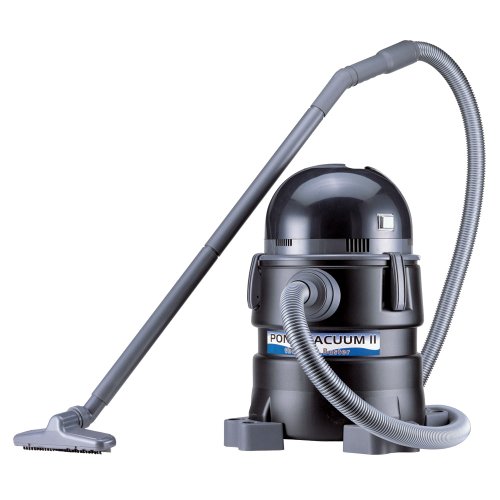
Matala Pond Vacuum II Muck Vac
The tool that removes sludge rather than stirring it. It lifts the fine dark layer out instead of re-suspending it, which no net can do. Note the rhythm: it vacuums in bursts, then stops to drain its tank, so expect a stop-start job. NeNet coarse leaves first so it does not clog.
Microbe-Lift Sludge-Away
The targeted digester for the residual organic film once the bulk is out. It works on decaying organic matter, not on silt or clay, and it is maintenance rather than a cure. Dose per the label and keep the water aerated, since the bacteria need oxygen.

API Pond-Zyme Sludge Destroyer
A cheap enzyme-and-bacteria route to the same maintenance job, useful if you want to hold a thin layer in check without much outlay. Same honest limits as any treatment: it digests organic matter and will not clear an established muck layer on its own.

Microbe-Lift PL Pond Bacteria
The general-purpose bacteria for ongoing prevention rather than sludge removal. Note the overlap honestly: PL also claims sludge and odor benefits, so if you buy one bottle, buy this one, and add Sludge-Away only when a stubborn bottom layer is the specific problem.
What owners say
Real owner reports from the threads and editorial sources we drew on for this guide.
“You may be able to remove the larger particles with a net, but the smaller particles will require a vacuum. Using a net will also stir up the fine particles, causing the water to be cloudy for a few days and when the water clears the sludge is still there.”
“Stirring up that muck can release a poisonous gas, hydrogen sulfide. It smells like rotten eggs. It's toxic to fish and people. So is it safe, maybe not. Depends on how much gas, if any, is in that mud. If you go slowly, it will likely be okay and the gas can dissipate.”
“If you want the thick stuff out then use a long handled net and bucket or a vacuum. Stirring up the muck can foul up the water tho, so be very slow and careful if using a net. Maybe don't do it all at once. Let it settle and do again later and so on and so on.”
“I don't really think those muck and sludge products do much- the theory is they help break things down faster, but honestly I think keeping the bottom of your pond stirred up is the best way to keep it from building up.”
“If you have rocks on the bottom then forget the vacuum it just won't work, rocks may look nice but they limit the amount of cleaning that you can do there is no way that you can use a net.”
“I love my pond vacuum. It really changed how I clean my pond. However, big stuff, especially pine needles don't do well in the vacuum. They either can't be sucked up well or get clogged.”


